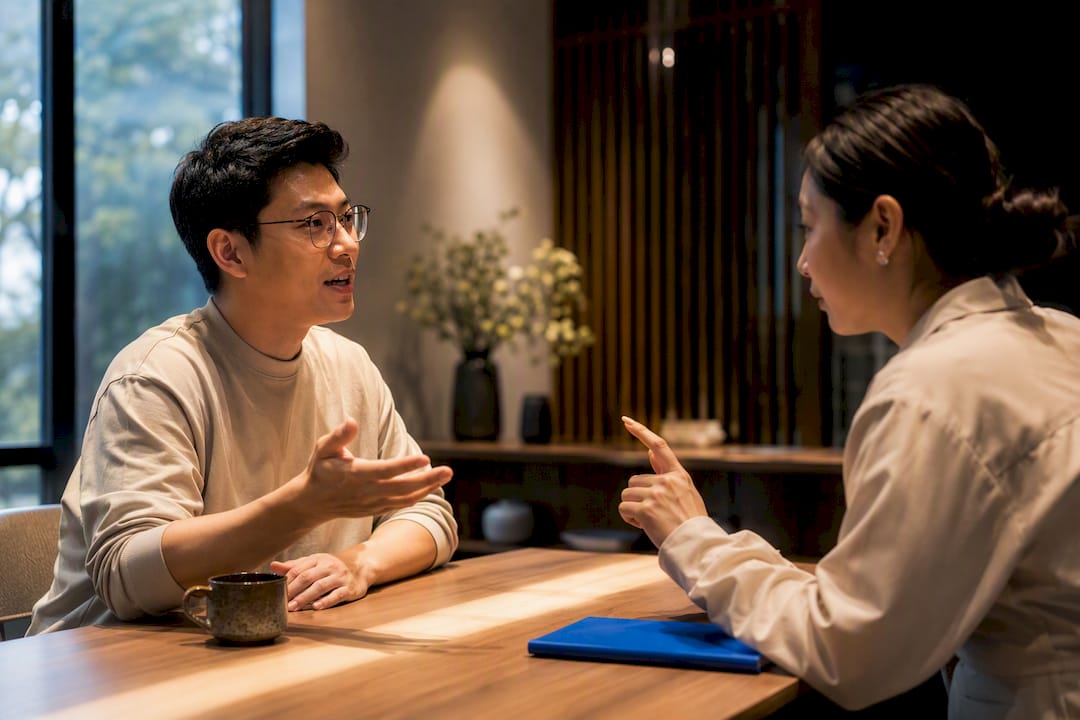
The strongest reasons to learn Thai are practical, not sentimental: you travel easier, connect with family and friends on a deeper level, open doors at work, and give your brain a genuine cognitive workout from wrestling with tones. Thai is learnable for adults with consistent, structured practice. Most people hit real conversational ability within months, not years, and the payoff starts showing up the moment you can order food or ask directions without switching to English.
TL;DR:
- Most learners can achieve basic conversational skills within a few weeks of daily practice focusing on survival phrases and tone drills.
- Learning Thai script early improves overall progress, especially for reading signs and messaging on apps like LINE, speeding up language acquisition.
- Thai’s tone system requires dedicated listening exercises to distinguish pitch differences, which enhances auditory skills and brain flexibility.
- Structured courses with native instructors and aligned curricula accelerate progress by providing cultural context and real-world practice.
- Consistent, focused listening combined with weekly conversations significantly boosts retention and fluency, especially given Thai’s tonal and cultural nuances.
Table of Contents
- 8 Reasons to Learn Thai That Actually Matter
- What Actually Makes Thai Hard (and Where It’s Surprisingly Easy)
- The Brain Science Behind Learning a Tonal Language
- Your First 30 to 90 Days Learning Thai
- Why Structured Courses Speed Up Real Progress
- A Personal Note on What Thai Actually Gives You
- Ready to Start? Here’s Your Next Step
- Sources
- FAQ
8 Reasons to Learn Thai That Actually Matter
Motivation fades fast when it’s vague. These eight reasons hold up because each one produces a specific, noticeable change in how you move through Thailand or interact with Thai people, whether you’re visiting once a year or working with partners in Bangkok every week.
- Travel gets easier and more authentic. Once you can read a bus schedule or haggle at a market in Thai, entire neighborhoods open up that guidebooks skip. You stop relying on translation apps at the worst moments, like mid-negotiation with a taxi driver.
- Culture stops needing subtitles. Song lyrics, film dialogue, and local humor rely on wordplay and tone that translation destroys. Fluency lets you catch a joke the same second everyone else laughs, which unlocks a level of cultural access that subtitles simply can’t deliver.
- Relationships deepen in a way English can’t replicate. Speaking Thai with a partner’s family, or with Thai friends, shifts how they see you. You stop being the polite foreigner and start being someone who actually participates in the conversation.
- Career and business conversations shift in your favor. Negotiating directly with a Thai supplier or client, without a translator softening or distorting your tone, builds trust faster and looks distinct on a resume. Thai fluency is a rare, specific skill in most industries.
- Daily errands stop being a hassle. Reading signs, filling out forms, or messaging on LINE without translating every line saves real time and speeds up everyday integration for anyone living in or regularly visiting Thailand.
- Tonal-language practice sharpens listening and mental flexibility. Thai forces your brain to track pitch and meaning simultaneously, a workout that carries over into general auditory processing.
- You gain a different lens on yourself. Learning any second language builds empathy and confidence, but Thai’s cultural distance from English pushes that shift further than most language pairs.
- You can start almost anywhere. Apps, group classes, private lessons, and online Zoom sessions all work as entry points, so there’s no single “right way” to begin.
Pro Tip: Learn to type basic Thai on your phone before you learn much grammar. Reading and typing Thai on LINE, the app almost everyone in Thailand uses daily, does more for your social integration than a semester of textbook drills.
What Actually Makes Thai Hard (and Where It’s Surprisingly Easy)
Thai’s reputation for difficulty comes from three specific features, and knowing which ones actually matter changes how you should study.
- Tones carry meaning, not just emphasis. Thai has five tones, and the same syllable said with a different pitch is a different word entirely. Early listening drills matter more here than in almost any other beginner language, because your ear needs to catch distinctions your native language never trained you for.
- The script looks intimidating but rewards early investment. Thai script has no spaces between words and uses its own alphabet, but learning to read and type it early speeds up everything else, from ordering food to using LINE.
- Grammar is often easier than English. Thai has no verb conjugations, no plurals to memorize, and no grammatical gender. Word order does most of the heavy lifting.
Realistic milestones: survival Thai (ordering, directions, basic pleasantries) in a matter of weeks with daily practice, conversational fluency in several months, and confident, nuanced fluency after a few years of regular use.
The Brain Science Behind Learning a Tonal Language
Tonal languages like Thai engage both hemispheres of the brain, while non-tonal languages lean mostly on the left hemisphere for language processing. That’s a meaningfully different cognitive workout than learning French or Spanish.
The takeaway: learning Thai’s tone system trains your brain to process pitch and meaning at the same time, a pattern of bilateral brain engagement documented in tonal-language research that doesn’t show up in most European language learning.
For adult learners, that translates into sharper listening skills and better auditory discrimination, benefits that extend beyond the language itself into how you process sound and speech generally.
Your First 30 to 90 Days Learning Thai
Progress in Thai comes from consistency, not marathon study sessions. Fifteen to thirty minutes a day beats two hours once a week, every time.
- Days 1 to 30: Focus on core survival phrases, daily tone drills, and passive listening (Thai music, podcasts, or shows in the background). Build a routine you’ll actually keep.
- Days 30 to 60: Add structured grammar and start reading basic Thai script, especially anything you’d see on LINE or a menu.
- Days 60 to 90: Push into real conversation practice, ideally with a native speaker, and start setting measurable goals like ordering a full meal or handling a taxi ride entirely in Thai.
Pro Tip: Pick your learning format based on your schedule, not ambition. Apps work well for vocabulary on the go, group classes build accountability, and private lessons move faster if you need to hit a specific goal, like an upcoming trip or business trip.
Why Structured Courses Speed Up Real Progress
Self-study gets you far, but a few things consistently separate fast learners from stalled ones.
- Native, bilingual instructors catch mistakes self-study misses. A teacher who’s genuinely fluent in Thai and English can explain not just what’s wrong with your tone, but why, and give cultural context that a textbook never will.
- Curriculum aligned to a recognized standard, such as CU-TFL, keeps your progress measurable. You’re not guessing whether you’re improving. You’re tracking against a real benchmark.
- Real-world practice matters more than textbook drills. Courses built around actual communication skills rather than rote memorization get you talking sooner.
A Personal Note on What Thai Actually Gives You
Learning Thai changes how a place feels. Streets that once looked identical start having character once you can read the signs, and conversations that used to stall at “hello” turn into actual relationships once you can follow a joke or ask a real question.
The habit that made the biggest difference for me, and that I’d recommend to anyone starting out, is simple: fifteen minutes of focused listening daily, paired with one real conversation a week, even a short one. Consistency beats intensity almost every time with tonal languages. The tones need repetition to stick, and there’s no shortcut around that.
— Paul
Ready to Start? Here’s Your Next Step
If you’ve read this far, you already know why learning Thai is worth the effort. The harder part is picking a format that fits your schedule and actually sticking with it. Com’s Thai courses run as group classes, private lessons, and online Zoom sessions, all taught by native Thai instructors who are bilingual in Thai and English, so you get real cultural context alongside the grammar.
Whether your goal is smoother travel, better conversations with a partner’s family, or sharper business communication in the region, there’s a format that fits. Classes run at Com’s training center, located right above Tanjong Pagar MRT at 10 Anson Road, #22-07, International Plaza, Singapore 079903, easy to reach whether you’re coming from work or home. Check the Thai course page for current class schedules and sign up for a trial lesson to see how the teaching style fits before committing to a full term.
Sources
- Neuroscience article on tonal-language processing (PMC)
- Why you should learn Thai in Thailand — Thai Guider
- Thai language fluency: benefits — Ling-App
FAQ
What Makes Thai Difficult to Learn?
Thai’s five tones and its own script are the main hurdles, since both require training your ear and eye in ways English never demands. Grammar, by contrast, is simpler than English in several respects, with no verb conjugations or plurals to memorize.
Which Is Harder, Thai or Korean?
Both languages present different challenges. Korean’s writing system (Hangul) is more phonetic and easier to learn quickly, while Thai’s tonal system demands more listening practice upfront, though Thai’s grammar tends to be simpler overall.
Is It Easy to Learn Thai?
Thai isn’t easy in the way learning a closely related European language is, but it’s highly learnable with consistent practice. Most learners reach survival-level conversation within weeks and genuine conversational ability within months.
Which Is Harder, Japanese or Thai?
Japanese generally takes longer to reach fluency because of its writing system, which combines three different scripts, while Thai’s single script and simpler grammar make early progress faster, even though its tones take dedicated practice to master.