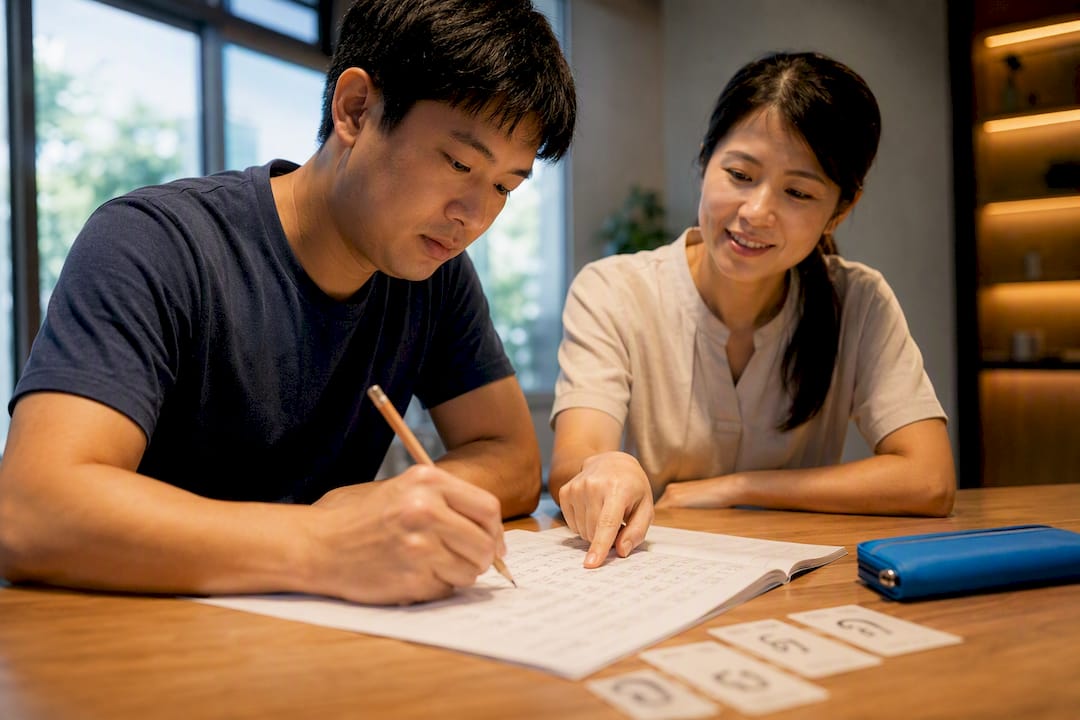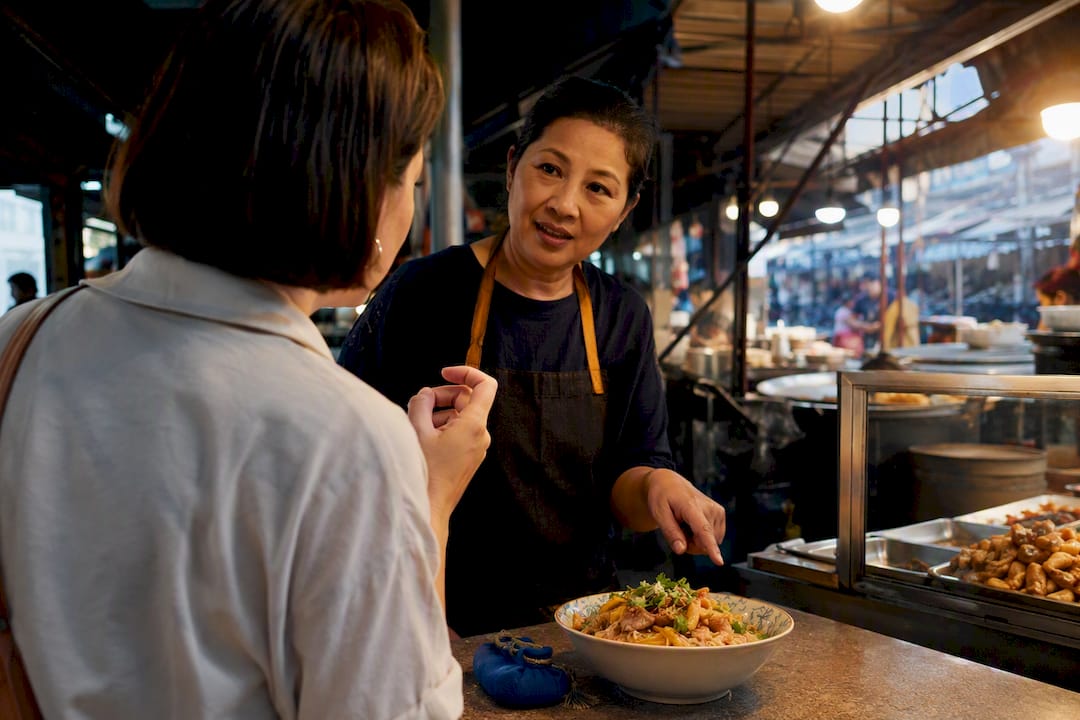
The fastest, most reliable way to learn Thai in Singapore is a structured course taught by bilingual native instructors, with a trial lesson booked first to confirm the fit. Group classes, private lessons, and online sessions all work, but progress tracks closest to a real curriculum when the school follows a recognized proficiency framework like CU-TFL. Start by booking a trial lesson, then commit to a level once you know the teaching style matches how you learn.
TL;DR:
- Private lessons with native instructors offer faster progress by tailoring the syllabus to individual needs, especially for tone mastery.
- Course costs in Singapore range from around $5 to $6 per hour for group classes and $10 to $12 per hour for private lessons, with additional fees for materials and assessments.
- Smaller class sizes and courses aligned with recognized standards like CU-TFL enhance skill development and provide measurable progress benchmarks.
- The most critical factor in learning Thai quickly is consistent contact hours and active practice outside class, not just selecting the right course.
- Booking a trial lesson allows learners to assess teaching style and curriculum fit, helping avoid dissatisfaction and unnecessary spending.
Table of Contents
- What Are the Main Ways to Learn Thai in Singapore?
- How Do You Choose the Right Thai Course?
- What Does a Structured Thai Program Actually Cover?
- How Much Does It Cost to Learn Thai in Singapore?
- Where Can You Find and Book a Thai Class?
- Why Consider Thai Explorer for Your Thai Learning Journey
- What Do Reviews Say About Thai Courses and Tutors in Singapore?
- The Real Bottleneck Isn’t the Course, It’s the Commitment
- Start With a Trial Lesson Before You Commit
- Sources
- FAQ
What Are the Main Ways to Learn Thai in Singapore?
Four formats cover almost every learner in Singapore, and picking the wrong one is the single biggest reason people quit after a month.
Group classes put you in a cohort of roughly six to twelve students, usually working through a set curriculum at a fixed pace. They suit total beginners who want structure, peer accountability, and a lower price per hour. The tradeoff is speed: if you already know some Thai or you’re gunning for a business trip in six weeks, a group cohort will feel slow.
Private lessons flip that equation. A tutor builds the syllabus around you, which means faster movement through material you already grasp and more time on the parts that trip you up, like tones or classifier words. Private tuition costs more per hour, but many learners reach conversational milestones in fewer total sessions because nothing gets repeated for someone else’s benefit.
Online classes run over Zoom or a similar platform, and they’ve become the default choice for professionals who can’t commit to a fixed classroom time every week. You still get a real instructor and a real curriculum. What you’re trading is the in-person energy of a physical classroom for scheduling freedom, which matters more if you travel for work or juggle shift hours.
Corporate training is built for teams, not individuals. Companies with staff traveling to Bangkok, Phuket, or Chiang Mai for business often bring in a Thai program tailored to workplace vocabulary, meeting etiquette, and client-facing phrases rather than general conversation.
A few things hold across all four formats:
- Most run on weekly lessons of 1.5 to 2 hours, though intensive blocks exist for people who want to compress a beginner level into a few weeks.
- Evening and weekend slots are common because most adult learners are working professionals.
- Group courses are almost always the cheapest entry point; private and corporate options command a premium for customization.
- Local course listings and community threads both confirm that pricing varies more by format than by school.
How Do You Choose the Right Thai Course?
Start with your actual goal, not the course that has the best marketing. Someone prepping for a Phuket vacation needs a completely different course than someone negotiating supplier contracts in Bangkok, and a course built for one rarely serves the other well.
Run through this checklist before you hand over any money:
- Define your outcome first. Conversational fluency, travel survival phrases, business Thai, or a certification pathway each demand a different pace and vocabulary focus.
- Check the instructor’s background. A native Thai speaker who is also fluent in English can explain grammar and tones in a way a non-native teacher usually can’t, because they’ve felt the language gap from both directions.
- Ask about curriculum alignment. Courses structured around a recognized framework like CU-TFL give you a way to measure progress against a real standard, not just a school’s internal opinion of your level.
- Confirm class size and format fit. A twelve-person group class and a one-on-one session produce very different amounts of speaking time per student.
- Ask what’s included. Course books, audio files, recorded class videos, and any retake or makeup-class policy should be spelled out before enrollment, not discovered afterward.
- Book a trial lesson. A single session reveals more about teaching style than any brochure will.
Pro Tip: If a school won’t offer any kind of trial or sample class, treat that as a warning sign. A confident program wants you to test the fit before you commit.
Watch for red flags during your first inquiry: vague answers about what you’ll actually be able to say after Level 1, no mention of assessment or progression criteria, and schools that dodge questions about class size. Those gaps tend to show up later as frustration, not just inconvenience.
What Does a Structured Thai Program Actually Cover?
Progress in Thai follows a fairly predictable arc, and knowing the milestones ahead of time keeps you from feeling stuck at week three, which is exactly when most beginners hit a tone-recognition wall.
- Beginner: basic greetings, numbers, polite particles, and enough exposure to the five tones and Thai script to recognize patterns, even before you can read fluently.
- Elementary: simple conversations about daily life, ordering food, asking directions, and enough listening comprehension to follow a slow native speaker.
- Intermediate: extended speaking on familiar topics, reading short texts and signage, and enough grammar control to handle past and future tense naturally.
- Advanced: complex grammar, workplace and business vocabulary, and functional reading and writing fluency.
Reaching solid conversational competence generally takes sustained weekly contact hours across several months, not weeks, especially for English speakers tackling a tonal language for the first time. Out-of-class review, even twenty minutes a day with flashcards or audio, compounds faster than most learners expect, because tone recognition is a listening skill before it’s a speaking one.
Assessment matters more than most learners realize going in. A course that tracks your progress against a recognized standard like CU-TFL gives you an external benchmark instead of a school’s own subjective read on your ability. In-house tests between levels catch gaps before they calcify into bad habits.

Cultural immersion accelerates all of this, especially now that Thailand is open for holidays, making travel and cultural exchange easier than before. Learners who attend Thai language events alongside their coursework tend to build speaking confidence faster than classroom time alone produces, mainly because real conversation forces you to react without translating in your head first.
How Much Does It Cost to Learn Thai in Singapore?
Pricing in Singapore splits along four models: per-hour private tuition, per-course group packages, term-based pricing, and custom corporate quotes.
Community pricing reports from learners in Singapore put budget group sessions around $5 to $6 per hour and private lessons around $10 to $12 per hour in earlier threads, though rates shift over time and by provider. Treat these numbers as a peer-reported starting point, not a guaranteed current rate. Verify any community figure against a school’s published fee before budgeting around it.
Several factors push price up or down regardless of format:
- Smaller class sizes cost more per student because you’re buying more instructor attention.
- Bundled materials (textbooks, audio files, recorded sessions) add value even when the sticker price looks higher than a bare-bones alternative.
- Certification-track courses with formal assessment modules often carry a premium over conversation-only classes.
- Registration fees are frequently separate from the course fee itself, so ask before you assume the quoted number is final.
What a fee normally includes: course books, audio files, and access to online course materials are standard inclusions at most established schools. What to verify separately: retake costs if you need to repeat a level, materials fees for supplementary workbooks, and whether recorded class videos are actually included or sold as an add-on.
Value isn’t just the lowest number on the page. A slightly pricier course with a real progression framework and recorded lessons for review often beats a cheaper one that leaves you guessing whether you’re actually improving.
Where Can You Find and Book a Thai Class?
Three channels cover most of what’s available in Singapore right now.
Course portals aggregate listings from multiple providers, including short 1 to 5 day conversational modules and multi-week leveled courses with published fees and start dates. These are useful for scanning what’s currently running without visiting a dozen individual school sites, though a short module is rarely a substitute for a paced, multi-level curriculum if lasting fluency is your goal.
School websites give you the most detail on curriculum, instructor background, and materials. Community threads, including active discussions on r/learnthai, fill the gap portals leave: real learners reporting what they actually paid and how a course felt from the inside.
Here’s a short booking sequence that avoids the most common enrollment mistakes:
- Confirm your level placement before you register, especially if you’ve studied Thai before, so you’re not stuck repeating material you already know.
- Check the schedule against your calendar for the full course length, not just the first session.
- Ask for a written syllabus so you know what each level actually covers before you pay.
- Book a trial lesson first to test the instructor’s teaching style and confirm the class format fits how you learn.
- Reserve early for popular cohorts, since group classes fill up faster than private slots.
For online classes specifically, confirm the platform and check your internet connection and device setup before your first session, so a technical hiccup doesn’t eat into your trial lesson time.
Why Consider Thai Explorer for Your Thai Learning Journey
Thai Explorer runs on the same principles this guide recommends: bilingual native instructors, a curriculum aligned with CU-TFL, and flexible formats so the course fits your schedule instead of the other way around.
What that looks like in practice:
- Native, bilingual teaching. Instructors are native Thai speakers who also teach comfortably in English, helping grammar explanations and tone corrections come through clearly.
- Four formats under one roof. Group, private, online, and corporate training all run from the same curriculum backbone, so switching formats later doesn’t mean starting over.
- Curriculum aligned with CU-TFL. Progress maps to a recognized external standard rather than an internal-only grading scale.
- Built-in learner support. Course books, audio files, recorded class videos, and online access typically provide material to review between sessions, aiding working professionals in study.
- Cultural immersion events. Regular language events give students speaking practice outside the classroom, the kind of low-stakes conversation that builds real confidence faster than drills alone.
The school operates from 10 Anson Road, #22-07, International Plaza, Singapore 079903, directly above Tanjong Pagar MRT, making it straightforward to reach before or after work.
What Do Reviews Say About Thai Courses and Tutors in Singapore?
Feedback across Singapore’s Thai learning options tends to cluster around three themes: teaching quality, pacing, and whether the course delivers on its stated curriculum.
Learners consistently rate native-speaking instructors higher than non-native tutors when it comes to tone correction, the single hardest skill for English speakers to self-diagnose. You can hear that you sound “off,” but without a native ear correcting you in real time, wrong tones become habits fast.
Community discussion also flags pacing as a recurring complaint, particularly in larger group classes where faster students outrun the syllabus and slower students fall behind. This is less about any individual school and more about class size itself. Smaller cohorts and private tuition consistently draw fewer pacing complaints, simply because there’s less variance to manage.
The most reliable signal isn’t a star rating. It’s whether a course’s actual content matches what was promised at sign-up. Peer forums are genuinely useful for catching this kind of mismatch before you enroll, but treat any single review as one data point rather than a verdict, and cross-check community claims against a school’s published curriculum whenever you can.
The Real Bottleneck Isn’t the Course, It’s the Commitment
Most advice about learning Thai focuses on finding the “best” course, as if the right school alone determines whether you succeed. That’s backwards. The research on language acquisition consistently points to contact hours and consistency as the real drivers of progress, not which brand of curriculum you bought into.
What conventional advice underrates is how much tone recognition depends on early, frequent correction. A cheap group class with twelve students gets you less individual feedback per hour than a private lesson, even though the private lesson costs more. If your budget is tight, a smaller group or a shorter block of private sessions at the start, followed by group classes once your ear is trained, often beats committing to a full year of large-cohort learning up front.
Prioritize instructor access over course length. A shorter, more intensive program with a native bilingual teacher who corrects your tones in real time will move you further than a long, cheap course that lets bad habits sit uncorrected for months.
— Paul
Start With a Trial Lesson Before You Commit
You don’t need to guess whether a course fits. Thai Explorer’s trial lesson lets you sit in on real teaching, ask questions about pacing and curriculum, and decide with actual information instead of a sales pitch.
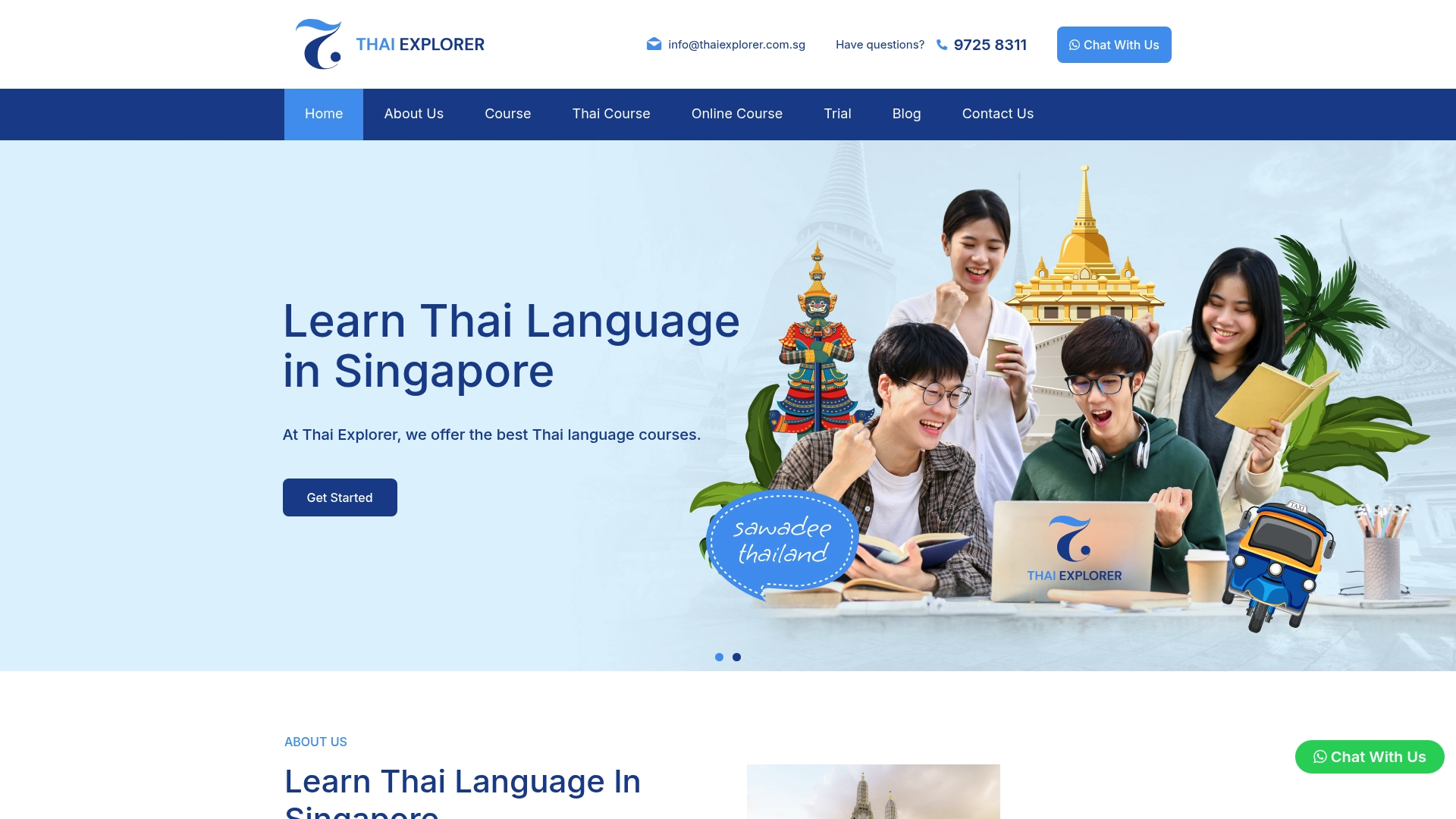
Before your trial, jot down your goal (travel, business, general conversation) and any prior Thai exposure, so the instructor can place you accurately from session one. If you’re weighing group versus one-on-one, the trial is the cheapest way to feel the difference firsthand rather than debate it in theory. From there, most learners move into the Conversational Thai Beginner course, available online or in person, with a straightforward registration process.
If your needs are less standard, a small team heading to Bangkok for a project, a partner who wants private sessions timed around shift work, ask about corporate training or private lesson packages. Either way, the next step is the same: book the trial, show up, and decide from there.
Sources
- MySkillsFuture | Search For thai language Courses
- Singaporean complete beginner in Thai : r/learnthai
FAQ
How Long Does It Take to Learn Thai Fluently?
Fluency timelines vary widely by definition and effort, but most learners need sustained weekly instruction over many months, not weeks, to reach strong conversational ability. Consistent contact hours plus daily review outside class shorten that timeline more than any single course choice.
Can I Learn Thai in Two Months?
You can reach basic survival phrases, greetings, and simple travel vocabulary in two months with focused daily practice, but genuine conversational fluency takes considerably longer. Short 1 to 5 day conversational modules work well for quick trips, not lasting fluency.
What Is the Fastest Way to Learn Thai?
Private lessons with a native bilingual instructor, combined with daily listening practice and real conversation outside class, tend to produce fast progress. Cultural immersion events also add speaking practice beyond classroom time.
How Difficult Is It to Learn Thai for English Speakers?
Thai is genuinely challenging for English speakers mainly because of its five tones and a non-Latin script, both of which require ear training most learners haven’t done before. That said, Thai grammar is simpler than many European languages in areas like verb conjugation, which offsets some of the difficulty once tones click.
What Does a Thai Trial Lesson Cost at Thai Explorer?
Thai Explorer’s trial lesson costs $45 SGD one-off, with a separate $50 SGD registration fee per student. Booking a trial first lets you confirm teaching style and course fit before enrolling in a full-level course.