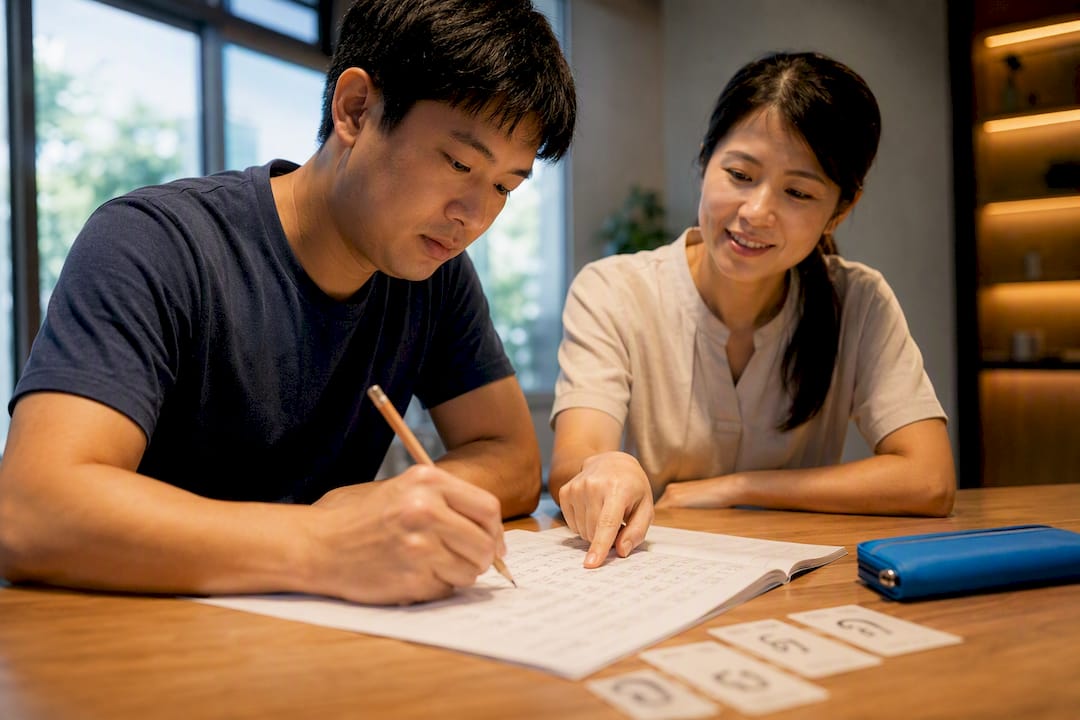
Online Thai lessons work through four main formats: self-paced video courses, live private lessons, live group classes, and hybrids that mix recorded content with scheduled practice. For most working adults, the fastest and most reliable route to real conversation is a hybrid built around live private lessons with a consistent teacher, backed by short daily practice between sessions. The sections below break down each format, what a structured course actually teaches, realistic pricing, and how to start.
TL;DR:
- Private lessons with one teacher and consistent feedback speed up pronunciation improvement and overall progress compared to rotating tutors.
- Hybrid courses combining recorded grammar lessons and scheduled speaking practice are the most efficient for busy adults seeking fast conversational skills.
- A typical starting routine includes a 60-minute live lesson per week and 10 to 15 minutes of daily practice, achieving survival phrases in weeks and basic conversation in months.
- Choosing a provider that offers post-lesson recordings, progress tracking, and a clear curriculum accelerates learning and prevents plateauing around beginner levels.
- Costs vary with lesson type, but a trial lesson typically costs around $45 SGD with an additional registration fee, and several months of regular study are needed for fluent conversation.
Table of Contents
- What Are the Different Formats for Online Thai Lessons?
- What Does a Structured Online Thai Course Actually Teach?
- How Do You Choose Between Self-Paced, Private, and Group Lessons?
- What Should You Expect From a Live Online Thai Lesson?
- What Does Online Thai Cost, and How Long Until You’re Conversational?
- How Do You Start Learning Thai Online?
- Why Structure and Teacher Continuity Beat Convenience Shopping
- Ready to Move From Browsing to Speaking Thai?
- Sources
- FAQ
What Are the Different Formats for Online Thai Lessons?
Self-paced courses give you pre-recorded videos, quizzes, and sometimes spaced-repetition drills you work through on your own schedule. They suit people with unpredictable calendars who want to build vocabulary and grammar before ever speaking to a person. StudyThai, for example, structures its self-paced content around an 8-level system with dedicated tone training modules.
Live private lessons put you with one teacher, session after session, who adjusts the syllabus to your goals and corrects your tones in real time. This continuity matters more than most people assume: a private teacher who works with you repeatedly can build a custom curriculum around your specific pronunciation weak points instead of restarting from a generic template each week.
Group classes run on a fixed schedule with other learners, which lowers the per-hour cost and adds peer practice, though you get less individual correction time.
Hybrid formats combine recorded lessons for grammar and vocabulary with scheduled live sessions for speaking practice. This tends to be the most efficient use of both time and money for adults juggling work.
Signals that point to the right format for you:
- Limited, unpredictable free time → self-paced or hybrid
- Need for fast correction on tones and pronunciation → live private
- Budget is the top constraint and you enjoy peer energy → group classes
- Want structure but can’t commit to fixed weekly slots → hybrid with on-demand review
What Does a Structured Online Thai Course Actually Teach?
A properly structured course covers five core areas, and skipping any of them is why so many self-taught learners plateau at “menu Thai” and never progress further.
- Listening and speaking. Audio-first exposure paired with speaking practice, as Loecsen’s free beginner course emphasizes, builds the ear before it builds the mouth.
- Survival phrases. Greetings, numbers, directions, ordering food. This is the beginner milestone.
- Reading and writing. The Thai script has its own alphabet and no shared roots with English, so this usually comes after a foundation in spoken skills.
- Business and formal registers. Relevant for professional learners who need polite forms and workplace vocabulary, not just tourist phrases.
A typical learning path moves from beginner (survival phrases, basic greetings) to elementary (simple back-and-forth conversation) to intermediate (extended conversation, basic reading) to advanced (confident, professional-level use). Providers signaling real structure will offer a level test before you start, a visible lesson progression, and materials you can revisit, a pattern Thailand Foundation’s course listings reflect well. Skipping tone work early is the single most common reason adult learners hit a wall around month three.
How Do You Choose Between Self-Paced, Private, and Group Lessons?
Start with your actual goal, not the format that sounds most efficient on paper. Quick survival conversation for an upcoming trip needs different pacing than business Thai for client meetings or exam-style certification prep.
Match the format to your habits and honestly assess your budget:
- Daily micro-practice fits people who can commit 10 to 15 minutes most days but not long blocks.
- Weekly long sessions fit people who prefer depth over frequency.
- Private lessons cost more per hour but compress the timeline.
- Group classes and subscription tiers stretch a smaller budget further, at the cost of individualized feedback.
Before booking anything, ask providers direct questions: Will I keep the same teacher? Do I get lesson recordings? How is progress tracked? Is there a trial lesson? Marketplace platforms that rotate tutors frequently are a red flag, since continuity with one teacher is what lets a curriculum adapt to your specific errors instead of repeating the same introductory material.
Pro Tip: Ask to see a sample of what you get after a lesson, not just during it. If a provider can’t show you a recording, notes, or a vocabulary list from a past session, assume you won’t get one either.
What Should You Expect From a Live Online Thai Lesson?
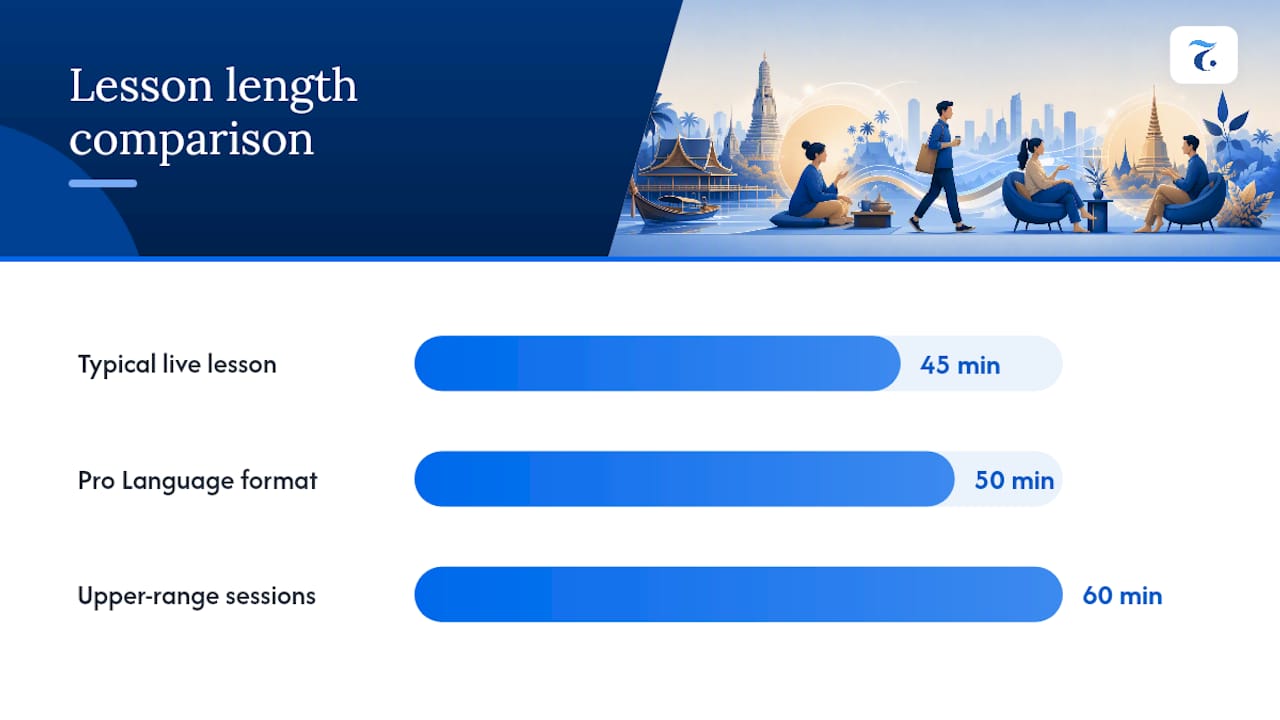
Most live providers run lessons at 45 to 60 minutes, once or several times a week, which matches how Pro Language’s 50-minute live format is structured. You’ll need a stable internet connection, a headset, and access to Zoom or a similar video platform, nothing exotic.
Inside the session, the teacher’s real job is correcting pronunciation in the moment, guiding conversation practice, and adjusting on the fly when something isn’t landing. What happens after the lesson matters just as much:
- Recordings you can rewatch
- Notes on what you struggled with
- Assigned vocabulary or drills to review before the next session
Staying with one teacher across sessions speeds this up considerably, since they remember your specific tone errors instead of relearning your level each time.
What Does Online Thai Cost, and How Long Until You’re Conversational?
Pricing usually follows one of three shapes: pay-per-hour private lessons, multi-hour packages that discount the per-lesson rate, or subscription tiers for self-paced platforms. Native, experienced teachers, included materials, session recordings, and formal assessment all push the price up, which is a fair trade if continuity and post-lesson support are what you’re paying for.
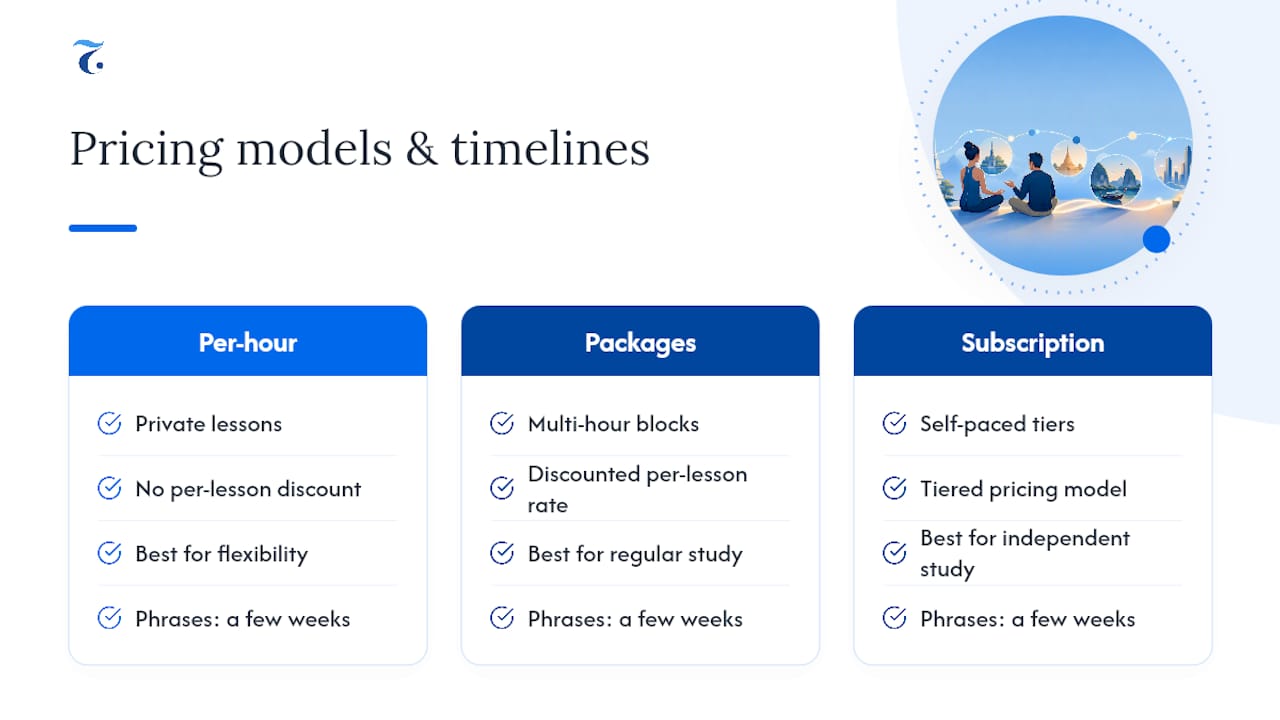
Timelines vary by effort, but rough patterns hold. Basic travel survival phrases are achievable in a few weeks with daily short practice. Genuine conversational ability, where you can hold an unscripted exchange, typically takes several months of regular lessons plus practice between them. The fastest way to test whether a program fits is to start small: book a trial lesson or a short package, then judge teacher continuity and post-lesson support before committing to anything longer.
How Do You Start Learning Thai Online?
- Book a trial or taster lesson to check whether the teacher’s style and the format actually work for you.
- Do a short level check and name a concrete goal, whether that’s travel phrases, talking with family, or business Thai.
- Set a simple starter routine: one 60-minute live lesson per week, plus 10 to 15 minutes of daily micro-practice, plus a weekly review of your recorded lesson.
- Use vocabulary cards and short pronunciation drills between sessions to lock in what the live lesson covered, and lean on resources that explain tone rules clearly when a sound isn’t clicking.
Why Structure and Teacher Continuity Beat Convenience Shopping
Adult learners rarely fail at Thai because the language is impossible. They fail because they rotate teachers, skip tone training, and treat practice as optional. Bilingual native instructors who stay with a learner across many sessions catch pronunciation errors that a rotating cast of tutors simply won’t notice twice. A curriculum aligned to a recognized proficiency standard like CU-TFL gives that continuity a destination instead of an open-ended drift through random topics. Flexible formats, whether online or in person, only pay off if the structure behind them is real. The next section covers what that looks like in practice.
— Paul
Ready to Move From Browsing to Speaking Thai?
If you’ve read this far, you already know the format matters more than the platform. Some online courses are built around features this guide recommends: bilingual native Thai teachers who stay with you, a curriculum that maps to a clear level progression, and materials, recordings, and dashboards you can actually use between sessions.
Rather than piecing together a self-paced app and hoping speaking practice happens on its own, you get Conversational Thai Beginner 1 and Beginner 2 as structured, Zoom-based online courses with real teacher contact. If you’d rather test the waters first, the Thai Trial Lesson runs at $45 SGD, with a $50 SGD registration fee per student. Prefer one-on-one pacing? The private course option builds the syllabus around your specific goals. Com’s training center sits at 10 Anson Road, #22-07, International Plaza, Singapore 079903, right above Tanjong Pagar MRT, for anyone who wants an in-person session alongside the online format. Book a trial lesson this week and find out within one session whether the teacher and pacing actually fit how you learn.
Sources
- PRO Online Live Thai – Pro Language School
- Private Thai Lessons Online | 1-on-1 | Thai with Nariss
- Thai Language Courses
FAQ
How Many Hours a Week Should a Beginner Study Thai Online?
One live 60-minute lesson per week paired with 10 to 15 minutes of daily practice is a realistic starting routine for most adults. This combination builds vocabulary retention between sessions without requiring a large time commitment.
Can You Become Conversational in Thai Using Only Self-Paced Apps?
Self-paced apps build vocabulary and listening skills well, but tone correction and real conversation practice generally require live feedback from a teacher. A hybrid approach, self-paced content plus scheduled live practice, tends to produce faster speaking gains than either format alone.
What Is the Cost of a Trial Thai Lesson?
Com’s Thai Trial Lesson costs $45 SGD, with a separate one-time $50 SGD registration fee per student. It’s designed to let you test a teacher’s style before committing to a full course.
Do I Need the Same Teacher Every Lesson?
Continuity with one teacher is not strictly required, but it speeds up progress because that teacher learns your specific pronunciation errors and builds a tailored curriculum around them. Providers that frequently rotate tutors often mean starting over on the basics each time.
How Long Does It Take to Reach Basic Conversational Thai?
Basic travel survival phrases are achievable within a few weeks of daily micro-practice. Genuine conversational fluency, where you can hold an unscripted exchange, typically takes several months of consistent live lessons combined with regular practice between them.