
For most beginners, a live small-group course or a short guided online course beats free apps for actual speaking ability. Self-study platforms and private tutoring both have a place, but they work best as add-ons, not your main track. Pick your format around your weekly schedule first, then compare providers using what each one offers for feedback and live practice time.
TL;DR:
- Live small-group courses and university conversational programs are most effective for achieving fluency within a few months, especially for travel or work.
- Free platforms provide vocabulary exposure but lack live feedback, making them unsuitable for building conversational reflexes.
- The actual course level skills vary significantly, with beginner courses covering basic greetings and elementary levels enabling short, unscripted conversations.
- Course format and schedule consistency are more crucial than price, as flexible options like private lessons or intensive crash courses suit different learner needs.
- Regular speaking practice, especially daily voice exercises and situational drills, accelerates progress more than passive listening or weekly study sessions.
Table of Contents
- Where Can You Learn Malay? Comparing the Real Options
- What Can You Actually Do at Each Course Level?
- What Course Format Actually Fits Your Schedule?
- How Do You Choose the Right Malay Course?
- What’s the Fastest Way to Build Basic Speaking Skills?
- An Instructor’s View on What Actually Speeds Progress
- Interested in a Regional Language Closer to Singapore’s Culture?
- Sources
- FAQ
Where Can You Learn Malay? Comparing the Real Options
Most people default to a free app because it’s the path of least resistance. That works for vocabulary, but it rarely builds the reflexes you need to hold a real conversation.
Here’s how the main options actually break down:
- Free, self-paced platforms like LingoHut offer over a hundred lessons covering vocabulary and pronunciation basics, but there’s no live feedback loop, so mistakes in tone or word order can go uncorrected for months.
- Structured online courses with a certificate, such as the Learn Bahasa Melayu introduction from Universiti Malaya on FutureLearn, run three weeks at roughly two to three hours per week and cover greetings, numbers, and simple dialogue with cultural context built in.
- Short intensives and staged conversational classes found through community training listings, which often use role-play formats to get you using practical phrases fast.
If your goal is speaking fluency for travel or work within a few months, the live small-group or university conversational route wins. If you just want vocabulary exposure before a bigger commitment, a free platform is a reasonable warm-up.
What Can You Actually Do at Each Course Level?
Malay course levels sound similar across providers, but the actual skills attached to each label vary more than most learners expect. Here’s a realistic breakdown of what beginner, elementary, and intermediate levels tend to deliver:
- Beginner: You can handle greetings, introduce yourself, count, and order food using memorized phrases. Most learners reach this after roughly a few weeks of guided instruction with a few hours per week.
- Elementary: You can ask for directions, describe daily routines, and hold a short unscripted exchange without freezing. This typically takes additional practice spread over a school term or more.
- Intermediate: You can discuss opinions, handle unpredictable conversation turns, and function in basic workplace or social settings without leaning on English. Getting here from elementary usually takes additional months of regular practice, not just one more course.
Progression isn’t linear for everyone. Some learners plateau at elementary because they stop speaking out loud once the novelty wears off, which is exactly where a structured course with live practice earns its keep.
What Course Format Actually Fits Your Schedule?
Format matters more than most people admit when they sign up. A course that looks great on a syllabus but meets at a time you’ll skip every third week won’t move your Malay forward at all.
The main formats break down like this:
- Self-paced online: No fixed schedule, unlimited replay, but no live correction. Good for vocabulary building between other commitments.
- Live online small-group: Weekly sessions of 60 to 90 minutes, usually over Zoom, with real-time speaking practice and a capped class size.
- In-person group classes: Similar weekly cadence to live online, with the added benefit of reading body language and classroom energy.
- Private lessons: Fully flexible scheduling, faster pace, but usually a higher cost per hour than group formats.
- Intensive crash courses: Multiple sessions per week over two to four weeks, built for travel prep or a fast deadline.
The activities that actually move the needle are role plays and situational drills: ordering food, asking for directions, negotiating a price at a market. Passive listening exercises build recognition, but they don’t build the reflex to respond under time pressure.
Pro Tip: Book a trial session before committing to a term. A single live class tells you more about teaching style and class size than any course description will.
How Do You Choose the Right Malay Course?
Picking a course by price alone is how a lot of learners end up stuck at beginner level for a year. The better approach is matching the provider’s structure to what you actually need out of the language.
Run through these criteria before you commit:
- Your goal: Travel phrases, business conversation, or academic study each call for a different course structure.
- Class size: Smaller groups mean more speaking time per person. Ask directly how many students are enrolled.
- Teacher background: A bilingual, native-speaking instructor catches pronunciation errors that a non native teacher might miss entirely.
- Speaking time per session: Ask what percentage of class time is actual student talk versus lecture.
- Schedule fit: A course you’ll attend consistently beats a “better” course you’ll skip half the time.
- Price model: One-off course fees, subscriptions, and per-session private rates all suit different budgets and commitment levels.
- Certificate or badge availability: Useful for academic or workplace documentation, though not essential for personal or travel goals.
Before enrolling anywhere, ask the provider these questions directly:
- How many students are typically in a class?
- How much of each session is live speaking practice versus listening?
- What’s the instructor’s teaching background?
- Can I try a single session before committing to the full course?
- How is progress measured between levels?
- What happens if I miss a session?
- Is the course content adjusted for travel, business, or academic goals?
- Is there a certificate, and does it matter for my purpose?
If a provider can’t answer the speaking-time question specifically, or the course page doesn’t mention who’s teaching, treat that as a red flag. Vague promises like “become fluent fast” without a stated weekly structure usually mean there isn’t one. For a broader framework on matching any short course format to your goals, this guide on planning upskilling courses covers similar selection logic.
What’s the Fastest Way to Build Basic Speaking Skills?
Malay gives English speakers an early advantage: no verb conjugation and no gendered nouns, so early progress often comes faster than with many other languages. The catch is that grammar being simple doesn’t mean speaking confidence shows up automatically. That still takes repetition out loud.
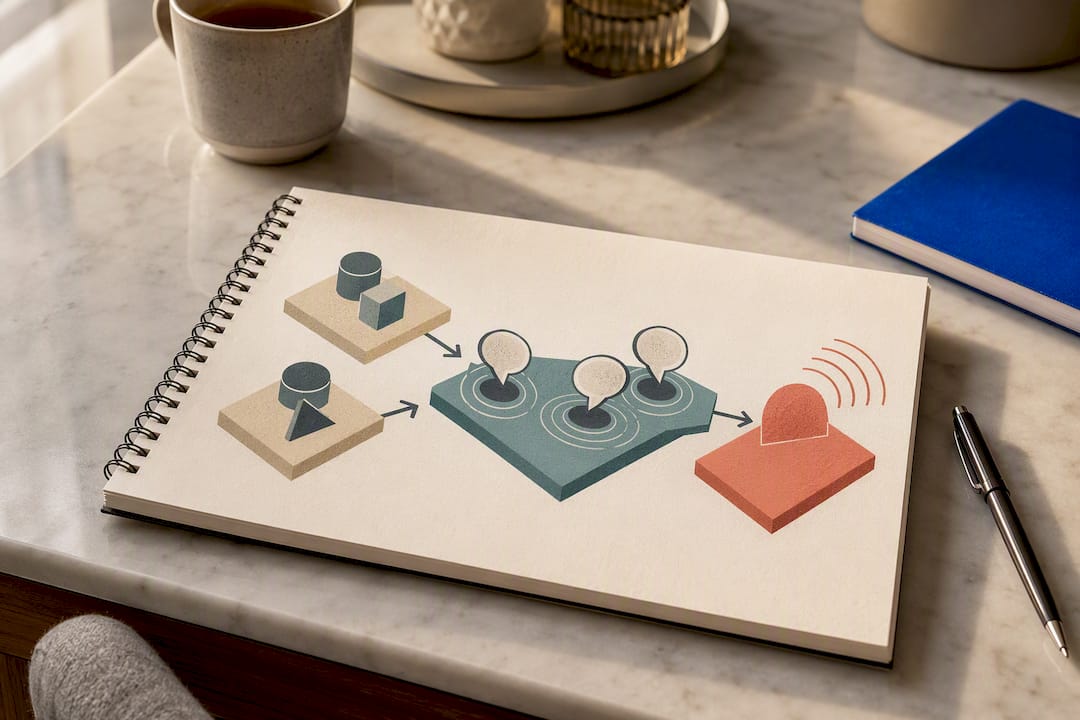
Voice-first practice, meaning speaking daily rather than only reading or listening, is one of the higher-leverage habits for moving from beginner toward elementary competence. Platforms built around real-time pronunciation feedback point to the same conclusion: correcting your mouth movements in the moment beats reviewing mistakes later.
Try this four-week structure:
- Week 1: Ten minutes daily on greetings and self-introduction, spoken aloud, not just typed.
- Week 2: Add situational drills, ordering food, asking for directions, using short scripted exchanges.
- Week 3: Mix in unscripted responses to simple questions from a partner or instructor.
- Week 4: Combine everything into a five-minute unscripted conversation, recorded and reviewed.
Twenty minutes a day beats two hours once a week, every time.
An Instructor’s View on What Actually Speeds Progress
Live small-group instruction consistently outperforms solo study for one simple reason: correction happens while the mistake is still fresh in your mouth, not three lessons later. Instructor background matters more than course marketing suggests. A bilingual, native-speaking teacher hears errors a self-study app can’t detect. If you’re choosing between formats, run the checklist above before you compare prices.
— Paul
Interested in a Regional Language Closer to Singapore’s Culture?
If Thai has crossed your mind alongside Malay, whether for travel, business connections, or plain curiosity, there are structured Thai courses designed with small groups, live speaking practice, and bilingual native instructors who catch pronunciation errors in real time.
Classes run in group, private, and online Zoom formats, plus corporate training for teams. The training center is located at 10 Anson Road, #22-07, International Plaza, Singapore 079903, right above Tanjong Pagar MRT. It’s an easy add if you’re already commuting through the area. This isn’t a substitute for Malay. It’s a separate option worth considering if your travel or business plans point toward Thailand instead of, or alongside, Malaysia. Check the Thai course page to see current class schedules and pick a format that fits your week.
Sources
FAQ
What Is the Best Way to Learn Malay?
For practical speaking ability, live small-group classes or a guided online course with real feedback outperform free apps alone. Combine structured lessons with daily short speaking drills for the fastest results.
Where Can You Learn Malay in Singapore?
University programs like the NUS CLS conversational Malay course and live online providers such as Lingo both offer structured options for adult learners in Singapore.
How Long Does It Take to Learn Malay?
Reaching a basic conversational level usually takes a few weeks of guided instruction, roughly several weeks with regular study sessions. Moving to intermediate takes additional months of regular practice.
Where Can You Learn to Speak Malay Online?
Structured platforms like the FutureLearn introduction from Universiti Malaya and live small-group Zoom classes both work well, with the live format giving you more real-time speaking correction.