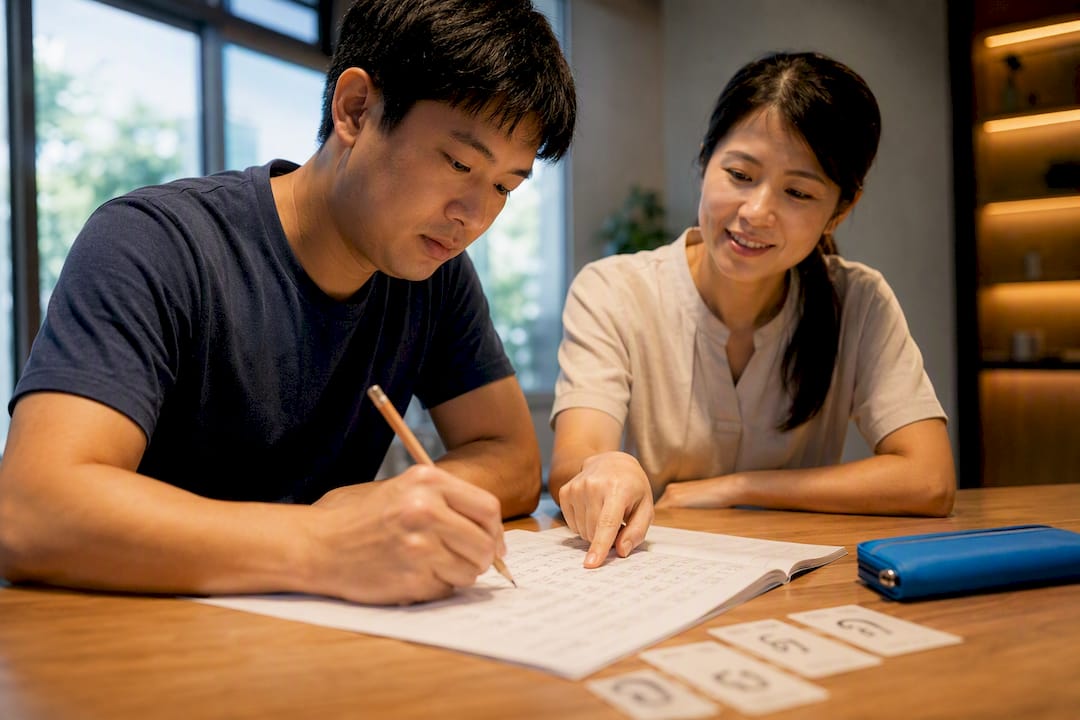
The fastest way to improve your Thai in Singapore is to pair a structured class with regular local speaking practice, not one or the other. Group or private lessons build your grammar and pronunciation foundation, while weekly meetups, language exchange apps, and community events give you the real-world reps that make speaking automatic. Start by booking a trial class, then join one Thai-focused meetup or Tandem group within your first two weeks.
TL;DR:
- Joining Thai classes paired with regular local meetups or exchanges accelerates speaking fluency more than focusing on one method alone.
- Most learners achieve basic survival Thai within four to six weeks, but true conversational fluency takes between eight months to a year of steady practice.
- Private lessons are essential for pronunciation and tone correction, while group classes offer affordability and peer practice opportunities.
- Consistent speaking, combining structured lessons, community meetups, and solo drills like shadowing ensures rapid progress.
- A deliberate weekly routine involving a class, language exchange, and daily drills can substantially shorten the path to speaking Thai confidently.
Table of Contents
- Where Can You Practice Thai in Singapore?
- Structured Thai Classes: Group, Private, or Online?
- Where Do Thai Meetups and Language Exchanges Happen?
- Practicing Thai Alone: Apps, Drills, and Daily Habits
- How Long Does It Take to Speak Conversational Thai?
- What Does It Cost to Practice Thai Consistently in Singapore?
- How Do You Choose the Right Thai Class or Practice Path?
- Is Thai Explorer a Good Fit for Structured Practice?
- A Practical Weekly Routine That Actually Works
- Ready to Start Practicing Thai With Structure?
- Sources
- FAQ
Where Can You Practice Thai in Singapore?
Singapore has more Thai-speaking practice options than most learners realize, and they fall into four rough categories: formal instruction, community meetups, cultural or campus events, and app-based exchanges.
Language schools remain the most reliable starting point because they combine structure with accountability. Most local schools offer a trial class before you commit to a term, which lets you gauge teaching style and class pace without a big upfront decision. Beyond dedicated Thai schools, public course directories also list Thai language options as part of broader adult-education offerings, which is worth checking if you want a low-commitment community class alongside your main course.
Meetups fill the gap that classes cannot. Regular Friday-night language exchange events in Singapore include Thai conversation tables among their rotating language groups, often at social venues like pubs, where the format is casual but the speaking time is real. These sessions work because they mix learners and native speakers in one room, rather than segregating by fluency level.
Universities and cultural institutions are an underused channel. Exchange and cultural affairs offices, such as the NUS exchange program, occasionally host language and culture events open to the wider public, and checking these calendars once a month can surface pop-up practice opportunities you won’t find on typical meetup listings.
For one-on-one practice, online exchange platforms have an active local base:
- Tandem’s Singapore directory shows thousands of active members looking for language partners, Thai included.
- Language.exchange and similar directories carry individual profiles, including Singapore residents specifically offering Thai exchange.
- Facebook groups and Eventbrite listings surface one-off social events that don’t always make it onto general meetup calendars.
None of these replace instruction, but together they turn Singapore into a workable practice environment if you know where to look.
Structured Thai Classes: Group, Private, or Online?
Every class format solves a different problem, and picking the wrong one wastes both time and money.
Group classes work best if your goal is steady, well-rounded progress and you enjoy learning alongside peers. The pace is set for the middle of the class, so you get less individual correction, but you gain something private lessons can’t offer: other learners to practice with during breaks and after class. Group settings also tend to cost less per hour, which matters if you’re building a long-term habit rather than cramming for a trip.
Private lessons earn their higher price tag in one specific area: pronunciation and tone correction. Thai is a tonal language, and a wrong tone can change a word’s meaning entirely. A private tutor catches those errors in real time, something a group instructor simply cannot do for every student every session. If your Thai sounds “off” despite knowing the vocabulary, private lessons are usually the fix.
Online Zoom classes suit professionals whose schedules don’t cooperate with a fixed commute or timetable. The format has matured well past “video call plus textbook.” Good online programs still run live speaking drills and breakout practice, just through a screen instead of a room.
When comparing programs, look for these curriculum signs of quality:
- Native, bilingual instructors who can explain grammar in English but drill you in Thai.
- A speaking-first teaching approach rather than heavy grammar lecture with minimal talk time.
- Structured assessment aligned with recognized proficiency benchmarks, such as the CU-TFL (Chulalongkorn University Proficiency Test of Thai as a Foreign Language) framework, which gives you an objective marker of progress instead of a vague sense of “getting better.”
Pro Tip: Ask any school for a sample lesson plan before enrolling. If they can’t show you what a typical class actually covers, that’s a bigger red flag than the price.
For learners deciding between formats, a private lesson track built around pronunciation drills often pairs well with a weekly group session for variety and speaking volume.
Where Do Thai Meetups and Language Exchanges Happen?
Meetups are where classroom Thai turns into real conversation, and Singapore’s exchange scene runs on a fairly predictable rhythm once you know the pattern.
- Find the event. Eventbrite and Meetup both list recurring language exchange nights, and Facebook groups often post smaller, informal gatherings that never make it onto ticketing sites. One recurring example is Singapore’s Friday language exchange night, held at social venues like Molly Malone’s, which draws a mixed crowd of learners and native speakers across several languages, Thai among them.
- Prepare before you go. Bring three or four topics you can talk about comfortably: your job, your weekend, why you’re learning Thai. Rehearsing these in advance means you’re not translating on the fly when the pressure is on.
- Work the room strategically. The best sessions use rotating pairs and structured conversation prompts rather than open mingling, since rotating formats give every participant more actual speaking minutes per hour than a standard cocktail-party setup.
- Follow up one-on-one. If you click with a native Thai speaker at a meetup, exchange contact details and set up a recurring coffee chat. That single relationship often becomes more valuable than the meetup itself.
Etiquette matters more than most learners expect. Don’t monopolize a native speaker’s time all evening. Rotate, thank people for correcting you, and offer to help with English or another language you know in return. Exchange only works when it’s actually an exchange.
Practicing Thai Alone: Apps, Drills, and Daily Habits
Classes and meetups give you scheduled practice, but the habit that moves your Thai forward fastest happens on the days in between.
Tandem is the most practical starting point for solo practice, given its large active user base in Singapore. The trick is your profile, not the app itself. Learners who list specific interests, mention their current level honestly, and state what they want to practice (tones, business vocabulary, casual chat) get matched with better partners than those who write a generic “want to learn Thai” bio.
Three drills work particularly well for solo practice:
- Shadowing: play a short Thai audio clip, pause, and repeat it aloud matching the rhythm and tone as closely as you can.
- Scripted role plays: write out a common scenario (ordering food, asking directions) and speak both sides aloud.
- Self-recording: record yourself answering a simple question in Thai, then listen back the next day with fresh ears.
None of these require a partner, which makes them ideal for the days your schedule won’t allow a meetup or class.
Pro Tip: Record the same sentence once a month. Hearing your own voice improve over eight or ten weeks is one of the most motivating things you can do for yourself as a learner.
The gap in self-study is feedback on tone accuracy, since apps and solo drills can’t tell you when a tone is subtly wrong. That’s where an occasional check-in with a tutor pays for itself, even if your main practice happens through apps and meetups. A short block of private lessons every few weeks, focused purely on correcting drift in your pronunciation, keeps solo practice from reinforcing bad habits.
How Long Does It Take to Speak Conversational Thai?
Realistic timelines depend heavily on how often you actually speak Thai out loud, not just how many hours you study.
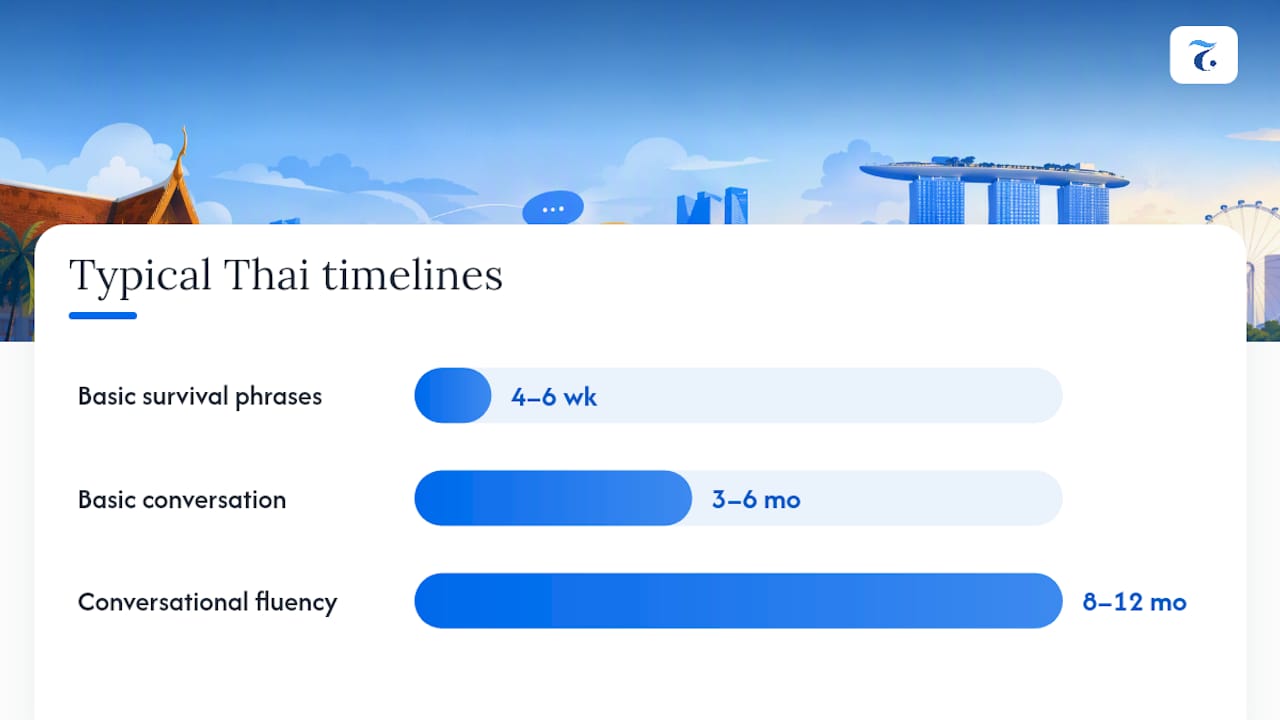
Most learners hit basic survival phrases (greetings, ordering food, simple directions) within four to six weeks of consistent practice, two to three sessions a week. Basic conversation, where you can handle small talk and simple daily situations without constantly reaching for a translation app, typically takes three to six months for someone practicing regularly. Conversational fluency, the point where you can hold a real back-and-forth on everyday topics without much hesitation, usually takes eight months to a year of steady speaking practice combined with instruction.
What actually moves that timeline:
- Speaking frequency matters more than total study hours. Someone speaking Thai for 20 minutes a day progresses faster than someone studying grammar for two hours once a week.
- Targeted pronunciation feedback, from a tutor or a language partner who corrects you gently and consistently, prevents tone errors from becoming permanent habits.
- Immersive exposure, even passive exposure like Thai music or shows, reinforces rhythm and listening comprehension between active sessions.
Can you learn Thai in two months? Some learners get close to basic conversational ability in that window, but it usually requires several hours of daily practice, most of it speaking rather than reading. That intensity is achievable for a career sabbatical or a dedicated crash course. For anyone working full time, a two-month conversational target is possible only with heavily compressed daily practice, and it comes at the cost of depth: you’ll speak, but your vocabulary and grammar range will stay thin until you keep going past that point.
What Does It Cost to Practice Thai Consistently in Singapore?
Budgeting for Thai practice comes down to how you mix formats, since group classes, private lessons, and self-directed practice sit at very different price points.
Group classes tend to offer the lowest effective cost per hour of instruction, since the teacher’s time is shared across the class. Private lessons cost more per session but concentrate feedback entirely on you, which matters most for pronunciation work. Paid tutoring platforms and one-off private sessions booked independently vary widely in price depending on the tutor’s experience and availability.
Budget framework: multiply your planned practice hours per week by your expected per-hour cost across formats to estimate a monthly figure. For example, one group class plus one private session plus two free meetups gives you four practice touchpoints weekly, only two of which cost money.
Ways to stretch a Thai-learning budget without cutting your speaking time:
- Mix a lower-cost group class with free community meetups instead of paying for private lessons every week.
- Save private lessons for pronunciation troubleshooting rather than general conversation practice, which you can get for free at meetups.
- Use Tandem and language exchange apps as a zero-cost supplement between paid sessions.
The instruction budget matters less than the consistency of your speaking hours. A cheaper mix that gets you talking daily beats an expensive class you attend once a week.
How Do You Choose the Right Thai Class or Practice Path?
Picking a class or a practice mix comes down to five decision points, and working through them in order saves you from signing up for the wrong format entirely.
- Define your goal first. Are you learning for travel, business conversations, or general fluency? A business-Thai learner needs different vocabulary priorities than someone prepping for a Chiang Mai trip.
- Check the schedule fit honestly. A class that meets during your busiest work hours will get skipped, no matter how good the curriculum is. Online Zoom formats solve this for many professionals.
- Set a budget range before you shop around. Knowing your monthly ceiling upfront prevents overspending on private lessons you don’t need or underspending on instruction you do.
- Ask about the teacher’s background. A native, bilingual instructor who can explain Thai grammar clearly in English tends to accelerate early progress more than a non-native teacher working from a textbook.
- Ask what assessment looks like. Programs that track your progress against a proficiency standard, rather than just “finishing the course,” give you a clearer sense of where you actually stand.
During any trial class or enquiry, ask directly: What’s your trial class policy? Can I see a sample lesson plan? What’s the teacher’s teaching background? Straightforward answers to all three are a good sign.
Pro Tip: Treat a vague answer to “what will I be able to say after this course?” as a warning sign. A program that can’t describe its own outcomes probably hasn’t defined them.
Red flags worth walking away from: no trial option at all, a syllabus that’s more marketing copy than curriculum detail, and inconsistent scheduling that makes it hard to build a weekly habit. For a fuller walkthrough of matching your level to the right course type, this step-by-step course guide breaks down the process further.
Is Thai Explorer a Good Fit for Structured Practice?
Thai Explorer runs group, private, and online Thai courses for adult learners in Singapore, with curriculum aligned to the CU-TFL proficiency framework so progress is measured against a recognized standard rather than a vague sense of improvement. Lessons are led by bilingual native Thai instructors, which matters most in the early stages when grammar explanations in clear English speed up comprehension.
The training center sits at 10 Anson Road, #22-07, International Plaza, Singapore 079903, right above Tanjong Pagar MRT. It makes an easy stop before or after work for professionals who don’t want to build travel time into an already tight schedule.
What to expect if you’re considering enrollment:
- Course formats span group, private, and online Zoom classes, so you can pick based on schedule and learning style rather than settling for whatever’s available.
- Trial classes let you assess teaching pace and style before committing to a full term.
- Curriculum built around speaking-first practice, with assessment checkpoints tied to CU-TFL standards, gives you a way to track real progress instead of guessing.
For business-focused learners, corporate Thai training is also available for teams needing conversational or workplace-specific vocabulary.
A Practical Weekly Routine That Actually Works
The learners who progress fastest almost never rely on one format. They stack a class, a meetup, and solo drills into a single week and let each one cover a gap the others leave open.
A workable weekly split looks like this: one structured lesson (group or private) for grammar and correction, one community meetup or Tandem session for unscripted conversation, and three short solo drills, fifteen to twenty minutes each, for shadowing and recording practice. The structured lesson prevents bad habits from calcifying. The meetup forces you to think in Thai under mild social pressure, which classroom practice rarely replicates. The solo drills keep the muscle memory active on days you’re not speaking with anyone.
The mistake I see most often is learners treating classes and community practice as substitutes for each other instead of complements. A class without conversational exposure produces textbook Thai that falls apart at pub-meetup speed. Community practice without any structure produces confident-sounding Thai riddled with tone errors nobody’s correcting. Combined, each format compensates for what the other misses.
— Paul
Ready to Start Practicing Thai With Structure?
If meetups and apps have gotten you comfortable with basic phrases but you’re stuck plateauing on grammar and tones, a structured course closes that gap faster than more solo practice ever will. Thai Explorer offers group, private, and online Zoom classes for adult learners and professionals in Singapore, with assessment aligned to the CU-TFL framework to help measure your progress.
Professionals juggling packed schedules tend to do best in the online Zoom track, while learners who want faster pronunciation correction usually start with a private lesson block. Either way, the center’s location right above Tanjong Pagar MRT makes it simple to fit a session between work commitments. Browse the full range of Thai course options and book a trial class to see how the teaching style fits before committing to a term.
Sources
A handful of sources cover most of what you need to find speaking practice in Singapore. Tandem’s Singapore language exchange directory is the largest active pool of potential conversation partners. Eventbrite’s recurring language exchange listings show upcoming meetup dates and venues. Public community course directories list adult Thai classes outside dedicated language schools. For general conversation-practice strategy that applies across languages, this guide on practicing conversation for real fluency offers transferable tactics worth adapting to Thai.
- Language Exchange Singapore | Find Open Groups with Tandem
- Singapore Language Exchange Friday | Make Friends, Learn Languages & Culture Tickets, Multiple dates | Eventbrite
FAQ
Where can I learn Thai language in Singapore?
You can learn through language schools offering group, private, or online Zoom classes, through public community course directories, or through campus and cultural events at institutions like NUS. Thai Explorer, located above Tanjong Pagar MRT, offers structured courses across all three class formats.
How long does it take to learn Thai fluently?
Basic survival phrases usually take four to six weeks of regular practice, basic conversation takes three to six months, and conversational fluency typically takes eight months to a year with consistent speaking practice and instruction.
How many Thais live in Singapore?
Singapore hosts a sizable Thai community, though exact resident figures fluctuate with work-pass and expatriate populations. Meetups and exchange apps like Tandem are a more reliable gauge of active language partners than population estimates.
Can I learn Thai in 2 months?
Reaching basic conversational ability in two months is possible but usually requires several hours of daily practice, most of it speaking rather than reading, and your vocabulary range will stay limited until you continue past that point.
How do I find a Thai language exchange partner in Singapore?
Tandem’s Singapore directory and community meetup listings on Eventbrite are the most active channels, and profile-based sites like language.exchange also list Singapore residents specifically seeking Thai practice partners.