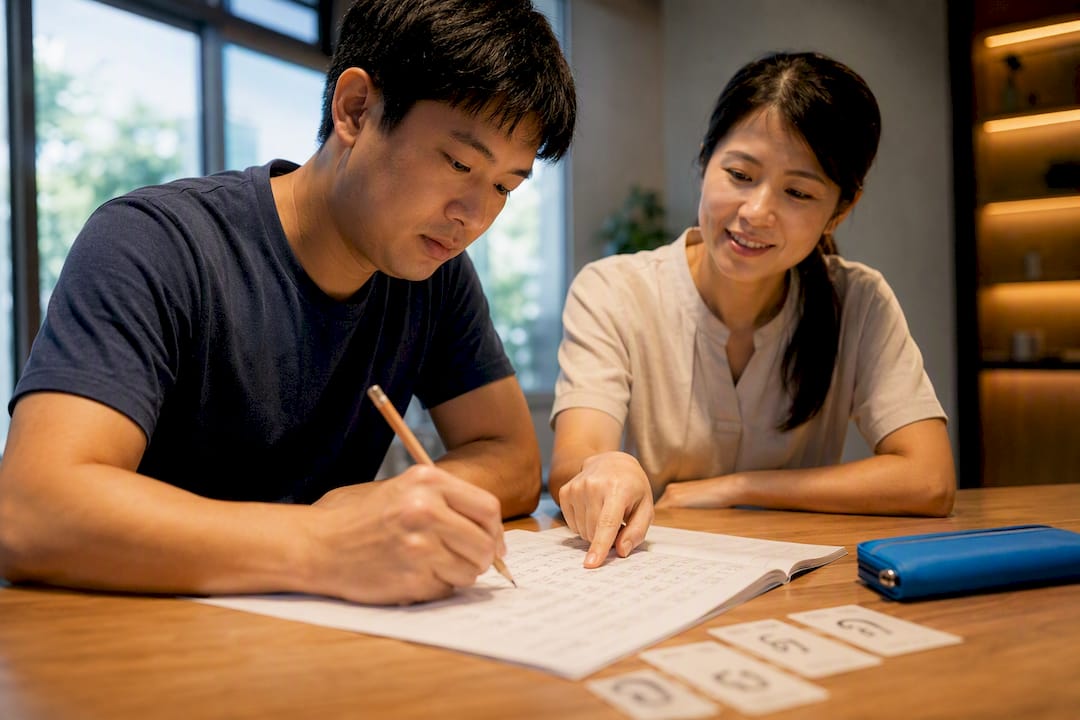
Learning Thai delivers clear travel, cultural, career, cognitive, and social benefits — and for adults in Singapore, the opportunity to act on those benefits has never been more accessible. Here are the strongest reasons to start:
- Travel confidence: Order food, read menus, bargain at markets, and navigate safely without depending on translation apps.
- Cultural depth: Participate in Songkran and Loy Krathong as a guest who actually understands what’s happening, not just a bystander.
- Career edge: Thailand is a major ASEAN trade partner; Thai language skills open doors in negotiation, client trust, and regional business.
- Brain health: Tonal-language practice engages pitch discrimination and broader neural networks, supporting executive function and listening acuity.
- Social connection: Speakers who learn Thai report stronger local friendships and access to conversations that short-term visitors simply never reach.
- Local relevance: Singapore’s Thai community is active and visible; even basic Thai changes how you connect with Thai colleagues, neighbors, and business contacts here.
Thai Explorer, Singapore’s structured Thai language school with CU-TFL-aligned curriculum, is the local starting point for most adult learners. The CU-TFL (Chulalongkorn University Proficiency Test of Thai as a Foreign Language) is the recognized proficiency benchmark for non-native speakers.
Key Takeaways
Learning Thai delivers measurable benefits across travel, career, culture, and cognitive health, and Singapore-based adult learners have structured, accessible options to start immediately.
| Point | Details |
|---|---|
| Travel and daily life | Basic Thai (30–60 hours) covers ordering food, reading signs, and navigating markets safely. |
| Career and business | Thai language skills build client trust and smoother negotiations with ASEAN partners. |
| Cognitive benefits | Tonal-language practice engages pitch discrimination and supports executive function and memory. |
| Cultural and social access | Speaking Thai shifts your status from tourist to insider, deepening friendships and community ties. |
| Start now in Singapore | 20 minutes daily plus a trial class at Thai Explorer is the fastest path to real early progress. |
Table of Contents
- 1. You connect with Thai culture on a completely different level
- 2. Travel becomes genuinely easier and safer
- 3. Career and business opportunities expand across ASEAN
- 4. Your brain gets a genuine workout from tonal learning
- 5. Thai is a gateway to the broader Southeast Asian region
- 6. You gain access to Thai media, pop culture, and digital life
- 7. Thai language skills help you navigate official and administrative situations
- 8. Learning Thai is more achievable than most people expect
- Common challenges in learning Thai and how to get past them
- Realistic timeline and cost expectations for reaching beginner and intermediate levels
- A practical 4–12 week starter roadmap for absolute beginners
- Research-backed benefits and an expert study tip
- Where to learn Thai in Singapore: what to look for and what to expect
- How learning Thai strengthens ties with Thai communities in Singapore
- Thai Explorer: structured Thai courses for adult learners in Singapore
- Sources
- FAQ
1. You connect with Thai culture on a completely different level
Surface-level tourism gives you temples and pad thai. Language gives you everything else.
Culture and social connection sit at the top of almost every learner’s list once they’ve spent real time in Thailand or around Thai communities. Knowing even basic Thai shifts your status from “tourist” to someone locals actually want to talk to. That shift is not subtle. You get invited to things. You understand the jokes. You catch the tone of a conversation before the translation arrives.
Festivals like Songkran (Thai New Year, April) and Loy Krathong (the lantern festival, November) are far richer experiences when you understand the greetings, the rituals, and the small talk that surrounds them. Cultural fluency in Thai covers not just vocabulary but the etiquette layer: the wai greeting, honorific particles, and the way age and status shape every conversation.
In Singapore specifically, the Thai community is large enough that language skills pay off in daily life, not just on trips abroad.
2. Travel becomes genuinely easier and safer
The practical case for learning Thai for travel is hard to argue against. Reading a menu in Thai script means you order what you actually want. Asking for directions in Thai means you get real answers, not the polite nod-and-point that tourists receive. Bargaining at Chatuchak Market in Thai gets you a better price and a better experience.

Basic Thai phrases for travelers, presented in Thai script, romanization, and English, are widely recommended as the fastest path to travel-ready competence. Polite particles like khráp (male) and khâ (female) should be learned from day one — they signal respect and immediately improve how locals respond to you.
Travel safety is a real factor too. Knowing how to ask for help, describe a medical situation, or read a road sign reduces friction in ways that no app fully replaces, especially outside Bangkok.
3. Career and business opportunities expand across ASEAN
Thailand is one of Southeast Asia’s largest economies and a central node in ASEAN trade networks. For professionals in Singapore working with Thai partners, suppliers, or clients, Thai language skills translate directly into business outcomes: smoother negotiations, faster trust-building, and the ability to read a room during a meeting rather than waiting for a translator’s summary.

Local market research becomes sharper when you can read Thai-language sources directly. Client relationships deepen when you can open a call with a greeting in Thai and follow the small talk before the agenda starts. Corporate training programs that combine role-play with real work scenarios tend to produce the fastest return on investment for teams with active Thai business relationships.
Thai communication skills for travel, culture, and work covers the specific register shifts between social and professional Thai — a distinction that matters more in Thai business culture than in many Western contexts.
4. Your brain gets a genuine workout from tonal learning
Thai is a tonal language with five tones. That sounds intimidating, but the cognitive upside is real. Tonal-language learning engages pitch discrimination and prosody, stimulating neural networks that support memory, attention, and executive function. Learners who train their ear on Thai’s five tones often find it easier to approach other tonal languages afterward — the skill transfers.
Research on bilingualism and language learning consistently links sustained language study to improved working memory and cognitive flexibility. Thai’s tonal system adds an extra layer of auditory processing that most European languages don’t require, which means the brain-training effect is more pronounced.
5. Thai is a gateway to the broader Southeast Asian region
Thai gives you passive comprehension of Lao, which shares significant vocabulary and a related script. Regional cultural norms, Buddhist traditions, and social etiquette patterns overlap across Thailand, Laos, and parts of Myanmar — understanding Thai gives you a working framework for navigating all of them.
For Singapore-based professionals who travel across the Mekong region, this regional leverage is a practical multiplier. One language investment opens partial access to several markets.
6. You gain access to Thai media, pop culture, and digital life
Thai pop culture — lakorn (TV dramas), K-pop-adjacent Thai pop, Thai YouTube, and the massive Thai Line messaging ecosystem — is genuinely engaging and widely consumed across Southeast Asia. Once you reach even A2 level, you can follow Thai media without subtitles for short clips, which accelerates informal learning faster than any classroom exercise.
Line is the dominant messaging platform in Thailand. Thai social media runs on Thai. Being able to read and respond in Thai on these platforms changes the quality of friendships and professional relationships with Thai contacts, whether they’re in Bangkok or in Singapore.
7. Thai language skills help you navigate official and administrative situations
Embassy guidance highlights language skills as important for long-term residents — covering official procedures, local administration, and daily integration. For expats living in Thailand or Singaporeans with Thai business interests, this is practical, not aspirational. Dealing with Thai government offices, property transactions, or healthcare without a language intermediary is faster and less error-prone when you have basic Thai.
Even at a conversational level, the ability to confirm details, ask clarifying questions, and read official signage reduces the risk of misunderstanding in high-stakes situations.
8. Learning Thai is more achievable than most people expect
Thai has no verb conjugation, no grammatical gender, and no plural forms. Sentence structure follows a straightforward subject-verb-object pattern. The tones and the script are the real learning curve — but both are learnable with the right approach.
Compared to Mandarin (four tones plus a logographic writing system with thousands of characters) or Japanese (three writing systems and complex honorific grammar), Thai is more accessible for English speakers. The script has 44 consonants and a vowel system that looks complex at first but follows consistent rules once you understand the tone-class logic.
Pro Tip: Don’t try to master the script and the tones simultaneously in week one. Spend the first two weeks on tones and survival phrases using romanization, then introduce the script in week three when your ear is already calibrated.
Common challenges in learning Thai and how to get past them
Every learner hits the same three walls: tones, script, and politeness markers. Knowing they’re coming makes them easier to clear.
Tones are the most common early frustration. Thai has five: mid, low, falling, high, and rising. The word mai means five different things depending on which tone you use. The fix is not memorization — it’s ear training. Short daily tone drills (10–15 minutes of listening and mimicking native audio) build the discrimination faster than any chart.
The Thai script looks impenetrable at first. It isn’t. The 44 consonants fall into three tone classes, and once you understand that the script encodes tone information directly, it becomes a pronunciation guide rather than just an alphabet. For short trips, romanization-first strategies speed early confidence. For longer stays or serious learners, learning the script early improves pronunciation accuracy because the romanization systems are inconsistent across different resources.
Polite particles (khráp for men, khâ for women) should be used from your very first sentence. They signal respect and dramatically improve how Thai speakers respond to you. Don’t wait until you’re “good enough” to use them — they’re the single highest-return habit in early Thai learning.
Regional accents vary between Bangkok Thai, Northern Thai (Kham Mueang), and Southern Thai. Standard Central Thai, which is what you’ll learn in class, is understood everywhere and is the right starting point.
- Tone drills: 10–15 minutes daily, using native audio
- Script: learn the consonant tone classes before the full alphabet
- Polite particles: use khráp/khâ from day one, without exception
- Accents: stick to Central Thai until you’re at B1 or above
Pro Tip: For a trip of two weeks or less, romanization is fine. For a stay of three months or more, or for anyone serious about the language, invest in the script by week three. The Thai vs. English structural guide explains exactly where the two languages diverge and why the script is less intimidating than it looks.
Realistic timeline and cost expectations for reaching beginner and intermediate levels
The honest answer: basic travel competency takes 30–60 hours of focused study, which translates to roughly 4–12 weeks at 3–5 hours per week. Conversational A2–B1 level takes 6–12 months of sustained, consistent effort.
Study format affects speed significantly:
- Self-study only: Slowest for speaking skills; works well for reading and vocabulary if you’re disciplined.
- Group classes: Structured pace, peer practice, and a teacher to correct your tones in real time. Most cost-effective format for consistent progress.
- Private tutoring: Fastest for targeted goals (a business trip, a specific professional context). Higher cost per hour, but fewer hours wasted on content you don’t need.
- Online Zoom classes: Flexible scheduling; equally effective as in-person for listening and speaking when the instructor is native and bilingual.
Typical cost ranges in Singapore vary by format and provider. Group classes at structured schools generally run at a lower per-hour rate than private sessions. Short intensive programs cost more upfront but compress the timeline. Self-study apps are low-cost but rarely sufficient on their own for tonal accuracy.
A short milestone roadmap:
- Month 1: Survival phrases, polite particles, tone awareness, 10–15 high-frequency words per week, 20-minute daily habit.
- Month 3: Basic conversations (introductions, ordering food, asking directions), 200+ vocabulary words, beginning script recognition.
- Month 6: Comfortable A2 conversations, reading simple signs and menus, following slow Thai speech.
- Month 12: B1 conversational fluency, ability to handle most daily situations, basic business or travel Thai depending on your focus.
A practical adult learning guide covers how to structure study time across these phases for maximum retention.
A practical 4–12 week starter roadmap for absolute beginners
The goal in the first four weeks is not fluency. It’s momentum. Small, daily wins compound faster than weekend cramming sessions.
Weeks 1–4: Build the foundation
- Learn 5–10 survival phrases in the first week: greetings, khráp/khâ, “how much?”, “thank you,” “I don’t understand.”
- Start tone drills from day one — 10 minutes of listening and repeating native audio daily.
- Add 10–15 new vocabulary words per week using spaced repetition (SRS). Anki works well for this.
- Establish a 20-minute daily habit. Consistency beats length at this stage.
- Attend a trial class or start a structured course to get immediate feedback on your tones.
Weeks 5–12: Expand and connect
- Introduce the Thai script: start with the 44 consonants and their tone classes.
- Expand to 50–100 common phrases covering food, transport, shopping, and social situations.
- Start simple conversations: introduce yourself, ask basic questions, respond to common replies.
- Add Thai media: short YouTube clips, Thai music, or simple Thai podcasts at slow speed.
- Practice shadowing — listen to a native speaker, then immediately repeat what you heard, matching rhythm and tone.
Study methods that work:
- Spaced repetition (SRS): Anki or similar for vocabulary retention
- Shadowing: The fastest method for tonal accuracy and natural rhythm
- Active recall: Cover the Thai side of your flashcard and produce the word from memory
- Partner exchanges: Find a Thai speaker for a 15-minute weekly language exchange
- Short daily speaking practice: Even talking to yourself in Thai for 5 minutes builds fluency faster than silent reading
Phrase packs combining Thai script, romanization, and audio are effective for short-term travel readiness and give you a structured vocabulary base to build from.
Research-backed benefits and an expert study tip
The cognitive case for learning Thai is grounded in how tonal languages are processed. Tonal practice requires the brain to use pitch discrimination and prosody simultaneously, engaging networks associated with executive function, working memory, and auditory processing. These are transferable gains — not just language skills.
Dr. Kiat’s advice aligns with what structured language programs have found repeatedly: grammar-first approaches slow early progress because learners get stuck analyzing rules instead of producing language. Listening and imitation build the neural pathways that grammar study alone cannot.
For learners pursuing formal recognition, the CU-TFL (Chulalongkorn University Proficiency Test of Thai as a Foreign Language) is the recognized benchmark. Thai Explorer’s curriculum is aligned to CU-TFL standards, and proficiency testing information is available for learners who want a formal measure of progress.
Pro Tip: Apply Dr. Your tones will be more accurate at the end of month one than if you’d spent that time studying grammar tables.
Where to learn Thai in Singapore: what to look for and what to expect
Singapore has a small but active Thai learning community, and the quality of instruction varies significantly. Here’s what separates a course worth your time from one that isn’t.
Checklist for choosing a course:
- Native Thai instructors who are bilingual in Thai and English (so they can explain why something sounds wrong, not just that it does)
- Curriculum aligned to CU-TFL standards for structured, measurable progress
- Practical conversational focus, not just grammar drills
- Flexible scheduling: in-person and Zoom options for working adults
- Small class sizes that allow for real speaking practice and tone correction
- Assessment modules so you can track progress at each level
What to expect from different formats:
Group classes offer structured pacing, peer interaction, and the most cost-effective path to consistent progress. Private classes are faster for specific goals — a business trip, a professional certification, or catching up after a break. Corporate training works best when sessions combine role-play with real workplace scenarios relevant to the team’s Thai business context.
Local action checklist before you enroll:
- Attend a trial class to assess the instructor’s teaching style and your comfort level
- Check teacher bios for native speaker credentials and bilingual ability
- Ask about class size (smaller is better for tonal feedback)
- Request a sample lesson plan to confirm the conversational focus
Thai Explorer, located at 10 Anson Road, #22-07, International Plaza, Singapore 079903 (directly above Tanjong Pagar MRT), offers group, private, and online Thai courses for adult learners at all levels. Online Thai classes via Zoom are available for learners who prefer flexible scheduling.
Pro Tip: Ask any prospective school whether their curriculum references CU-TFL level descriptors. A school that can map its course content to recognized proficiency levels gives you a clearer picture of what you’ll actually be able to do at the end of each term.
How learning Thai strengthens ties with Thai communities in Singapore
Thailand and Singapore share deep economic and cultural ties. Singapore is home to a substantial Thai community, including professionals, entrepreneurs, students, and long-term residents. For Singaporeans and expats who interact with this community, Thai language skills change the quality of those relationships in ways that English alone cannot.
At a practical level, many Thai community members are more comfortable in Thai for personal conversations, family discussions, and informal settings. Speaking even basic Thai signals genuine respect and interest, which opens doors that English-only communication keeps closed.
Thai Buddhist temples in Singapore hold regular ceremonies and community events. Thai restaurants, businesses, and social groups operate partly or entirely in Thai. Being able to participate in these spaces in Thai moves you from observer to participant.
For professionals, the impact extends to business. Singapore-based companies with Thai partners or subsidiaries often find that Thai-speaking staff build client relationships faster, resolve misunderstandings more cleanly, and navigate cultural nuance in negotiations that would otherwise require a translator. The Thai communication skills guide covers the specific register differences between social and professional Thai that matter most in these contexts.
Why Thai is worth the effort, even if you never move to Thailand
The conventional wisdom on language learning tends to frame it as a binary: either you’re moving to the country, or the language isn’t worth the investment. Thai breaks that logic cleanly.
Singapore’s position as a regional hub means Thai is a working language in this city, not just a travel accessory. The Thai community here is large, the business ties are real, and the cultural presence is active. Learning Thai in Singapore pays off before you ever board a flight to Bangkok.
There’s also something the cognitive research keeps confirming: the process of learning a tonal language changes how you hear. Not just Thai — everything. The pitch discrimination you build in the first few months of Thai study carries into meetings, conversations, and listening situations that have nothing to do with language class. That’s a return on investment that no other skill-building activity quite replicates.
The trade-off is honest: Thai takes real effort. The tones will frustrate you in month one. The script will look impossible in week two. Both of those feelings pass faster than you expect, especially with a structured course and a native instructor who can correct your tones in real time. The learners who quit early almost always do so before the first real breakthrough, which typically arrives around week six or eight when the tones start clicking.
Start with 20 minutes a day. Get your tones corrected early. The rest follows.
Thai Explorer: structured Thai courses for adult learners in Singapore
Thai Explorer is the structured option for adult learners in Singapore who want real progress, not just exposure. Courses cover conversational Thai, business Thai, and corporate training, all taught by bilingual native instructors whose curriculum is aligned to CU-TFL standards.
Whether you’re preparing for a business trip, building relationships with Thai colleagues, or simply want to connect more deeply with Thai culture, Thai Explorer offers the format that fits your schedule: group classes, private sessions, or live Zoom lessons. The school is located at 10 Anson Road, #22-07, International Plaza, Singapore 079903, directly above Tanjong Pagar MRT, with online options available for learners who prefer to study from home or the office.
Browse Thai language courses and book a trial class to see the teaching approach firsthand before committing to a full term.
Sources
- How Learning Thai Opens Doors Across Southeast Asia – Verbacard
- Why you should learn Thai in Thailand – Thai Guider
- Basic Thai Phrases for Travelers | Thai with Nariss
- Thaiembassy
FAQ
What makes Thai hard to learn for English speakers?
The five tones and the Thai script are the main hurdles. Thai grammar is actually simpler than English in many ways — no verb conjugation, no plural forms, no grammatical gender — so once you clear the tonal and script learning curves, progress accelerates.
Is Thai easier or harder to learn than Mandarin?
Thai is generally considered more accessible for English speakers than Mandarin. Thai has five tones compared to Mandarin’s four, but Thai script is a phonetic alphabet (not a logographic system), and Thai grammar is less complex. Learners who train on Thai’s tonal system often find the skill transfers to other tonal languages.
How long does it take to reach basic travel competency in Thai?
Basic travel competency typically requires focused study over several weeks. Conversational A2–B1 level takes several months of consistent effort.
What is special about learning Thai compared to other regional languages?
Thai is a gateway to the broader Southeast Asian region. It gives partial comprehension of Lao, overlaps with regional cultural norms, and opens access to Thai media, pop culture, and the Line messaging ecosystem — all of which accelerate informal learning and social connection.
Where can adults in Singapore learn Thai with a structured curriculum?
Thai Explorer, at 10 Anson Road, #22-07, International Plaza, Singapore 079903, offers group, private, and online Thai courses for adults, with curriculum aligned to CU-TFL standards and instruction by bilingual native teachers.