TL;DR:
- Thai craft vocabulary reflects the rich cultural hierarchy from general handwork to fine art craftsmanship. Understanding key terms and their cultural context helps learners navigate regional differences and social meanings. Practical methods like visual pairing and sentence practice accelerate mastery of this culturally significant language.
Thai folk arts and crafts vocabulary gives you direct access to one of the richest cultural traditions in Southeast Asia. Three terms anchor the whole system. Thai craftsmanship distinguishes between ngan fee mue (งานฝีมือ), meaning works of the hands in a general sense; hatthakam (หัตถกรรม), which covers functional handcrafts; and hatthasilp (หัตถศิลป์), reserved for fine-art-level craftsmanship. That three-way split matters because using the wrong term in a professional conversation signals a misunderstanding of the craft’s intent.
Here are the foundational terms every serious learner should know first:
- ngan fee mue (งานฝีมือ) — handwork, general craftsmanship
- hatthakam (หัตถกรรม) — functional craft or handicraft
- hatthasilp (หัตถศิลป์) — fine art craftsmanship
- chang (ช่าง) — skilled artisan or craftsperson
- mai phai (ไม้ไผ่) — bamboo, the most common structural material
- wai (หวาย) — rattan
- rak (รัก) — lacquer resin, harvested from the rak tree
- mat mee (มัดหมี่) — ikat, the resist-dyeing textile technique
- din pao (ดินเผา) — fired clay, used in ceramics and pottery
- khrueang khim (เครื่องขิม) — a term also used loosely for inlaid decorative work
Pronunciation note: Thai is tonal, so chang (ช่าง) with a falling tone means “artisan,” while the same syllable in a different tone means something else entirely. For learners comparing to English, hatthakam maps roughly to “craft” and hatthasilp to “fine craft” or “artisanal art,” but neither English word captures the cultural weight of the Thai original.
Table of Contents
- Why Thai cultural values shape craft terminology
- Key vocabulary categories in Thai folk arts and crafts
- How expert guidance accelerates your learning
- Key takeaways on Thai folk arts vocabulary
- FAQ
Why Thai cultural values shape craft terminology
Thai craft vocabulary does not just name objects. It encodes intent, belief, and social meaning. The concept of la-iad orn (ละเอียดอ่อน), documented by the Thailand Foundation, translates literally as “detailed and gentle.” It describes the artisan’s mindset: patient, precise, and oriented toward giving aesthetic pleasure to others. You will hear this phrase used to praise a piece of lacquerware or a woven textile, and understanding it changes how you read the compliment.
Two other cultural terms appear constantly in craft discussions:
- pram-penee (ประเพณี) — traditions, the inherited customs that govern when and how certain crafts are made
- khwam-chuea (ความเชื่อ) — beliefs, the spiritual or ritual significance embedded in craft objects
- silpa-watthanatham (ศิลปวัฒนธรรม) — art and culture, often used together as a compound concept
- phum-panya (ภูมิปัญญา) — local wisdom or indigenous knowledge, the term used when discussing craft traditions passed down through generations
Thai culture draws a meaningful line between art as emotional expression and craft as skilled, functional production. That distinction shapes vocabulary choices in ways that can trip up learners who assume the two overlap the way they do in English. A ceramic bowl made for daily use is hatthakam; the same bowl made as a temple offering with intricate painted motifs becomes hatthasilp.
Regional variation adds another layer. Northern Thailand, historically the Lanna kingdom, uses terms like sala (สล่า) to mean a skilled craftsperson, a word that does not appear in central Thai. Northeastern textile traditions use different names for weaving patterns than Bangkok-based artisans do.
Pro Tip: When you learn a new craft term, also learn the cultural occasion it belongs to. Knowing that a specific weave pattern is used only for temple donations, for example, prevents awkward misuse in a business conversation about souvenirs.
Key vocabulary categories in Thai folk arts and crafts
Organizing Thai craft terms by category is the fastest way to build usable vocabulary. The table below maps the main craft domains to their core materials and key terms.
| Craft Category | Thai Term | Key Materials | Example Vocabulary |
|---|---|---|---|
| Wickerwork / Basketry | เครื่องจักสาน (khrueang jak-san) | Bamboo, rattan, pandanus | tawk (ตอก) — bamboo strips |
| Textile / Weaving | การทอผ้า (kan tho pha) | Silk, cotton | mat mee (มัดหมี่) — ikat |
| Lacquerware | เครื่องเขิน (khrueang khoen) | Lacquer resin, bamboo base | rak (รัก) — lacquer |
| Ceramics / Pottery | เครื่องปั้นดินเผา (khrueang pan din pao) | Clay, glaze | din pao (ดินเผา) — fired clay |
| Metalwork | งานช่างโลหะ (ngan chang loha) | Silver, brass, gold | chang loha (ช่างโลหะ) — metalsmith |
| Woodcarving | การแกะสลักไม้ (kan kae salak mai) | Teak, hardwoods | kae salak (แกะสลัก) — to carve |
| Leatherwork | งานหนัง (ngan nang) | Cowhide, buffalo hide | nang (หนัง) — leather/hide |
| Nielloware / Inlay | ถมเงิน (thom ngoen) | Silver, niello compound | thom (ถม) — to fill/inlay |
| Mural / Decorative Painting | ช่างเขียน (chang khian) | Natural pigments | lai rod nam (ลายรดน้ำ) — gold lacquer pattern |
| Fresh Flower Crafts | งานดอกไม้สด (ngan dok mai sot) | Jasmine, orchids | dok mai (ดอกไม้) — flower |
Textile arts: ikat and weaving vocabulary
Thai ikat weaving divides into three types: warp ikat (mat mee sen yuen, มัดหมี่เส้นยืน), weft ikat (mat mee sen pung, มัดหมี่เส้นพุ่ง), and double ikat, where both warp and weft threads are resist-dyed before weaving. Each type carries its own vocabulary for the dyeing stages, the binding materials, and the pattern names. In the Northeast, mat mee silk from Surin province uses pattern names tied to local mythology.
Wickerwork and basketry vocabulary
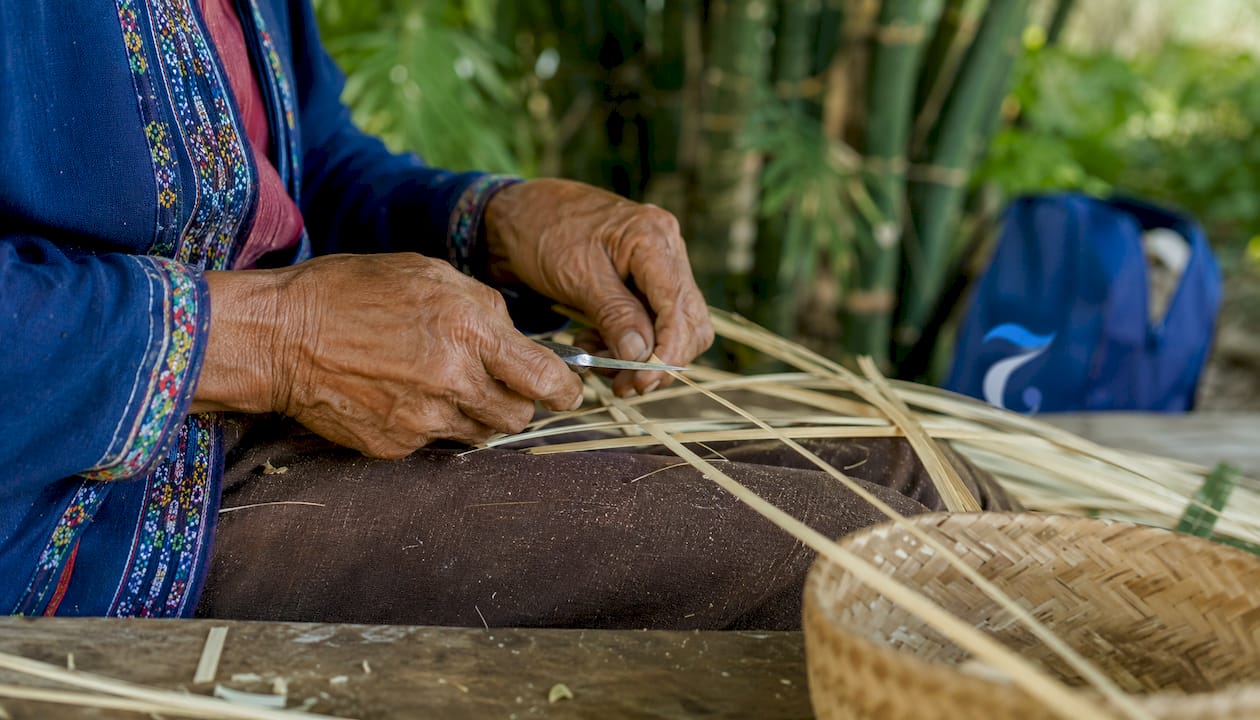
Wickerwork vocabulary centers on tawk (ตอก), the thin bamboo strips split and prepared for weaving. Related terms include jak (จัก) for the splitting action and san (สาน) for the weaving action. The compound jak-san describes the whole process. Pandanus leaf (bai toei, ใบเตย) is another common material with its own preparation vocabulary.
Lacquerware and metalwork
Lacquerware uses rak as both noun (the resin) and verb (to apply lacquer). The decorative gold-on-black technique lai rod nam (ลายรดน้ำ) literally means “pattern washed with water,” referring to the finishing step. In metalwork, chang ngoen (ช่างเงิน) is a silversmith and chang thong (ช่างทอง) a goldsmith. Northern Thailand’s Chiang Mai is historically associated with thom ngoen (ถมเงิน), nielloware inlaid with a black compound into engraved silver.
How expert guidance accelerates your learning
Mastering Thai folk arts vocabulary is not just about memorizing a word list. The terms connect to techniques, materials, and cultural occasions that give them meaning. Thai Explorer’s curriculum, aligned with CU-TFL standards, integrates this kind of contextual vocabulary into structured adult courses covering speaking, listening, reading, and writing.
Strategies that qualified native instructors recommend:
- Contextual pairing: Learn each craft term alongside a visual or physical example. Seeing actual mat mee fabric while learning the word builds retention far faster than flashcards alone.
- Sentence-level practice: Move from isolated words to short phrases immediately. “ผ้ามัดหมี่นี้สวยมาก” (pha mat mee ni suay mak — “This ikat fabric is very beautiful”) is a natural opener in any craft market conversation.
- Regional awareness: Note which terms are standard central Thai and which are regional. This matters for business travel to Chiang Mai versus Bangkok versus the Northeast.
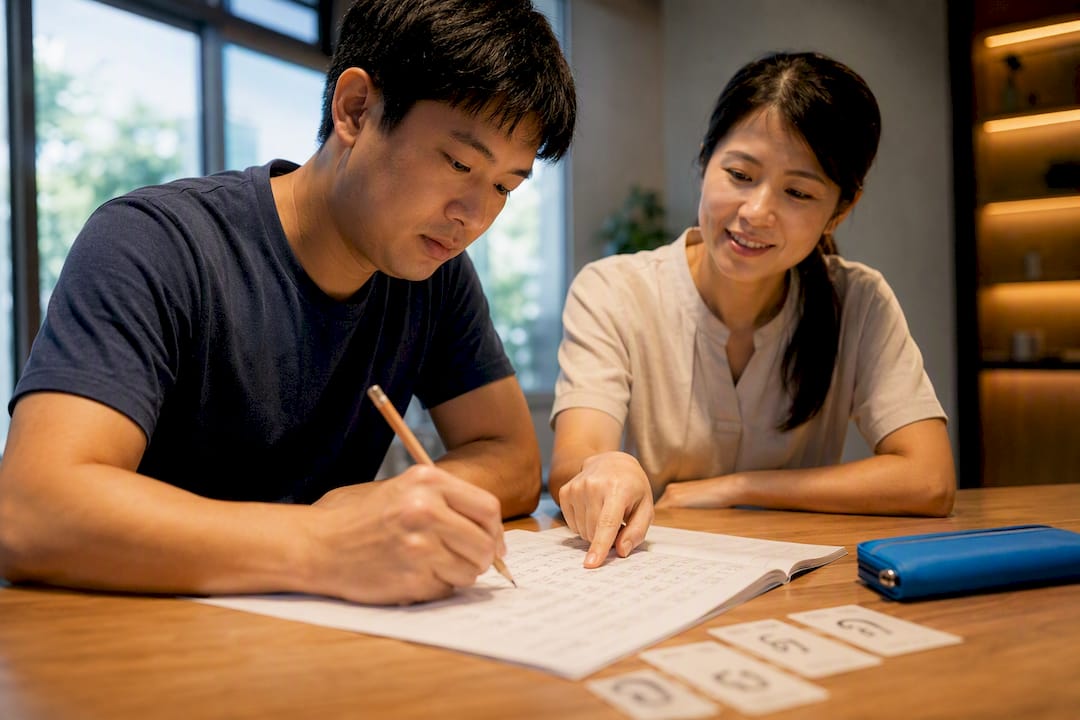
- Script practice: Reading craft labels and market signs in Thai script reinforces both vocabulary and reading skills. Thai writing exercises designed for adult learners are a practical starting point.
- Cultural immersion pairing: Combine vocabulary study with background on Thai craft traditions. Understanding pram-penee and khwam-chuea transforms a word list into a living cultural framework.
Online and group class formats work particularly well for this vocabulary domain because learners can discuss craft images, share market experiences, and practice the kind of descriptive language that comes up in professional sourcing or cultural tourism contexts. Flexible online Thai courses let US-based professionals study at their own pace without sacrificing the interactive practice that makes vocabulary stick.

Thai Explorer’s native instructors bring bilingual fluency in Thai and English, which means they can explain exactly why hatthasilp carries more prestige than hatthakam in a gallery context, or why calling a functional basket hatthasilp might raise an eyebrow. That kind of nuance is hard to get from a dictionary. Explore Thai Explorer’s structured Thai courses to build this vocabulary with proper cultural grounding.
Key takeaways on Thai folk arts vocabulary
Mastering Thai folk arts and crafts vocabulary requires learning the three-tier craft classification, the cultural values embedded in key terms, and the domain-specific language for each major craft category.
| Point | Details |
|---|---|
| Three core craft terms | Ngan fee mue, hatthakam, and hatthasilp mark the spectrum from general handwork to fine art craftsmanship. |
| Cultural terms matter | La-iad orn, pram-penee, and khwam-chuea give vocabulary its cultural weight in professional and conversational use. |
| Categories organize learning | Ten craft domains, from wickerwork to metalwork, each carry distinct material and technique vocabulary. |
| Regional variation is real | Northern terms like sala and northeastern ikat vocabulary differ from central Thai usage. |
| Contextual practice accelerates fluency | Pairing terms with images, sentences, and cultural context builds retention faster than word lists alone. |
FAQ
What are the three main Thai terms for craftsmanship?
Thai distinguishes ngan fee mue (general handwork), hatthakam (functional handicraft), and hatthasilp (fine art craftsmanship). Using the right term signals whether you are discussing a utilitarian object or a piece of artistic merit.
What does mat mee mean in Thai craft vocabulary?
Mat mee (มัดหมี่) is the Thai term for ikat, a resist-dyeing textile technique. It divides into warp ikat, weft ikat, and double ikat, each with its own specific terminology for the dyeing and weaving process.
Why does regional vocabulary matter for Thai crafts?
Thailand’s craft traditions vary significantly by region. Northern Thailand uses terms like sala for artisan that do not appear in central Thai, and northeastern weaving patterns carry names tied to local culture, so learners benefit from knowing which regional context they are working in.
How do I start learning Thai craft vocabulary as a US-based adult?
Begin with the three core craft classification terms, then build outward by craft category. Pairing vocabulary with cultural context and sentence-level practice, ideally with a qualified native instructor, accelerates both retention and conversational confidence.
What is la-iad orn and why does it matter?
La-iad orn (ละเอียดอ่อน) means “detailed and gentle” and describes the artisan’s mindset in Thai craft culture: patient, precise, and focused on aesthetic pleasure. Recognizing this term in conversation signals cultural literacy well beyond basic vocabulary.