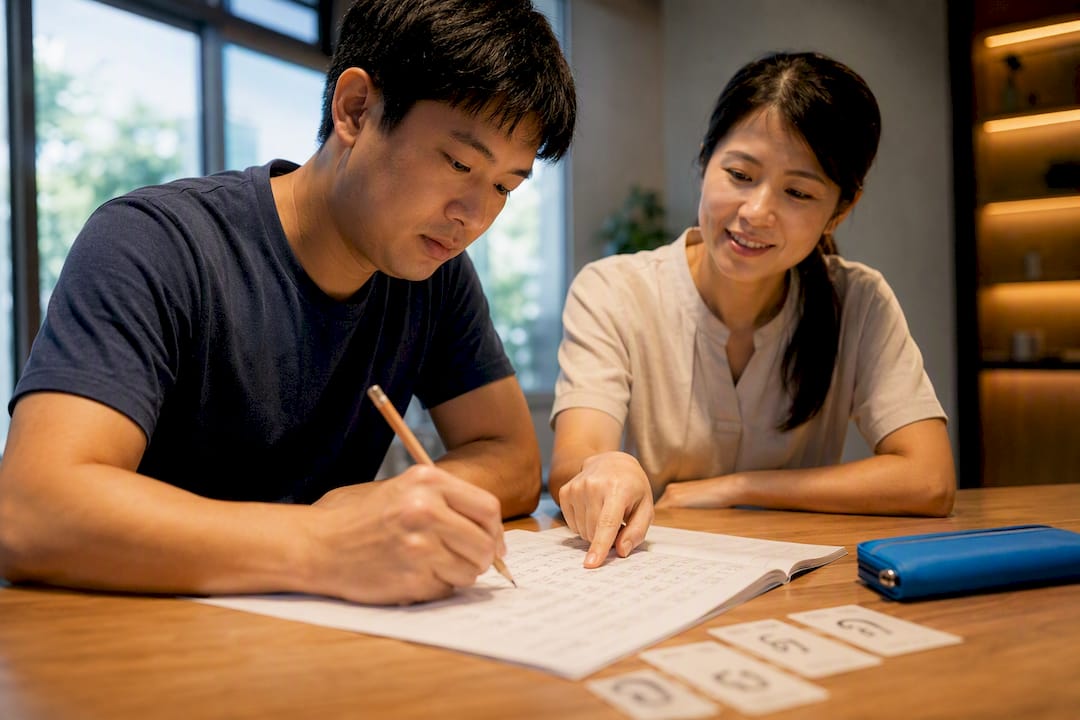
TL;DR:
- Interactive Thai lessons focus on active speaking, real-life scenarios, and cultural engagement.
- Formats include group, private, and online classes tailored to different schedules and learning preferences.
- Techniques like role plays, pronunciation games, and immediate feedback boost confidence and language retention.
Most people picture language classes as rows of silent students copying words from a whiteboard while a teacher drones through grammar rules. That image puts a lot of potential learners off before they even start. Interactive Thai lessons turn that picture completely upside down. Instead of passive note-taking, you’re speaking, reacting, playing, and engaging with real Thai culture from the very first class. This guide breaks down exactly what makes a Thai lesson interactive, which formats work best, and how Singapore learners can use these methods to progress faster and enjoy every step of the journey.
Table of Contents
- What is an interactive Thai lesson?
- Key formats of interactive Thai lessons
- Core techniques that drive engagement
- Benefits of interactive Thai lessons for Singapore learners
- How to get started with interactive Thai lessons in Singapore
- Why interactive lessons outshine traditional Thai classes
- Ready to try interactive Thai lessons?
- Frequently asked questions
Key Takeaways
| Point | Details |
|---|---|
| Interactive learning defined | Interactive Thai lessons use real conversation, cultural activities, and engaging exercises to make learning fun and effective. |
| Flexible lesson formats | You can choose group, private, or online interactive Thai classes tailored to your needs. |
| Better results for Singapore learners | Interactive methods deliver faster progress, more confidence, and stronger cultural understanding for learners in Singapore. |
| Easy to get started | Joining a trial class is a simple way to experience interactive Thai lessons and see immediate benefits. |
What is an interactive Thai lesson?
Traditional Thai lessons often follow a predictable pattern: the teacher explains a rule, writes vocabulary on the board, and students copy it down. There’s little real conversation, almost no cultural context, and feedback comes days later on a written test. For many learners, this approach works fine on paper but falls apart the moment they step into a real-world Thai setting like a Bangkok market or a business meeting in Chiang Mai.
An interactive Thai lesson flips this model entirely. Interactive Thai lessons are designed to actively engage students with real communication and cultural activities rather than passive observation. The student becomes the main character in every session, not just an audience member.
Here are the core features that define a truly interactive Thai lesson:
- Student-driven participation: You speak, respond, and create sentences rather than just listening.
- Real-life scenarios: Lessons simulate situations you’d actually face, like ordering food, asking for directions, or navigating a hotel check-in.
- Games and competitions: Pronunciation games, vocabulary challenges, and quiz-style activities keep energy levels high.
- Role plays and dialogues: Paired or group conversations let you practice natural speech rhythms.
- Cultural immersion moments: Learning about Thai festivals, food, and social customs alongside the language itself.
- Immediate feedback: Your instructor corrects pronunciation and grammar in real time, so errors don’t become habits.
The difference is immediate. When you practice a trial Thai lesson using interactive methods, you leave the room having actually spoken Thai, not just having read about it.
“The best language learning happens when students forget they are studying and simply start communicating.”
One area where many learners stumble is Thai grammar basics, which can feel intimidating on a page but become much clearer when practiced through real conversation. Interactive lessons bridge that gap naturally.
Pro Tip: When evaluating a Thai course, ask the school to show you a sample activity or lesson segment. If the class involves you speaking within the first five minutes, that’s a strong sign it’s genuinely interactive.
Key formats of interactive Thai lessons
With a clear idea of what makes a lesson interactive, let’s look at the different ways you can experience these lessons.
Interactive formats include group, private, and online lessons, each offering unique engagement and flexibility depending on your schedule, budget, and learning personality. Understanding the differences helps you choose what fits your goals best.
| Format | Interaction style | Best for | Flexibility |
|---|---|---|---|
| Group classes | Peer to peer and instructor led | Social learners, beginners | Fixed schedule |
| Private lessons | One on one, instructor focused | Targeted goals, fast progress | Highly flexible |
| Online classes | Live digital interaction | Busy schedules, remote learners | Very flexible |
Each format has real strengths. Group classes expose you to different accents, speaking speeds, and personalities, which mirrors the unpredictability of real Thai conversations. You learn to listen actively and respond quickly. The social energy in a group session is genuinely motivating. Many learners find that friendly peer competition pushes them to prepare more thoroughly.
Private lessons, on the other hand, concentrate every minute on your specific gaps. If you struggle with tones, your instructor can dedicate entire segments to tone drills and correction without moving on before you’re ready. Research consistently shows that personalized instruction accelerates language acquisition by removing the bottleneck of group pacing.

Online classes have grown enormously in popularity and sophistication. Live video sessions with breakout rooms, digital flashcard tools, and screen-shared activities replicate almost everything a physical classroom offers, with the added convenience of joining from your home or office in Singapore.
Here’s what to consider when choosing a format:
- Your schedule: Can you commit to fixed weekly group sessions, or do you need flexible booking?
- Your personality: Do you thrive with peer interaction, or do you prefer focused one on one time?
- Your budget: Group classes are generally more affordable, while private lessons maximize efficiency.
- Your goal: Traveling soon? A private intensive works faster. Building long-term fluency? Group classes with cultural depth are ideal.
Singapore learners can also access SkillsFuture Thai language courses, which make structured interactive learning even more financially accessible. Using SkillsFuture credits to fund your Thai classes is a smart move that many learners in Singapore overlook entirely.
Core techniques that drive engagement
After covering lesson formats, it’s important to focus on the specific techniques that make these lessons truly engaging.
Techniques such as speaking practice, cultural activities, and technology integration are proven to boost engagement and retention in Thai lessons far beyond what repetitive drills achieve. Let’s look at exactly how each technique works in practice.
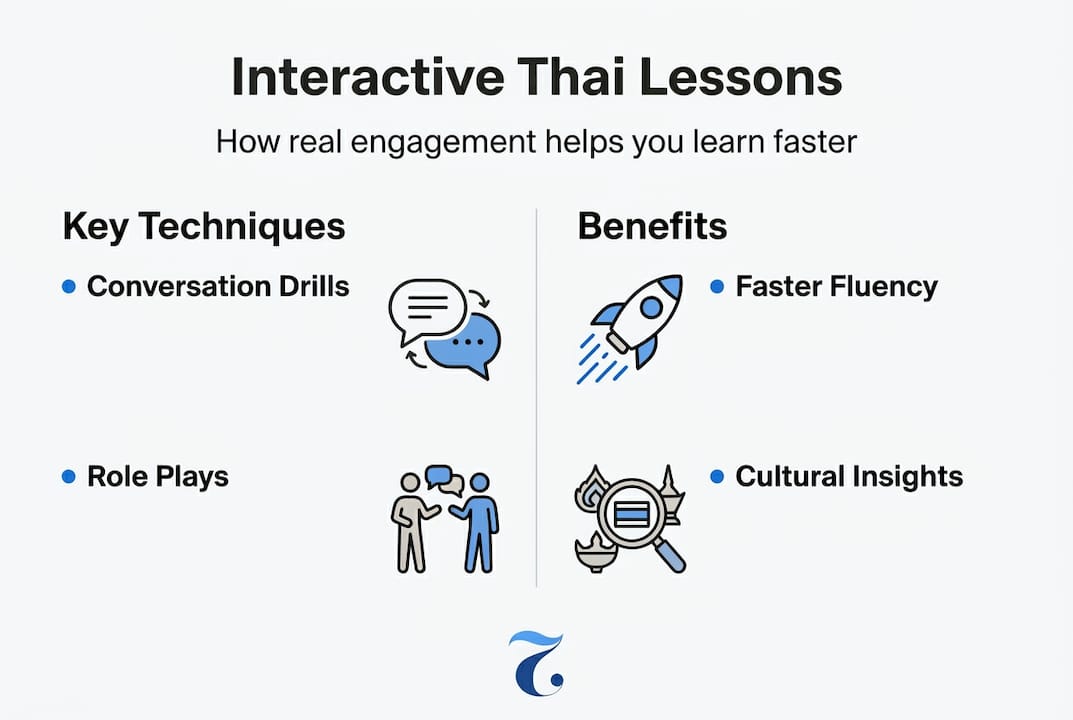
- Conversation drills with purpose: Unlike mindless repetition, purposeful drills place vocabulary and grammar inside meaningful contexts. Instead of repeating “sawadee krap” twenty times, you practice an entire greeting exchange with different personas, a shop owner, a taxi driver, a new colleague.
- Role play scenarios: Instructors create realistic scenes, checking into a hotel, ordering a meal, navigating a disagreement politely, and students act them out. This technique forces you to think on your feet and builds confidence for real situations.
- Pronunciation games: Thai is a tonal language with five distinct tones. Games that isolate and practice these tones in a playful setting reduce anxiety and accelerate accuracy. Competitive formats like tone-matching challenges make difficult material genuinely fun.
- Listening exercises: Authentic audio clips, Thai songs, short podcast segments, and native-speed dialogues train your ear to process real Thai rather than slow, classroom-paced speech.
- Cultural discussions: Understanding why Thais remove shoes before entering a home, how the wai greeting works, or why certain words are reserved for royalty makes the language feel alive rather than mechanical.
- Digital tools and quizzes: Apps, online flashcard platforms, and in-class quiz tools like interactive polls give instant feedback and help learners track their own progress session by session.
| Technique | Primary skill built | Engagement level |
|---|---|---|
| Conversation drills | Speaking fluency | High |
| Role plays | Real-world confidence | Very high |
| Pronunciation games | Tonal accuracy | High |
| Listening exercises | Comprehension speed | Medium to high |
| Cultural discussions | Contextual understanding | High |
| Digital quizzes | Vocabulary retention | High |
One often overlooked skill is writing in Thai. Interactive lessons incorporate script practice through games and storytelling rather than rote copying, making even the beautiful but complex Thai alphabet approachable.
Pro Tip: Combine speaking and listening in every session. When you speak immediately after a listening exercise, your brain links the sounds you heard to your own vocal production, which dramatically accelerates natural pronunciation.
Benefits of interactive Thai lessons for Singapore learners
Knowing the techniques, let’s explore why interactive lessons deliver such strong results for learners in Singapore.
Interactive approaches lead to better language confidence and cultural adaptability, especially for Singapore learners preparing for travel or professional engagements in Thailand. The benefits go well beyond being able to say a few phrases correctly.
Here’s what learners in Singapore consistently gain from interactive Thai lessons:
- Real conversational ability: You leave each class having spoken Thai in context, not just having memorized it. This makes conversations with Thai colleagues, friends, or vendors feel natural and rewarding much sooner.
- Stronger listening comprehension: Because interactive lessons use varied audio and live native speech, your ear adjusts to the real rhythm and pace of Thai, not the slow, artificial version found in textbooks.
- Deeper cultural appreciation: Singapore has strong trade and travel ties with Thailand. Understanding Thai culture and etiquette beyond surface-level tourism phrases makes a genuine difference in professional relationships and social interactions.
- Higher motivation and lower dropout rates: Studies on language learning consistently show that learners in active, participatory environments stay enrolled longer and reach their goals at a higher rate than those in passive settings.
- Better memory retention: Active recall, which is built into every role play and quiz, is one of the most powerful memory tools in learning science. When you retrieve and use information rather than simply reading it, it sticks far longer.
- Adaptability in unpredictable situations: Because interactive lessons deliberately introduce unexpected questions and conversations, learners get comfortable with not knowing exactly what comes next, which is exactly what real life feels like.
“Learning Thai interactively helps you speak more naturally and confidently, because you’ve already practiced the awkward moments in a safe environment before they happen in real life.”
For Singapore professionals with Thai business connections, or families with roots in Thailand, or travelers planning their next trip to Bangkok or Phuket, these benefits translate directly into better experiences and stronger relationships.
How to get started with interactive Thai lessons in Singapore
To wrap up, let’s talk about how you can take your first step toward an interactive Thai learning journey.
Trial lessons, course overviews, and clear learning goals make starting much easier than most people expect. Here’s a practical roadmap to get you from zero to your first interactive Thai session without overthinking it.
- Research reputable schools or platforms in Singapore: Look for schools with qualified native Thai instructors, structured curricula, and clear course pathways. Check whether the school aligns its programs with recognized standards like the CU-TFL, which measures real proficiency across all four language skills.
- Book a trial lesson: A trial session lets you experience the teaching style, instructor personality, and lesson format before you commit to a full course. It also gives you an honest benchmark of where your Thai currently sits.
- Set specific, meaningful goals: “Learn Thai” is too vague. “Be able to have a basic conversation at a Thai restaurant in three months” or “Pass the CU-TFL Level 1 within six months” gives your learning direction and keeps you motivated when progress feels slow.
- Use supplementary resources actively: Flashcard apps, Thai YouTube channels, simple Thai podcasts, and even Thai cooking shows all reinforce what you learn in class. Check out tips for quick Thai mastery to build a smart daily practice habit outside the classroom.
- Ask questions freely: Interactive lessons only work if you participate fully. Ask your instructor to repeat, correct you, or explain a cultural point. Native instructors who are bilingual in Thai and English make this especially easy since there’s no communication barrier.
- Track your progress consistently: Keep a simple journal of new words, phrases, and cultural insights from each lesson. Reviewing it weekly shows you how far you’ve come and reveals patterns in your learning gaps.
Pro Tip: Consistency matters far more than intensity. Two to three interactive sessions per week with active daily practice for even 15 minutes will outperform one long cramming session every weekend. Your brain needs regular exposure to build lasting neural pathways for a new language.
Why interactive lessons outshine traditional Thai classes
Here’s a real-world perspective that often goes unsaid in language learning discussions: the biggest obstacle for most Thai learners isn’t grammar or tones. It’s the fear of sounding foolish. Traditional classroom setups reinforce this fear because they treat every mistake as a correction event rather than a learning moment.
Interactive lessons work partly because they normalize imperfection. When everyone in the room is laughing through a pronunciation game or struggling together through a role play, the social pressure evaporates. We’ve seen learners at Thai Explorer who spent years in passive textbook classes suddenly find their voice within the first month of interactive sessions.
There’s also something deeply practical about cultural immersion woven into language instruction. Understanding learning Thai efficiently isn’t just about hours spent studying. It’s about the quality of those hours and whether your learning environment pushes you to produce language actively. Passive learners often plateau early because their brain never gets challenged to retrieve and apply what it knows.
The honest truth is that interactive methods aren’t a trend or a marketing label. They reflect how humans actually acquire language, through use, feedback, and genuine communication. Traditional methods teach you about Thai. Interactive lessons teach you to speak it.
Ready to try interactive Thai lessons?
If you’re inspired to learn Thai the engaging way, here’s how Thai Explorer can help.
At Thai Explorer, conveniently located right above Tanjong Pagar MRT, we’ve built our entire teaching approach around active participation and cultural understanding. Whether you’re a complete beginner or already managing basic conversations, our Thai course options are structured to meet you exactly where you are.
If you prefer focused, personalized attention, our private Thai lessons let you set the pace and target the exact skills you need. Not sure which format suits you yet? The easiest way to find out is to book a trial lesson and experience interactive Thai teaching first-hand. No pressure, just your first real taste of what Thai learning can actually feel like.
Frequently asked questions
What activities make a Thai lesson interactive?
Interactive Thai lessons often include speaking practice, role plays, games, group discussions, and cultural demonstrations that put practical communication at the center of every activity.
Can I learn Thai interactively online?
Yes, many courses offer online interactive lessons with live real-time activities, instructor feedback, and digital tools that replicate the energy of an in-person class.
What are the benefits for Singapore learners?
Singapore learners gain real-world language skills, cultural awareness, and greater motivation, with interactive lessons significantly boosting confidence and adaptability for travel, work, and personal connections in Thailand.
How do I join an interactive Thai class?
The simplest first step is signing up for a trial Thai lesson so you can experience the interactive teaching style and assess which course format best matches your goals before committing.