TL;DR:
- Structured cooperative activities that require active production, cultural integration, and clear assessment produce measurable language gains in Thai classrooms. Activities like group investigation, idiom games, cultural projects, and role-plays foster authentic communication and cultural confidence for adult learners. Incorporating explicit evaluation components ensures learners recognize their progress and retain language and cultural knowledge effectively.
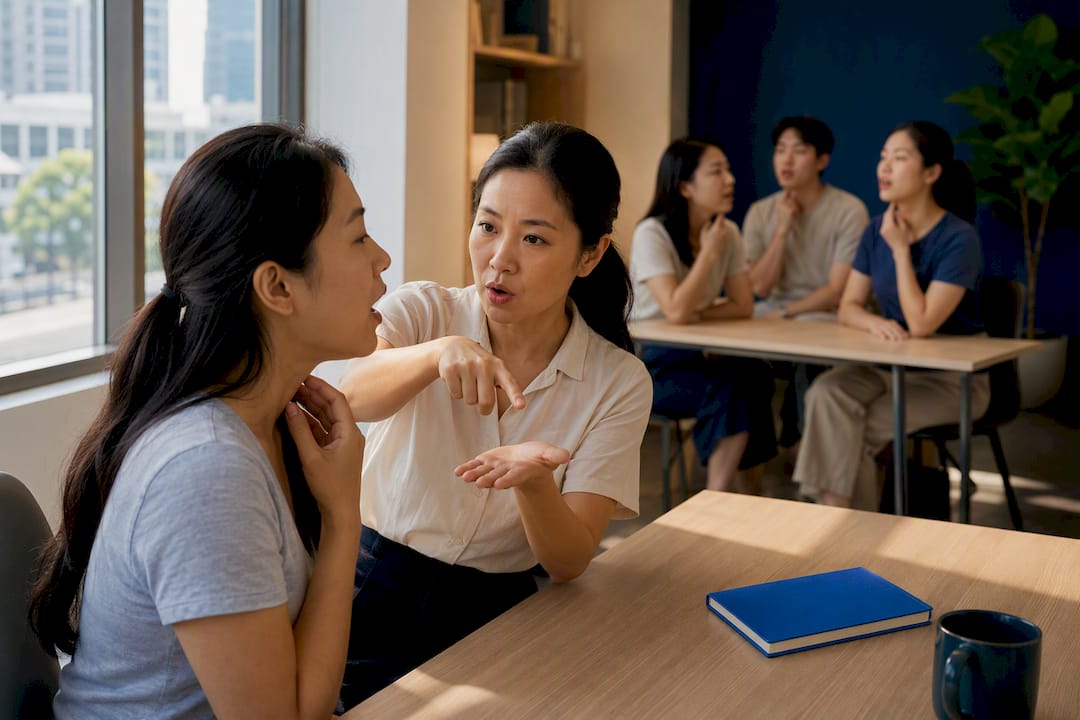
Common Thai classroom activities are structured learning exercises that combine cooperative group work, cultural immersion, games, and role-play to develop language fluency and cultural competency simultaneously. The most effective activities go beyond vocabulary drills. They place learners inside the language, requiring them to speak, negotiate meaning, and apply cultural knowledge in real time. Research on Thai language instruction confirms that cooperative learning methods produce measurable gains in both achievement and learner satisfaction, making activity design one of the highest-leverage decisions any Thai language educator can make.
1. Common Thai classroom activities: what the research actually shows
The evidence base for Thai language classroom activities is stronger than most educators realize. A study comparing pre-test and post-test scores among Mathayomsuksa 3 students found that post-test means nearly doubled after structured cooperative learning activities, rising from 8.79 to 16.71. That is not a marginal improvement. It signals that the structure of the activity matters as much as the content being taught.
The types of Thai classroom activities that produce these results share three features: they require active participation from every learner, they integrate cultural context rather than treating it as optional background, and they include a clear assessment component so both teacher and student can measure progress. Activities that lack any one of these features tend to be entertaining but not particularly effective for language acquisition.
For adult learners specifically, this matters because motivation is tied to visible progress. When an activity produces a measurable outcome, such as completing a concept map, winning a proverb game, or successfully navigating a role-play scenario, learners leave the session with a concrete sense of what they have gained. That sense of progress is what keeps adult students enrolled and engaged over time.
- Active participation from every learner, not just the most confident speakers
- Cultural context woven into the activity structure, not added as an afterthought
- Assessment components that make learning gains visible to both teacher and student
Pro Tip: Before designing any classroom activity, write down the specific language output you expect from learners at the end. If you cannot describe what students will say, write, or produce, the activity needs more structure.
2. Group investigation and concept mapping
Group Investigation (G.I.) is a cooperative learning model where small teams research a shared topic, then present findings to the class. When combined with concept mapping, it becomes one of the most effective group learning formats available for Thai language instruction. The concept map forces learners to organize vocabulary and grammatical relationships visually, which deepens retention beyond what note-taking alone achieves.

The practical structure works as follows. The teacher introduces a Thai language topic, such as figurative language or formal versus informal registers. Groups of four to six learners receive a concept map template and a set of source materials in Thai. Each group member takes a defined role: researcher, recorder, presenter, or language checker. The group completes the map collaboratively, then presents their findings using Thai vocabulary and sentence structures from the lesson.
Concept mapping across lessons supported post-test score improvements and high satisfaction ratings in structured Thai language research. The satisfaction component is significant because adult learners who enjoy the process are more likely to practice outside class, compounding the in-class gains.
Pro Tip: Assign a “language checker” role within each group whose sole job is to flag when a member switches to English unnecessarily. This single role change dramatically increases Thai output per session.
3. Thai idiom and proverb games
Game-based learning in Thai classrooms is most effective when it targets cultural knowledge alongside language skills. Thai idiom and proverb card games are among the best examples of Thai classroom games that accomplish both goals at once. The format is competitive enough to create energy in the room, but structured enough to produce real learning outcomes.
The standard procedure for a Thai idiom game runs as follows:
- Divide the class into groups of four to six learners.
- Display an image or partial phrase representing a Thai proverb or idiom.
- Each group has a timed window, typically 60 to 90 seconds, to identify the proverb and prepare a spoken explanation.
- One designated speaker per group delivers the explanation in Thai.
- Points are awarded for correct identification, accurate pronunciation, and quality of cultural explanation.
- After all rounds, a brief post-game discussion asks learners to use each proverb in an original sentence.
The post-game application step is what separates this from entertainment. Explicit scoring and follow-up assessment reinforce teamwork and prevent the activity from becoming purely recreational. Learners who can explain a proverb in context have internalized it in a way that flashcard memorization cannot replicate.
Pro Tip: Record the spoken explanations on a phone or tablet. Replaying them at the start of the next class session gives learners immediate feedback on pronunciation and fluency without requiring formal testing.
4. Hands-on cultural projects in the Thai classroom
Cultural activities in Thailand’s educational tradition treat cooking, craft, and ceremony as legitimate vehicles for language learning. For adult learners, hands-on cultural projects work because they attach new vocabulary to physical actions and sensory experiences, which creates stronger memory encoding than reading or listening alone.
Making Nam Khaeng Sai, Thai shaved ice, is a well-documented example. Primary students who participated in cooking-based cultural projects developed life skills, cultural appreciation, and increased confidence alongside language exposure. The same principle scales directly to adult learners, who bring stronger prior knowledge and can engage with more complex cultural commentary during the activity.
For a Thai language classroom, a hands-on cultural project session might include:
- Pre-activity vocabulary work: Learners study ingredient names, preparation verbs, and measurement terms in Thai before the session begins.
- During-activity narration: Each learner describes what they are doing in Thai as they complete each step, with the teacher providing real-time correction.
- Cultural commentary: The teacher explains the social context of the dish, including regional variations, festival associations, and etiquette around serving and eating.
- Post-activity reflection: Learners write or speak a short summary of the experience in Thai, using the vocabulary from the pre-activity phase.
The cultural fluency that comes from these projects is qualitatively different from what textbook cultural notes provide. Learners who have made a dish, decorated a craft, or participated in a ceremony simulation carry that knowledge into real-world Thai interactions with far greater confidence.
5. Role-play and active learning simulations
Role-play is one of the most researched and consistently recommended engaging classroom exercises in Thai language education. It works because it forces learners to produce language under mild social pressure, which mirrors the conditions of real-world communication more closely than any other classroom format.
Active learning in Thai classrooms includes small group discussions, peer teaching, problem-solving tasks, and role-play scenarios that engage both sensory and cognitive networks simultaneously. This multi-channel engagement is why active learning boosts retention more effectively than passive instruction. Learners are not just hearing Thai. They are using it to accomplish a social goal.
Practical role-play scenarios for adult Thai learners include:
- Simulated market negotiation: One learner plays a vendor, another plays a buyer, and the class observes and evaluates the exchange for accuracy and politeness register.
- Thai festival reenactment: Small groups prepare and perform a short scene set during Songkran or Loy Krathong, incorporating culturally appropriate greetings, requests, and expressions.
- Business meeting simulation: Learners practice formal Thai registers in a mock meeting context, which is directly relevant to corporate learners.
- Restaurant ordering sequence: A classic but effective scenario that covers polite requests, food vocabulary, and number use in a single exchange.
“Active learning pedagogies develop practical competencies rather than passive familiarity with language. The goal is not to know Thai. It is to use Thai.” — adapted from curriculum research on pre-service Thai teachers
A 16-hour active learning intervention in Academic Year 2025 produced excellent competency levels in organizing and evaluating classroom activities among Thai language pre-service teachers. This finding matters for practicing educators because it confirms that structured active learning is a teachable, measurable skill, not just a personality trait of naturally engaging instructors.
6. How these activities compare in practice
Choosing the right activity depends on class size, available resources, learning objectives, and the proficiency level of your learners. The table below compares the five main activity types covered in this article across the dimensions that matter most for adult Thai language instruction.
| Activity type | Primary skill focus | Cultural integration | Best class size | Assessment potential |
|---|---|---|---|---|
| Group Investigation with concept mapping | Reading, vocabulary, speaking | Moderate | 12 to 30 learners | High (pre/post-test, map review) |
| Idiom and proverb card games | Speaking, cultural knowledge | High | 8 to 24 learners | Moderate (post-game application) |
| Hands-on cultural projects | Speaking, vocabulary, listening | Very high | 6 to 20 learners | Moderate (narration, reflection) |
| Role-play simulations | Speaking, listening, pragmatics | High | 6 to 30 learners | High (peer and teacher feedback) |
| Active learning discussions | All four skills | Moderate | 8 to 25 learners | Moderate (observation, output review) |
For adult learners in conversational or business Thai courses, role-play and group investigation deliver the strongest return because they produce the most authentic language output. Idiom games and cultural projects work best as supplementary sessions that reinforce vocabulary and cultural confidence built in core lessons. The practical guide for adult learners at Thai Explorer covers how to sequence these methods across a full course arc.
Key takeaways
The most effective Thai classroom activities combine structured cooperative learning, cultural immersion, and clear assessment to produce measurable language gains and lasting cultural competency.
| Point | Details |
|---|---|
| Cooperative learning doubles scores | Group Investigation with concept mapping nearly doubled post-test scores in structured Thai language research. |
| Games need structure to teach | Proverb and idiom games produce real learning only when they include timed speaking turns, scoring, and post-game application. |
| Cultural projects build confidence | Hands-on activities like cooking Thai dishes attach vocabulary to physical experience, creating stronger memory and cultural confidence. |
| Role-play mirrors real communication | Simulations and role-play force learners to produce Thai under social pressure, which is the closest classroom analog to real-world use. |
| Assessment makes progress visible | Every activity type becomes more effective when paired with a clear output or assessment component that learners can see and measure. |
What I have learned from years of watching Thai classrooms work and fail
The single biggest mistake I see educators make with Thai classroom activities is treating engagement as the goal. An activity that generates laughter and energy but produces no measurable language output is not a good lesson. It is a good break. The distinction matters enormously for adult learners who are paying for their time and expect to leave each session with something they could not do before.
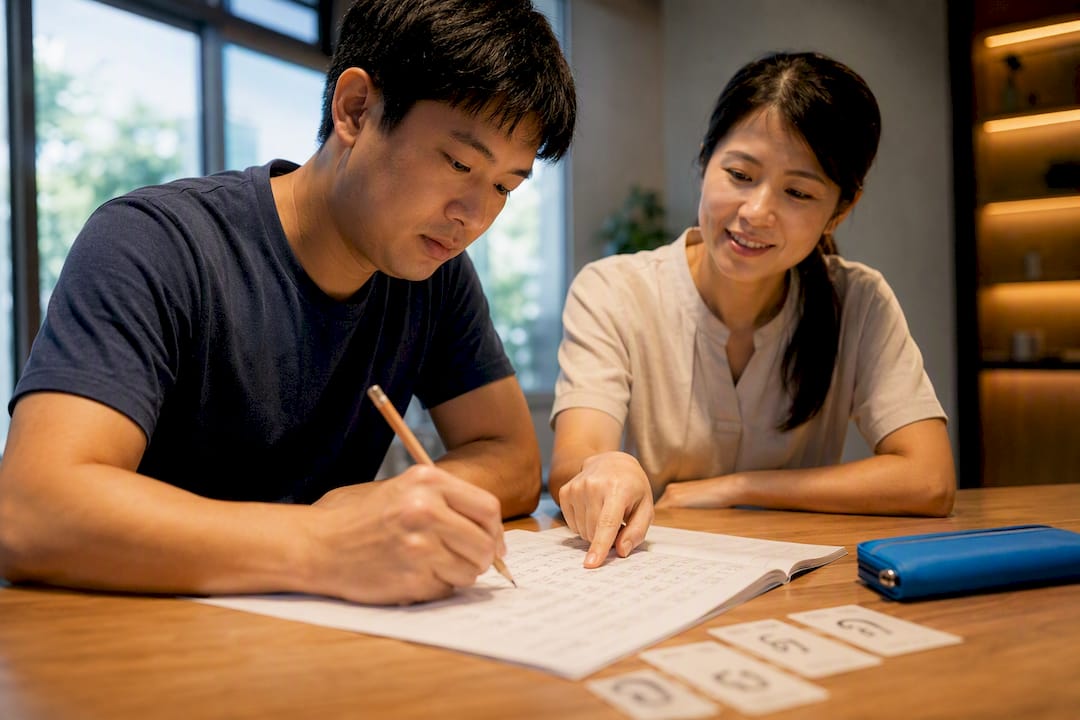
The activities that consistently produce results share one quality: they require learners to produce Thai, not just receive it. Concept maps require written Thai. Proverb games require spoken Thai under time pressure. Role-play requires Thai in a social context. Cultural projects require Thai narration and reflection. Every one of these formats puts the learner in the position of producer rather than consumer, and that shift is where acquisition actually happens.
I also want to push back on the idea that cultural activities are a nice-to-have supplement. In my experience, they are often the fastest route to genuine fluency. A learner who has navigated a Songkran role-play or explained a Thai proverb to a classmate has done something that no amount of grammar drilling can replicate. They have used the language to communicate something that matters culturally, and that experience rewires their relationship with Thai in a way that sticks.
The practical implication for teachers is this: do not save cultural activities for special occasions. Build them into the regular rotation, pair them with explicit vocabulary preparation, and follow them with structured reflection. That combination is what separates a memorable class from a transformative one.
— Paul
Explore Thai language courses built around these methods
Thai Explorer offers adult Thai language courses in Singapore that put these exact activity types at the center of every lesson. Whether you are learning for travel, professional communication, or cultural fluency, the curriculum at Thai Explorer integrates cooperative learning, role-play, and cultural immersion into a structured progression aligned with the CU-TFL proficiency framework. Classes are available in group, private, and online formats, with sessions held at 10 Anson Road, #22-07, International Plaza, Singapore 079903, directly above Tanjong Pagar MRT. Explore the full range of adult Thai courses or browse Thai language courses in Singapore to find the format that fits your schedule and goals.
FAQ
What are the most common Thai classroom activities for adults?
The most common Thai classroom activities for adult learners include cooperative group investigations with concept mapping, idiom and proverb card games, role-play simulations, and hands-on cultural projects. Each format targets speaking, vocabulary, and cultural knowledge simultaneously.
Do Thai classroom games actually improve language skills?
Yes, but only when structured correctly. Proverb games with scoring and post-game application questions produce measurable cultural knowledge and speaking gains. Games without explicit objectives and follow-up assessment tend to improve motivation without improving language output.
How does role-play support Thai language learning?
Role-play forces learners to produce Thai under mild social pressure, which mirrors real-world communication more closely than passive exercises. Active learning research confirms that role-play and simulation develop practical language competencies that transfer directly to real conversations.
What cultural activities work best in a Thai language classroom?
Hands-on projects tied to Thai food, festivals, or traditions work best because they attach new vocabulary to physical and sensory experiences. Activities like preparing Thai dishes or reenacting festival scenarios produce both language output and cultural confidence that textbook study alone cannot replicate.
How do I measure learning gains from interactive Thai lessons?
Pair every activity with a pre-activity vocabulary check and a post-activity output task, such as a short spoken summary or written reflection in Thai. Structured pre and post-tests used in cooperative learning research produced the clearest evidence of achievement gains and are straightforward to adapt for any classroom format.