TL;DR:
- Thai cultural activities include festivals, rituals, and art forms rooted in community, religion, and tradition. Engaging directly in experiences like cooking classes or temple visits provides deeper understanding than passive observation. Learning Thai language enhances participation and respect within these cultural practices.
Thai cultural activities are defined as the living practices, festivals, rituals, and art forms through which Thai communities express their shared heritage, beliefs, and identity. From the nationwide water celebrations of Songkran to the quiet reverence of temple merit-making, these activities blend Buddhist devotion, Brahmanical ceremony, and animistic tradition into a single, coherent way of life. The most recognized examples of Thai cultural activities go far beyond tourist spectacles. They are community events rooted in agricultural cycles, royal history, and spiritual practice. Thai Explorer, a Thai language school in Singapore, helps learners understand these traditions from the inside out, not just as observers.
What are the best examples of Thai cultural activities?
Thai cultural activities span festivals, performing arts, spiritual rituals, and hands-on crafts. The activities below represent the full range, from nationally celebrated events to regional traditions that most visitors never encounter.
1. Songkran: the Thai New Year water festival
Songkran draws millions into both sacred cleansing rituals and celebratory water fights every april. The festival runs april 13–15 nationwide, with Chiang Mai and Bangkok hosting the largest gatherings. The sacred core involves pouring scented water over Buddha images and the hands of elders as a gesture of respect and renewal. The street water fights came later and are now the most photographed element, but they are secondary to the religious practice. Understanding both layers makes the experience far richer.
2. Loy Krathong and Yi Peng: floating lights and sky lanterns
Loy Krathong and Yi Peng occur together in november, with 2026’s date falling on november 5. Participants float small decorated baskets, called krathong, on rivers and canals to release misfortune and make merit. In Chiang Mai, the Yi Peng tradition adds thousands of paper sky lanterns released simultaneously into the night sky. The visual effect is extraordinary, but the intent is deeply personal. Each lantern carries a wish or a letting go of something the sender no longer wants to carry.
3. Chinese New Year in Bangkok’s Chinatown
Bangkok’s Yaowarat district hosts one of Southeast Asia’s most energetic Chinese New Year celebrations every january or february. The streets fill with lion dances, firecracker displays, and food stalls serving traditional dishes. Thai-Chinese families participate in ancestral offerings and temple visits alongside the street festivities. This event reflects Thailand’s long history of Chinese immigration and cultural integration. It is a strong example of how Thai cultural life absorbs and honors multiple ethnic traditions.
4. Phi Ta Khon: the Ghost Festival of Dan Sai
Phi Ta Khon is a regional festival held in Dan Sai, Loei Province, typically in june or july. Participants wear elaborate ghost masks and colorful costumes, parading through the town in a celebration that mixes Buddhist merit-making with animistic spirit beliefs. The masks are handmade from woven bamboo and painted with bold patterns, and each one is unique. The festival commemorates a story from the life of the Buddha and serves as a communal act of gratitude. Travelers who make the trip to Loei encounter a tradition almost entirely untouched by commercial packaging.
5. Nang Yai and Nang Talung shadow puppetry
Nang Yai shadow puppetry is a royal temple art that uses large leather puppets to enact scenes from the Ramakian, Thailand’s version of the Hindu Ramayana epic. Performances are linked to temples like Wat Khanon and Wat Sawang Arom, where the tradition has been preserved for centuries. A live PhiPat orchestra accompanies the narrators, creating a full sensory experience. Nang Talung, the southern folk version, uses smaller, jointed puppets and incorporates humor and local commentary. Both forms carry moral and religious teaching inside their storytelling.
Pro Tip: Visit Wat Khanon in Ratchaburi Province to see one of the few remaining Nang Yai troupes perform in a genuine temple setting. This is not a tourist show. It is a living ritual.
The puppet artistry itself requires specific animal leathers prepared under conditions of ritual purity, reflecting the sacred status of the craft. Preservation is a serious challenge, as fewer young artisans are learning the full process. Attending a performance or visiting a workshop directly supports the continuation of this tradition.
6. Khon masked dance drama
Khon is Thailand’s classical masked dance theater, performed to narrate episodes from the Ramakian. Dancers wear elaborate gilded costumes and expressive masks, moving in precise, codified gestures that communicate character and emotion without words. The form was historically performed exclusively for the royal court. UNESCO recognized Khon as an Intangible Cultural Heritage in 2018, which brought renewed public attention to the art. Watching a full Khon performance at the National Theater in Bangkok gives you direct access to a tradition that shaped Thai royal culture for centuries.
7. The Royal Ploughing Ceremony
The Royal Ploughing Ceremony blends Brahmanical ritual with practical agricultural meaning, held annually in may at Sanam Luang in Bangkok. Sacred oxen are presented with trays of food, and the items they choose are interpreted as predictions for the coming harvest season. Crowds then rush to collect the blessed rice seeds scattered during the ceremony, believing the seeds confer agricultural fortune. The event connects the Thai monarchy, religious tradition, and farming communities in a single public act. It is one of the clearest examples of how Thai cultural activities serve practical community purposes, not just ceremonial ones.
8. Phi Khon Nam: the rain prayer festival
Chiang Mai’s Phi Khon Nam festival features masked dances performed to pray for rain, celebrated as a communal heritage event in Chiang Khan village in Loei Province. Participants of all ages and genders wear handcrafted masks decorated with traditional patterns and dance together in a collective act of gratitude and hope. The festival marks the transition into the agricultural growing season. It is a strong example of how Thai communities use performance and ritual to engage with the natural world. The masks themselves are considered objects of cultural value and are often displayed in local museums after the event.
9. The Vegetarian Festival in Phuket
Phuket’s Vegetarian Festival, held in october, is one of the most intense cultural events in Thailand. Participants of Chinese-Thai descent observe nine days of strict vegetarian diet, white clothing, and spiritual purification. The festival includes street processions where devotees perform acts of ritual piercing as demonstrations of faith and spiritual protection. The practice reflects the Taoist and Buddhist beliefs of Phuket’s Hokkien Chinese community. For visitors, it is a confronting and deeply memorable example of how faith shapes public life in Thai communities.
10. Thai culinary experiences and cooking classes
Cooking classes and craft workshops are among the most effective immersive cultural activities for visitors and language learners. Preparing dishes like tom yum, pad thai, or green curry under the guidance of a local cook connects you to the ingredients, techniques, and flavor logic that define Thai food culture. Many classes begin with a market visit, where you learn to identify fresh herbs and understand their medicinal and culinary roles. The experience is personal and interactive in a way that a restaurant meal cannot replicate. Thai culinary experiences also create natural opportunities to practice Thai vocabulary in a real context.
Pro Tip: Choose a cooking class run by a local family or community organization rather than a hotel program. The recipes are more authentic, the stories are more personal, and the money stays in the community.
11. Traditional flower arrangement and craft workshops
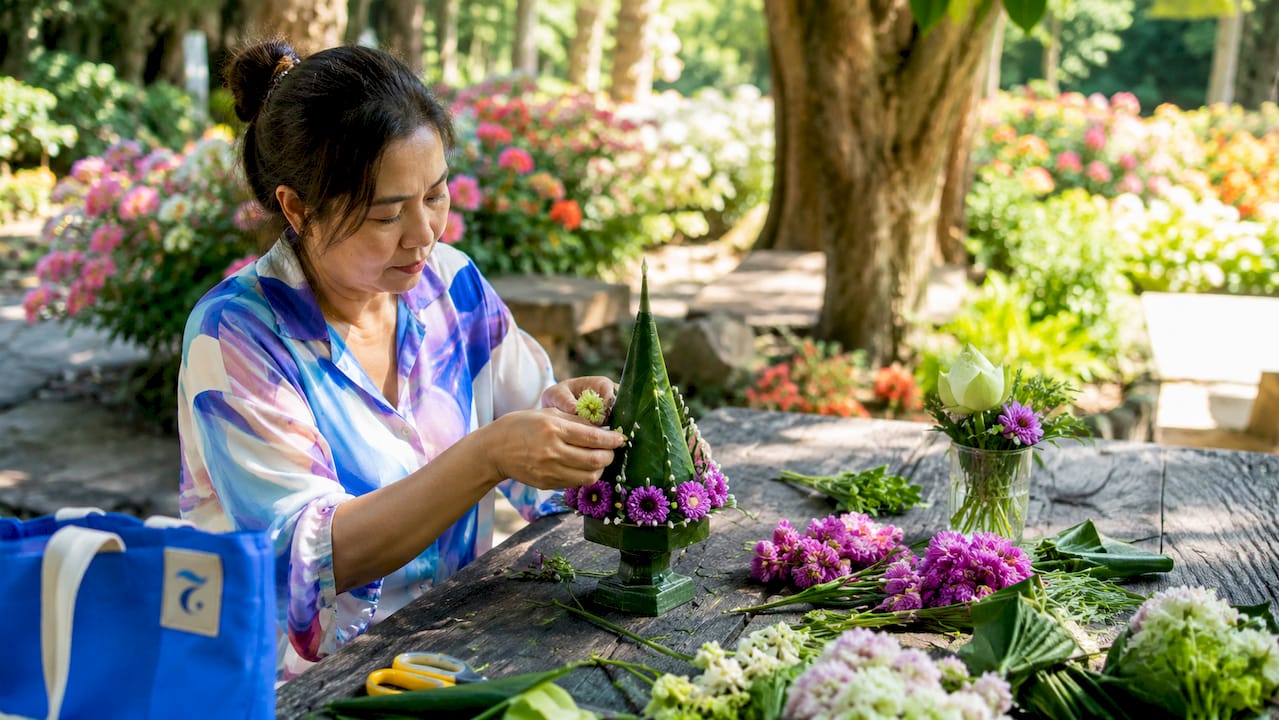
Thai flower arrangement, known as bai sri, is used in ceremonies to honor guests, spirits, and sacred occasions. Learning to fold banana leaves and assemble jasmine garlands gives you direct access to a craft that appears at weddings, ordinations, and spirit house offerings. Community workshops in Chiang Mai and Bangkok teach these skills alongside their cultural context. Joining a cultural exchange program that includes craft workshops deepens your understanding of how Thai aesthetics connect to spiritual life. The skills are practical and the cultural knowledge you gain stays with you long after the class ends.
12. Temple visits and merit-making
Temple visits are the most accessible and frequent form of Thai cultural participation. Thais visit temples to make offerings, listen to monks chant, release fish or birds as acts of merit, and seek blessings for specific occasions. The practice integrates Buddhist merit-making with Brahmanical rites and animistic spirituality, which together underpin both rural and urban community life. Visitors are welcome at most temples, provided they dress modestly and observe basic etiquette. Arriving early in the morning, when monks receive alms, gives you the clearest view of daily religious practice.
“Appreciation of Thai culture deepens when visitors understand the traditional monthly customs and community codes guiding religious life and social conduct.”
The monthly customs that shape Thai temple life follow a lunar calendar, meaning the most significant merit-making days shift each year. Asking a local or a Thai language instructor about the current lunar cycle is one of the simplest ways to time your visit well.
Key takeaways
Thai cultural activities are most meaningful when you engage with their religious and community roots, not just their visual spectacle.
| Point | Details |
|---|---|
| Festivals carry layered meaning | Songkran and Loy Krathong blend Buddhist, Brahmanical, and animistic traditions into single events. |
| Regional festivals reward effort | Events like Phi Ta Khon and Phi Khon Nam offer authentic experiences far from tourist circuits. |
| Performing arts preserve moral teaching | Nang Yai and Khon encode religious and ethical stories in every gesture and puppet movement. |
| Hands-on activities build real connection | Cooking classes and craft workshops create personal engagement that passive observation cannot match. |
| Language unlocks cultural depth | Speaking Thai, even at a basic level, transforms how locals share their traditions with you. |
Why the best Thai cultural experiences are never the most obvious ones
The festivals that appear on every travel blog, Songkran water fights and Loy Krathong lanterns, are genuinely worth attending. I am not going to pretend otherwise. But the travelers who come away with the deepest understanding of Thai culture are almost never the ones who stuck to the highlight reel.
The Phi Ta Khon festival in Dan Sai changed how I think about Thai cultural life. The masks are extraordinary, but what struck me was the ease with which the community moved between reverence and laughter within the same afternoon. That balance is not incidental. It is the point. Thai festivals are not solemn affairs interrupted by fun. They are designed to hold both at once.
My practical advice: plan your visit to major festivals at least six months in advance, especially for Songkran in Chiang Mai or Loy Krathong in Chiang Mai, where accommodation fills completely. But spend at least one day of your trip at a temple workshop, a local cooking class, or a community craft session. Those quieter hours will teach you more than any parade.
The other thing I consistently recommend is learning some Thai before you go. Not fluency. Even a working knowledge of greetings, numbers, and food vocabulary changes how locals respond to you. It signals respect. And respect, in Thai cultural life, opens doors that money and curiosity alone cannot.
— Paul
Thai Explorer can help you go deeper
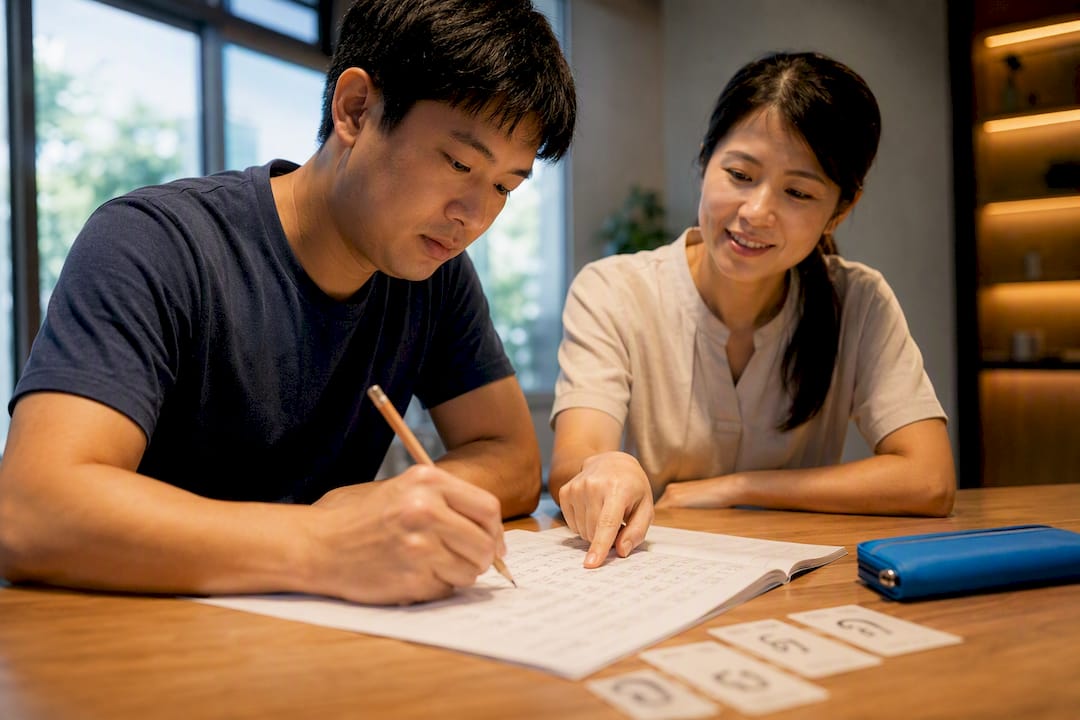
Thai cultural fluency starts with language. When you understand what people are saying during a ceremony, what the monks are chanting, or what a market vendor is explaining about an ingredient, the entire experience shifts from observation to participation.
Thai Explorer offers Thai language courses in Singapore designed for adults who want to travel, connect, and engage with Thai culture at a real level. Classes are taught by qualified native Thai instructors, bilingual in Thai and English, with flexible group, private, and online options. The curriculum is aligned with the CU-TFL standard from Chulalongkorn University. Whether you are preparing for your first trip to Thailand or deepening a long-standing interest in Thai heritage, Thai Explorer gives you the language skills to make every cultural activity more meaningful. The school is located above Tanjong Pagar MRT at 10 Anson Road, #22-07, International Plaza, Singapore 079903.
FAQ
What are the most famous examples of Thai cultural festivals?
Songkran (april 13–15), Loy Krathong (november), and the Phi Ta Khon Ghost Festival are among the most recognized. Each combines Buddhist merit-making with regional customs and community celebration.
When is the best time to attend traditional Thai festivals?
April and november offer the two largest national festivals, Songkran and Loy Krathong. Regional events like Phi Ta Khon in Loei and the Vegetarian Festival in Phuket run in june to july and october respectively.
How can visitors participate respectfully in Thai cultural activities?
Dress modestly at temples, follow local cues during ceremonies, and avoid treating sacred rituals as photo opportunities. Booking accommodation six to twelve months ahead for major festivals in cultural hubs is also strongly recommended.
What are immersive Thai cultural experiences beyond festivals?
Cooking classes, flower arrangement workshops, Nang Yai shadow puppetry performances, and temple merit-making sessions all offer hands-on engagement with Thai traditions that go well beyond watching a parade.
Does learning Thai language help with cultural participation?
Speaking Thai, even at a conversational level, signals respect and encourages locals to share more openly. Thai Explorer’s cultural fluency courses integrate language and cultural knowledge so learners can engage authentically from the start.