
TL;DR:
- Online language learning now emphasizes structured, instructor-guided interactions that foster real communication skills. It involves logical sequencing, immediate feedback, and cultural context, which are essential for effective Thai acquisition. Consistent, active participation and well-designed programs ensure measurable progress and practical fluency for learners in Singapore.
Most people picture online language learning as watching YouTube videos in their pajamas or tapping through a gamified app until they lose their streak. That image couldn’t be further from reality. Today’s online language learning is a structured, instructor-guided experience built around real interaction, measurable progress, and curriculum design grounded in actual pedagogy. For Singaporeans who want to learn Thai — whether for travel to Bangkok, building business relationships, or simply connecting with Thai culture — understanding what online learning really offers can change how fast you progress and how confident you feel using the language.
Table of Contents
- Defining online language learning: Beyond video calls and apps
- How online language learning works: Key components and methods
- Proven benefits: Why online language learning delivers results
- Online assessments and level claims: What you need to know
- Our perspective: Mastering online Thai is about design, not just devices
- Ready to learn Thai online? Courses and support in Singapore
- Frequently asked questions
Key Takeaways
| Point | Details |
|---|---|
| It’s more than videos | Effective online language learning combines technology, feedback, and purpose-built tasks. |
| Structure drives results | Regular, guided practice significantly boosts language skill—especially for Thai. |
| Mind assessments’ limits | Online test results can overestimate your real communicative ability without live feedback. |
| Design beats devices | The quality of course structure matters more than flashy technology. |
Defining online language learning: Beyond video calls and apps
With the stage set for why online platforms matter, let’s define exactly what online language learning is and what it isn’t.
Online language learning involves structured interaction with instructors and digital materials through internet-based platforms, not just passive exposure to content. This distinction matters enormously. Watching a Thai drama without guidance builds familiarity but not fluency. True online language learning is purposeful, sequenced, and designed to build skills progressively.
There are three main formats you’ll encounter:
- Self-paced learning: You move through pre-recorded lessons, exercises, and quizzes at your own speed. Good for vocabulary building but limited for speaking development.
- Tutor-led live sessions: A qualified instructor runs real-time classes through video platforms, with structured activities, immediate correction, and adaptive pacing. This is where the biggest gains happen.
- Blended learning: A combination of self-paced materials and live sessions. This is widely considered the most effective format because it gives you both flexibility and human interaction.
What separates effective online learning from passive content consumption is the presence of interactive technology and real feedback. Tools like shared whiteboards, breakout rooms, live polling, and digital flashcard systems aren’t gimmicks. They replicate the dynamics of a physical classroom while adding features that traditional rooms simply can’t match, such as recording sessions for review or accessing resources from anywhere in Singapore.
| Format | Best for | Interaction level | Progress speed |
|---|---|---|---|
| Self-paced apps | Vocabulary, scripts | Low | Slow without guidance |
| Tutor-led live sessions | Speaking, grammar, culture | High | Faster with feedback |
| Blended learning | All skill areas | Medium to high | Fastest overall |
“Not all online learning is created equal. The presence of a qualified instructor and structured interaction is what separates real skill-building from passive entertainment.” — Thai Explorer
If you’re aiming to use Thai for actual conversations — whether ordering food in Chiang Mai, attending a business meeting in Bangkok, or chatting with a Thai colleague here in Singapore — passive apps alone will leave you underprepared. Exploring Thai language learning online through structured, instructor-led programs is where real communication skills take root.
How online language learning works: Key components and methods
Now that we’ve established the real scope of online language learning, how does it actually work — and why does it matter for Thai learners in Singapore?
Effective online learning is built on technology-mediated instruction combined with solid pedagogical frameworks, not just generic video calls with a tutor you found online. The difference lies in how lessons are designed, sequenced, and assessed.
Here are the core components that make online Thai learning actually work:
- Instructional design: Lessons are sequenced to build skills logically. You learn tones before sentences, core vocabulary before complex grammar, and listening before speaking in new contexts.
- Live feedback loops: A qualified instructor corrects your pronunciation, tones, and grammar in real time. This is irreplaceable. Thai is a tonal language with five tones, and without immediate correction, bad habits solidify fast.
- Structured practice activities: Role plays, listening drills, reading exercises, and writing tasks are assigned with clear learning goals, not just as busywork.
- Progress tracking: Good programs use placement tests, mid-course assessments, and final evaluations to map your growth against recognized frameworks like the CEFR (Common European Framework of Reference for Languages).
- Cultural context: Understanding why Thais speak the way they do — politeness particles like ครับ (khrap) and ค่ะ (kha), the role of formality, regional accents — makes language stick in a way that vocabulary lists never will.
Flexibility is another major advantage. For working adults in Singapore who balance demanding jobs, commutes, and social commitments, being able to attend live online Thai classes from home at 7pm removes the biggest obstacle to consistent study. Consistency is the single biggest predictor of language progress. A well-designed step-by-step Thai study online plan accounts for your schedule and builds in the regular practice sessions that make knowledge stick.
Pro Tip: Before signing up for any online Thai program, ask whether lessons are recorded. Being able to re-watch your session the next morning — especially the parts where tones or script were introduced — can double your retention without adding any extra study time.

One thing that often gets overlooked is digital literacy. It’s not just about having a laptop and WiFi. Learners who get the most out of online classes know how to navigate shared documents, use annotation tools, and actively participate rather than staying on mute. Resources focused on digital literacy for online learning highlight that active participation habits are just as important as the technology itself. The students who progress fastest treat online class with the same seriousness as a physical classroom.
For Singaporeans building a sustainable routine, finding creative ways to incorporate everyday Thai language practice between live sessions — listening to Thai podcasts on the MRT, labeling items around your apartment in Thai script, or texting a language partner — accelerates progress dramatically. And for those who want a proven roadmap, following a guide on success in learning Thai online can remove the guesswork from structuring your study plan.
| Study habit | Impact on progress | Recommended frequency |
|---|---|---|
| Attending live sessions | Very high | 2-3x per week |
| Reviewing session recordings | High | After every session |
| Daily vocabulary review | Medium to high | Daily, 10-15 minutes |
| Passive listening (Thai media) | Medium | 20-30 minutes daily |
| Speaking with native speakers | Very high | Weekly minimum |
Proven benefits: Why online language learning delivers results
Understanding the mechanics is one thing, but what do actual results show? Let’s look at the evidence for skill improvement.
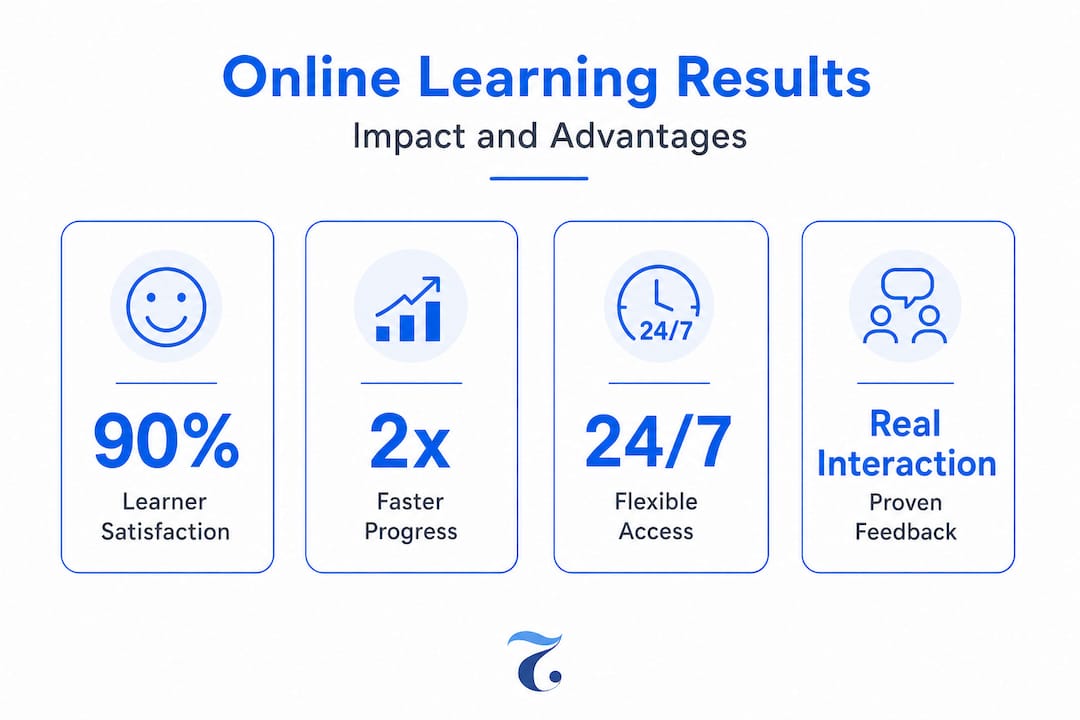
Research consistently shows that structured online study produces measurable gains across all four language skills. A study on hybrid language teaching programs found improvements in listening, speaking, reading, and writing after just 12 weeks of approximately one hour of practice per week. That’s a relatively low commitment for meaningful progress.
The key word in that finding is structured. Improvement doesn’t happen from random exposure. It happens when practice is regular, feedback is immediate, and materials are sequenced to build on each other. Here’s where that evidence translates into real-world benefits for Thai learners in Singapore:
- Travel confidence: After structured online study, learners can navigate transportation, order at local restaurants, and ask for directions in Thai rather than defaulting entirely to English.
- Business communication: Thai business culture places enormous value on relationship-building and politeness. Learning the right registers and honorifics through structured online instruction prepares you for professional interactions that apps simply can’t replicate.
- Cultural fluency: Language is culture. Understanding Thai proverbs, celebrations like Songkran, and the significance of the wai greeting comes naturally when cultural content is woven into every lesson.
- Script literacy: Many online programs skip the Thai script and teach only transliteration. Programs that teach you to read and write Thai script open up an entirely new world of menus, signs, and written communication. Developing building Thai reading skills from early in your learning journey prevents dependence on phonetic shortcuts.
The flexibility argument is especially strong in Singapore, where learners juggle careers, family, and a social life. Online programs allow you to study Thai at 6:30am before work or during a lunch break, without commuting to a physical school. That said, a school located right above Tanjong Pagar MRT removes even the commute objection for learners who prefer face-to-face interaction.
The bottom line: Regular, structured online study with qualified instruction and consistent feedback works. Results aren’t guaranteed by the platform alone — they’re guaranteed by how intentionally you use it.
Online assessments and level claims: What you need to know
Reliable progress measurement is crucial — so how should you interpret online test results as you study Thai?
Most online language platforms use CEFR levels (A1 through C2) or their own internal placement systems to describe your proficiency. These are genuinely useful frameworks when applied properly. A1 means you can introduce yourself and ask basic questions. B2 means you can hold a natural conversation with a native speaker on a range of topics. Knowing where you sit helps you choose the right course level and set realistic goals.
However, there’s a catch. CEFR assessments on online platforms can overestimate proficiency levels due to automated scoring or low-sampling tests that don’t capture real speaking and listening ability. This is sometimes called “CEFR inflation,” and it’s more common than most learners realize.
Here’s what to watch for when interpreting your online assessment results:
- Automated tests without speaking components can place you at B1 when your actual speaking ability is closer to A2.
- Short vocabulary quizzes measure recognition, not production. Being able to identify a word in a multiple-choice format is very different from using it correctly in a sentence.
- Reading-heavy assessments favor learners who read well but may underserve those who are stronger in listening or speaking.
“A placement test tells you where to start, not where you are. Always validate your level through real conversation with a qualified instructor.” — Thai Explorer
Pro Tip: After any online placement test, ask your instructor to confirm your level through a 10-minute conversation in your first class. This gives you and your instructor a much more accurate picture of where to focus.
The best approach is to use online assessments as a starting point and then let real-time instructor feedback shape your understanding of your actual level. Learners who seek out genuinely interactive Thai lessons get this feedback built into every session, which is far more reliable than any automated quiz.
Our perspective: Mastering online Thai is about design, not just devices
Here’s the view we’ve developed after working with hundreds of Singaporean Thai learners: the technology is the least interesting part of online language learning.
The conversation in many language learning circles tends to revolve around which app is best, which platform has the slickest interface, or which AI tool can generate the most Thai practice sentences. These are the wrong questions. A student with a basic laptop and a deeply prepared, native-speaking instructor will outlearn someone with a top-of-the-line setup and a generic self-study app every single time.
What actually drives progress is curriculum design, real interaction, and honest feedback. Programs built around proven step-by-step online Thai strategies consistently produce learners who can actually hold conversations, read Thai menus, and navigate real situations. Programs built around shiny interfaces tend to produce learners who have impressive streaks but freeze when a native Thai speaker goes off-script.
This matters especially for Thai, which has features that demand active correction. The five tones, the 44 consonants, the vowel length distinctions — these aren’t things you can self-correct through passive exposure. You need someone who knows the language deeply to tell you, in the moment, that your mâi is landing as mái and that you’ve just changed the meaning of your sentence entirely.
Our strong belief is this: self-paced apps are a fine entry point for motivation and basic vocabulary. But for Singaporeans with genuine goals — whether that’s navigating a business meeting in Bangkok or making real connections with Thai friends and family — interactive, instructor-led learning with structured assessment and cultural depth is where lasting fluency lives.
Ready to learn Thai online? Courses and support in Singapore
If you’re motivated to get started with Thai online, here are concrete next steps — and support that’s tailored to you.
Thai Explorer offers structured, instructor-led Thai language courses in Singapore designed for learners at every level, from complete beginners to advanced speakers refining their fluency. Every course is taught by qualified native Thai instructors who are bilingual in Thai and English, so explanations are always clear and culturally grounded.
For learners who prefer the flexibility of studying from home, Thai Explorer’s online Thai language courses bring the same structured, interactive experience to your screen. Lessons are aligned with the CU-TFL framework, ensuring your progress is tracked against recognized standards — not just an app’s internal scoring system. Not sure where you stand? You can take an online Thai test to get a clear picture of your current level before choosing a course. Real results start with the right placement.
Frequently asked questions
What is the difference between online and traditional language learning?
Online language learning uses internet-based platforms and can combine self-paced work with real-time interaction, while traditional methods generally require in-person attendance at a physical location. Both can be effective when structured well.
Can I become fluent in Thai through online courses alone?
Online courses can build strong, real-world Thai skills, but fluency depends on regular practice and meaningful feedback rather than passive study. Structured practice and feedback are the core ingredients, not the medium.
Are online placement tests reliable for measuring Thai ability?
Online tests give useful estimates but may overstate your level because many automated assessments skip speaking or use small samples. Treat them as a starting point and confirm your level with an instructor.
What do I need to get started with online Thai learning?
You need a reliable device, a stable internet connection, and a commitment to actively participating in lessons rather than just watching passively. Engagement, not equipment, determines results.
How do experts recommend structuring an online Thai language study plan?
Outcomes depend on blending self-study materials with live interactive sessions, setting clear goals for each stage, and building in regular review and real conversation practice from the start.