TL;DR:
- Thai communication relies on indirect speech, non-verbal cues, and respect for hierarchy to maintain social harmony. Understanding concepts like Kreng Jai and Mai Pen Rai helps foreigners interpret subtle signals and build trust. Patience and careful observation are key to developing genuine cultural fluency in Thailand.
Thai communication is defined by indirectness, non-verbal nuance, and a deep cultural commitment to preserving harmony and respect. Whether you are traveling to Bangkok, working with Thai colleagues in Singapore, or building personal relationships with Thai friends, the types of Thai communication styles you encounter will differ sharply from Western norms. Understanding these styles is not optional for effective interaction. It is the foundation of genuine connection in Thai culture.
What are the main types of Thai communication styles?
Thai communication methods fall into four broad categories, each shaped by centuries of cultural values around face-saving, hierarchy, and group harmony.
- Indirect verbal communication. Thais avoid direct confrontation and rarely say “no” outright. Vague answers, softened refusals, and polite deflections carry the real message.
- Non-verbal communication. Facial expressions, body posture, silence, and gestures like the Wai carry significant meaning. Reading these cues is as important as listening to words.
- Hierarchical verbal forms. Thai speakers adjust their vocabulary, pronouns, and polite particles based on the social status and age of the person they address. Polite particles like “Khrap” (male) and “Kha” (female) signal respect in every sentence.
- Emotional and social expression. Thai people express emotion through culturally specific signals, including a wide range of smiles that serve very different social functions. Happiness is only one of them.
Each of these styles reflects the same core value: maintaining smooth, respectful relationships above all else. Travelers and expatriates who recognize this framework gain a significant advantage in reading Thai social situations accurately.
How does indirect verbal communication work in Thailand?
Indirect speech is the default mode of Thai interpersonal communication, not an exception. Thais avoid saying “no” directly because a blunt refusal risks causing embarrassment or damaging the relationship. Instead, you will hear phrases like “maybe,” “it might be difficult,” or “I will try.” Each of these signals a polite refusal.
The cultural concept behind this behavior is Kreng Jai, which translates roughly as consideration for others. Kreng Jai governs Thai interactions by placing group harmony above blunt honesty. A Thai colleague who disagrees with your proposal will rarely say so directly. They will stay quiet, change the subject, or offer a vague alternative.
This creates a specific challenge for foreigners. A Thai “yes” often means “I hear you” rather than genuine agreement. Polite particles like Khrap and Kha confirm politeness, not consent. Misreading this as a green light leads to costly misunderstandings in both business and social settings.
Indirect feedback in Thai workplaces is delivered privately, heavily cushioned, and often through subtle hints or trusted intermediaries. Public criticism is avoided entirely to protect the dignity of everyone involved. If a Thai manager pulls you aside after a meeting rather than addressing an issue in front of the group, that is not avoidance. That is the correct channel.
Pro Tip: Restructure your questions to be open-ended and specific. Instead of asking “Is this okay?”, ask “What would make this work better?” Open questions invite genuine feedback and reduce the pressure to give a polite but meaningless “yes.”
What role do non-verbal cues play in Thai communication?
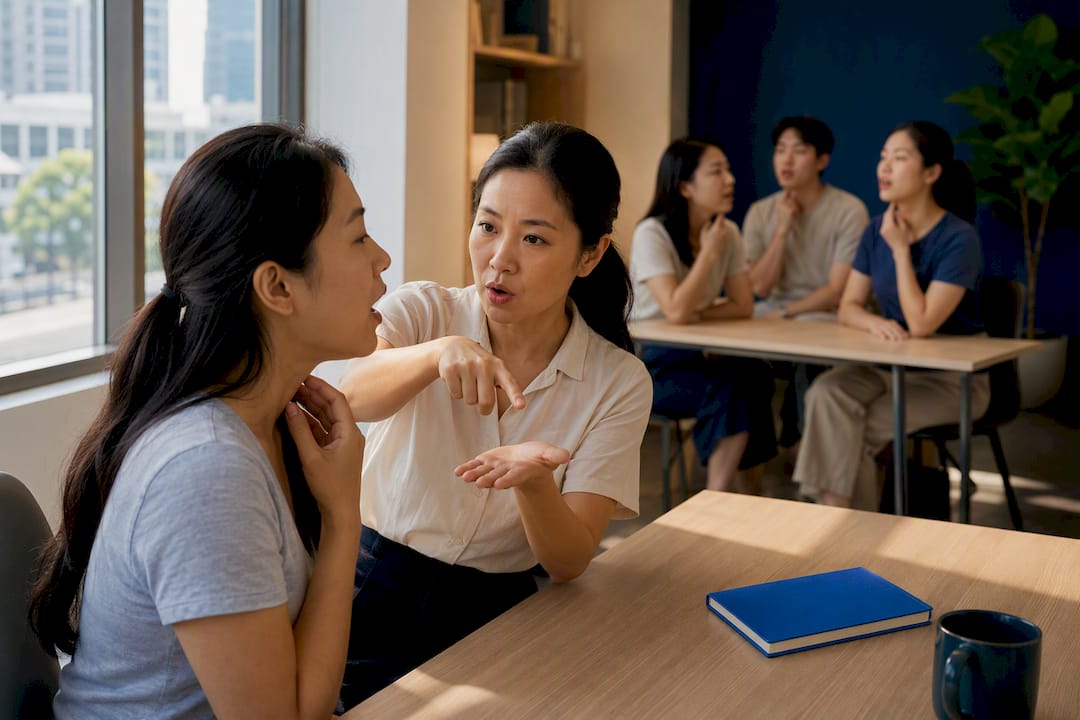
Non-verbal communication in Thailand carries as much weight as spoken words, and often more. Thais rely on facial expressions, body language, and deliberate silence to communicate what they will not say directly. Learning to read these signals is the real skill in cultural communication in Thailand.
Silence is one of the most misread signals. Silence in Thai communication signals a need for delicate handling or private discussion, not a lack of opinion. When a Thai person goes quiet after a question, they are not confused. They are signaling that the topic requires careful navigation.
Thai smiles are another layer entirely. Thai smiles are complex with over a dozen recognized types, each serving a different social function. A smile does not always mean happiness. It can signal embarrassment, discomfort, apology, or a polite way to smooth over tension.
| Smile type | What it communicates |
|---|---|
| Yim thang nam ta (smiling with tears) | Deep happiness or emotional gratitude |
| Yim cheun chom (admiring smile) | Approval or genuine compliment |
| Yim mee lessanai (smile with ulterior motive) | Concealed intent or masked disagreement |
| Yim soo (smiling under stress) | Coping with difficulty or embarrassment |
| Yim yaw (teasing smile) | Gentle mockery or playful provocation |
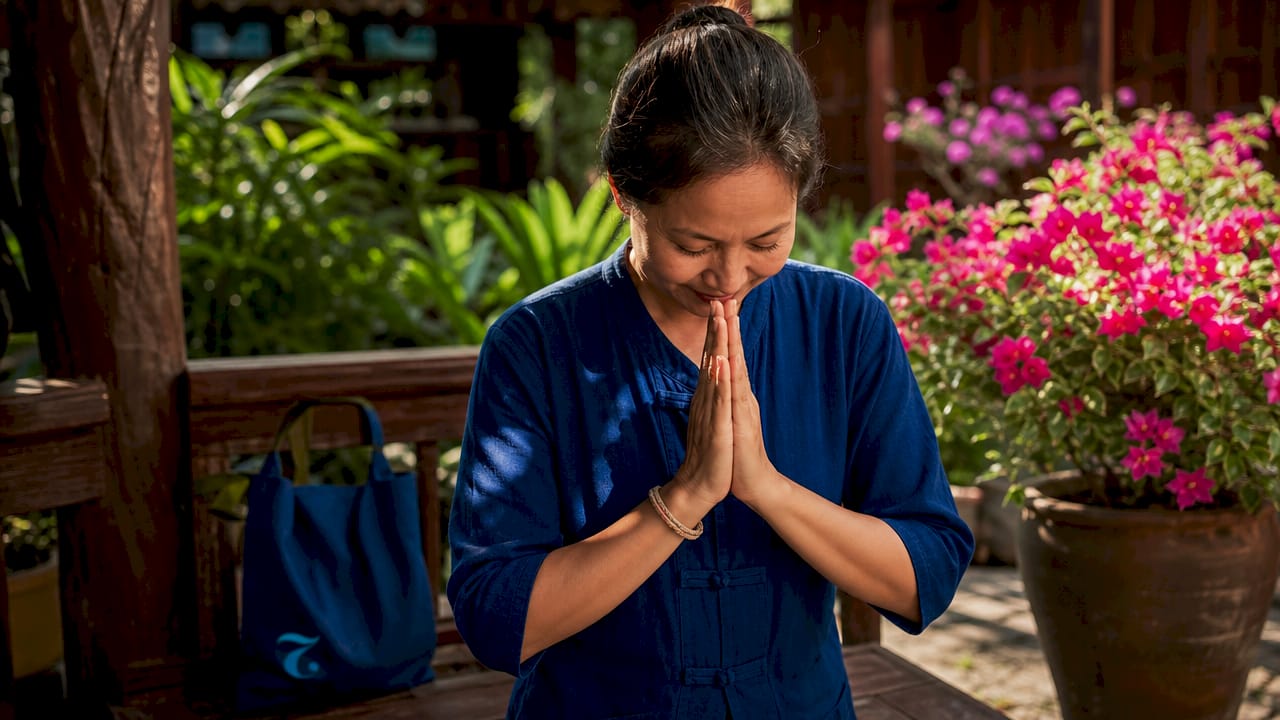
The Wai greeting, where both palms are pressed together at chest level with a slight bow, is another non-verbal signal with precise social rules. The height of the hands and the depth of the bow both communicate the relative status of the two people. Returning a Wai incorrectly, or not at all, sends a social message whether you intend it or not.
Pro Tip: When you are unsure how to respond non-verbally, observe before acting. Watch how Thai people around you greet each other, respond to authority, and signal discomfort. Mirroring respectful behavior is always safer than guessing.
How does hierarchy influence Thai interpersonal communication?
Social hierarchy is embedded in every layer of Thai communication, from the words chosen to the physical posture adopted. Thai communication reflects status differences through honorifics, titles, and non-verbal gestures of deference such as lowered eyes and a bowed head. These are not optional courtesies. They are expected signals of respect.
Thai pronouns shift depending on the relationship between speakers. Older or senior people use different pronouns than younger or junior ones. Using the wrong pronoun, even accidentally, can signal disrespect or social ignorance. Titles like “Khun” (a gender-neutral honorific) are used before names in formal and professional settings.
- Addressing a senior colleague without their title reads as rude, not casual.
- Younger employees defer to managers in meetings, rarely speaking before being invited to contribute.
- Eye contact with a superior is often reduced as a sign of respect, not disengagement.
- Physical positioning matters: standing or sitting lower than a senior person in formal settings signals deference.
In Thai business meetings, decisions are frequently made by senior people outside the meeting room itself. The meeting serves to present information and show respect, not to debate or decide. Pushing for a decision in the room can embarrass the senior person present and damage the relationship. Patience and deference to the hierarchy produce better outcomes than direct pressure.
Understanding hierarchy also shapes how you give and receive feedback. Junior staff will not contradict a manager publicly. If you want honest input from a Thai team, create private, low-stakes opportunities for them to share concerns. This is not a workaround. It is how effective communication in Thai culture actually functions.
How do Kreng Jai and Mai Pen Rai shape Thai communication?
Two cultural concepts explain more about Thai communication behavior than any grammar rule or vocabulary list. The first is Kreng Jai. The second is Mai Pen Rai.
Kreng Jai means placing the comfort and feelings of others above your own needs or opinions. It drives the indirectness, the softened refusals, and the reluctance to burden others with problems. A Thai person practicing Kreng Jai will not tell you that your plan has a flaw if pointing it out would cause you embarrassment. They will find a gentler path, or say nothing at all.
“Kreng Jai is not dishonesty. It is a form of social care. The goal is to protect the dignity of everyone in the interaction, not to deceive.”
Mai Pen Rai translates loosely as “never mind” or “it’s okay.” It reflects a cultural attitude of acceptance toward setbacks, imperfection, and indirect outcomes. In communication, Mai Pen Rai shows up as a reluctance to escalate conflict, a tendency to let small issues pass without comment, and a preference for moving forward over assigning blame. For foreigners, this can look like indifference. It is actually a deliberate choice to preserve relational harmony.
Both concepts reinforce each other. Kreng Jai keeps people from raising uncomfortable issues. Mai Pen Rai keeps people from dwelling on them. Together, they create a communication environment where reading between the lines is not just helpful. It is necessary. Foreigners who understand Thai cultural fluency build trust faster and avoid the most common misinterpretations.
Key Takeaways
Effective communication in Thai culture requires reading indirect speech, non-verbal signals, and hierarchical cues together, not in isolation.
| Point | Details |
|---|---|
| Indirectness is the default | A Thai “yes” signals politeness, not agreement; restructure questions to get genuine responses. |
| Non-verbal cues carry full messages | Silence, smiles, and the Wai each communicate specific social meanings that words do not cover. |
| Hierarchy shapes every interaction | Pronouns, titles, and physical posture all signal status; ignoring them reads as disrespect. |
| Kreng Jai drives communication choices | Thais prioritize group harmony over blunt honesty; feedback arrives privately and indirectly. |
| Mai Pen Rai is a communication strategy | Letting small issues pass is a deliberate relational choice, not a sign of disengagement. |
Why patience is the most underrated skill in Thai communication
Most guides on Thai communication focus on the rules: use the right pronoun, return the Wai, avoid saying “no” directly. Those rules matter. But after years of working with Thai language learners and observing cross-cultural interactions, I have found that the single biggest predictor of success is patience combined with genuine observation.
Foreigners who struggle most in Thai social and professional settings are the ones who fill silence too quickly, push for direct answers, and interpret politeness as agreement. They are not being rude intentionally. They are applying their own cultural communication framework to a system built on entirely different assumptions.
The learners who adapt fastest are the ones who slow down and watch. They notice that the Thai colleague who smiled and said “maybe” never followed up. They notice that the senior manager left the room before the difficult topic came up. They start asking better questions and listening for what is not said. That shift from hearing words to reading context is where real cultural fluency begins.
Learning the Thai language accelerates this process significantly. When you understand Thai communication skills at the language level, you stop relying on translation and start catching the tone, the particle choices, and the pauses that carry the actual message. Language and cultural understanding are not separate skills in Thailand. They are the same skill.
— Paul
Thai Explorer: build real cultural fluency through language
Thai Explorer is a Thai language school in Singapore that teaches communication the way it actually works in Thailand, not just vocabulary and grammar. Its courses are built around real-world interaction, covering the cultural context behind the language so you understand what is being communicated, not just what is being said.
Courses are available in group, private, and online formats, taught by qualified native Thai instructors who are bilingual in Thai and English. Whether your goal is confident travel conversation, professional communication, or deeper cultural understanding, Thai Explorer has a structured path for you. The curriculum aligns with the CU-TFL (Chulalongkorn University Proficiency Test of Thai as a Foreign Language) standard, giving your learning a recognized framework. Explore Thai language courses at Thai Explorer, located above Tanjong Pagar MRT at 10 Anson Road, #22-07, International Plaza, Singapore 079903.
FAQ
What is the most common Thai communication style?
Indirect verbal communication is the most common style in Thailand. Thais avoid direct confrontation and use softened language, vague responses, and non-verbal cues to convey meaning.
Why do Thais avoid saying “no” directly?
The cultural concept of Kreng Jai drives Thais to prioritize the comfort of others over blunt honesty. Saying “no” directly risks causing embarrassment and disrupting social harmony.
What does silence mean in Thai communication?
Silence is a deliberate signal, not an absence of opinion. It typically indicates that a topic requires careful or private handling rather than open discussion.
How do I know if a Thai “yes” means actual agreement?
A Thai “yes” often signals politeness rather than genuine consent. Ask specific, open-ended follow-up questions to confirm understanding and invite honest feedback.
How does hierarchy affect communication in Thai workplaces?
Hierarchy shapes vocabulary, tone, and behavior in every Thai professional interaction. Junior staff defer to seniors in meetings, and major decisions are typically made by senior figures outside the meeting room.