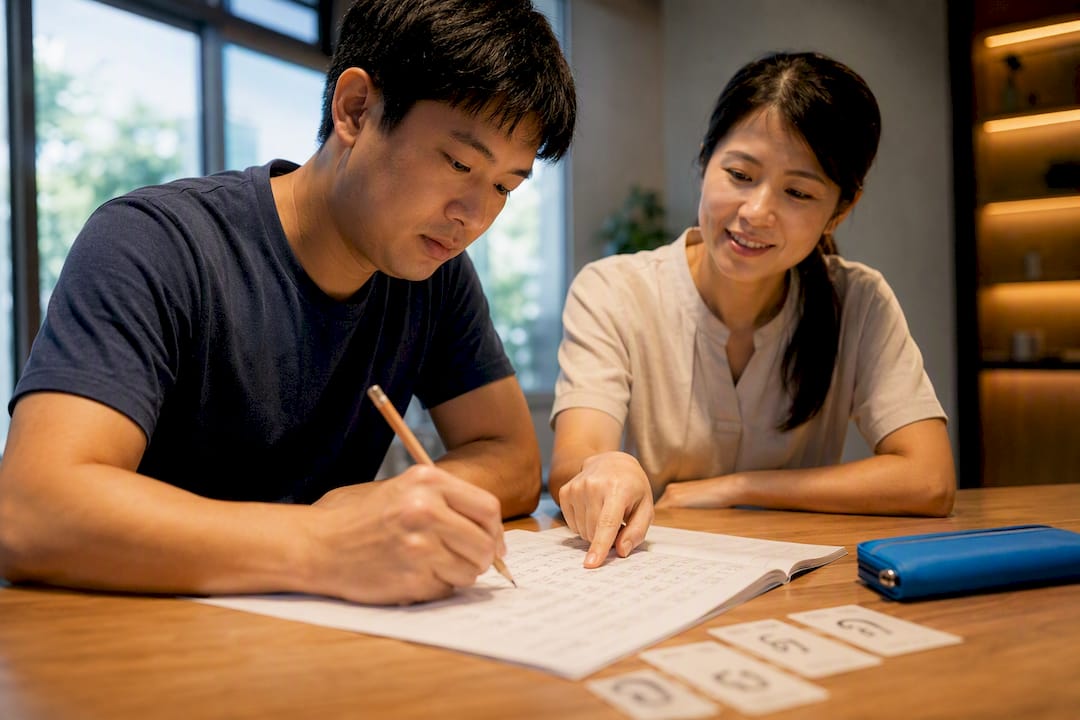
TL;DR:
- Conversational fluency in Thai involves active listening, spontaneous speech, and cultural understanding. It emphasizes interaction over grammar perfection and benefits from live practice with native speakers. Focusing on communication flow helps learners connect naturally and confidently in real-world settings.
Conversational fluency is defined as the ability to engage in smooth, spontaneous, and contextually appropriate spoken exchanges without significant hesitation. Unlike full language mastery, it focuses on communication flow rather than grammatical perfection. According to academic consensus including the work of Tavakoli (2025), fluency is a multidimensional construct involving cognitive processing, utterance flow, and perceived ease. For Thai learners focused on travel and cultural connection, understanding what is conversational fluency is the first step toward real, meaningful interaction with native speakers.
What is conversational fluency and why does it matter for Thai learners?
Conversational fluency is not a single skill. It is a combination of cognitive speed, social awareness, and language output that allows you to hold a real conversation without forcing the other person to slow down or simplify their speech. Language testing frameworks like IELTS and CEFR measure fluency through speech flow and interaction quality, not grammar scores alone. That distinction matters enormously for Thai learners.
For travel and cultural exchange, conversational fluency is the skill that actually gets used. You do not need to write a formal essay at a street market in Chiang Mai or during a family dinner in Bangkok. You need to respond quickly, read the room, and keep the exchange natural. That is the practical importance of conversational fluency: it opens doors that textbook study alone cannot.
Thai is a tonal language with five distinct tones, which means the cognitive load during real conversation is higher than in many other languages. A learner who has only studied grammar rules will often freeze when a native speaker responds at natural speed. Conversational fluency training addresses that gap directly by building the mental reflexes needed for live dialogue.
What are the key components of conversational fluency?
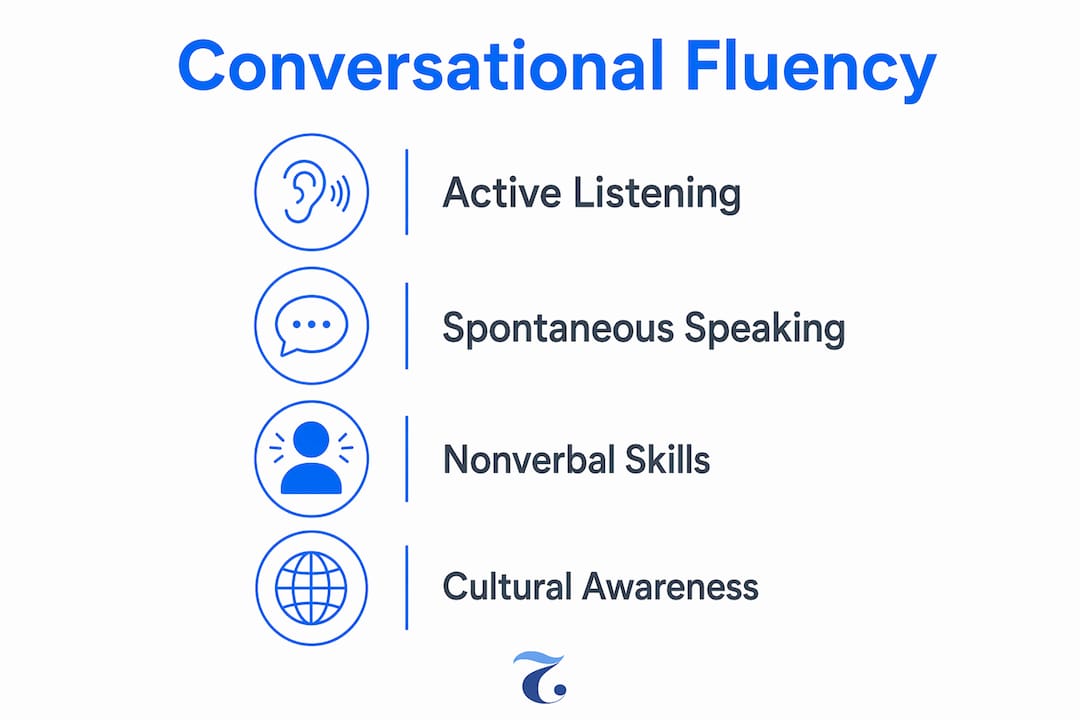
Four core components define conversational fluency: active listening, verbal output, nonverbal cues, and emotional awareness. Together, they allow you to interact with native speakers without needing them to adapt their speech for you.
- Active listening means processing not just words but intent. In Thai conversations, a speaker’s tone and phrasing often carry as much meaning as the words themselves. Full comprehension requires you to track both.
- Verbal output is your ability to express thoughts with spontaneity. Fluent speakers do not mentally translate from English before speaking. They retrieve language directly from memory, which comes from repeated practice.
- Nonverbal cues include body language, timing, eye contact, and physical presence. Nonverbal communication forms over half of human interaction, making it a non-negotiable part of fluency.
- Emotional awareness means reading the social and emotional context of a conversation. Empathy and sensitivity to the other person’s mood shape how you respond and whether the exchange feels natural.
These four components work together. A learner who speaks well but does not listen actively will miss cues. A learner who listens well but freezes during verbal output will lose the conversational thread. Developing all four in parallel is what separates genuine fluency from surface-level language ability.
Pro Tip: Practice listening to Thai podcasts or YouTube conversations at full native speed, even before you understand everything. Your brain trains itself to process the rhythm and pace of the language, which directly improves your verbal response time.

Is conversational fluency the same as being fully fluent?
Conversational fluency and full language fluency are not the same thing, and confusing them creates unrealistic expectations that slow learners down. Full fluency implies mastery across speaking, reading, writing, and formal registers. Conversational fluency focuses specifically on spoken interaction in everyday and social contexts.
Three common misconceptions about fluency are worth addressing directly:
- Fluency requires perfect grammar. It does not. Fluency means maintaining flow without forcing native speakers to simplify their language. A grammatically imperfect sentence that communicates clearly is more fluent than a perfectly structured sentence delivered with long pauses and visible anxiety.
- Native speakers are always fluent. Native speakers also stumble, self-correct, and use filler words. Fluency includes the natural social dynamics of conversation, not just language accuracy. Expecting perfection from yourself sets a standard that even native speakers do not meet.
- A large vocabulary equals fluency. Vocabulary breadth helps, but it does not produce fluency on its own. Effective conversation requires vulnerability and authenticity, where mutual understanding matters more than an impressive word count.
For Thai learners focused on travel and social interactions, conversational fluency is the realistic and practical target. You want to order food confidently, ask for directions, engage with locals at a temple, and hold a basic social conversation. That goal is achievable well before you reach full language mastery.
How do you achieve conversational fluency in Thai?
The most effective method for building conversational fluency is Communicative Language Teaching, known as CLT. Research confirms CLT reduces speaking anxiety and builds the feedback loops that learners need to improve in real time. CLT works because it prioritizes interaction over memorization.
Strategies that build fluency faster
- Role-play real scenarios. Practice ordering at a Thai restaurant, asking for directions, or greeting someone at a market. These low-stakes simulations build the mental pathways you use in actual conversations.
- Engage in low-pressure conversations. Practicing in low-stakes settings lowers psychological barriers and improves spontaneous speech. The goal is to make speaking feel normal, not stressful.
- Prioritize active participation over passive study. Reading Thai grammar notes does not build conversational fluency. Speaking, even imperfectly, does. Every conversation is a data point your brain uses to improve.
- Seek feedback from native speakers. A native Thai instructor can identify patterns in your errors that you cannot hear yourself. Structured feedback accelerates progress more than self-study alone.
- Build listening skills deliberately. Listening is not passive. Active listening practice, where you focus on intent and context, directly improves your ability to respond naturally.
One insight that surprises many learners: monologic and dialogic speech engage different cognitive processes. You may feel fluent rehearsing a speech alone but struggle in a real back-and-forth conversation. This is normal. It means you need to practice dialogue specifically, not just speaking in general.
Pro Tip: Speak Thai with a native instructor at least once a week, even for 20 minutes. Consistent live interaction builds the cognitive reflexes that no amount of solo study can replicate.
The table below compares two broad learning approaches by what they develop:
| Learning approach | Primary skill developed | Best for |
|---|---|---|
| Grammar-focused study | Accuracy and reading comprehension | Written exams and formal contexts |
| Communicative practice (CLT) | Spontaneous spoken interaction | Travel, social conversations, cultural exchange |
For learners whose goal is conversational fluency in Thai for travel and personal enrichment, CLT-based instruction is the clear choice. Pairing it with practical language training methods accelerates results further.
How does Thai culture shape conversational fluency?
Cultural understanding is not a bonus add-on to conversational fluency. It is a core requirement. In Thai culture, the way you say something carries as much weight as what you say. Tone, posture, and eye contact all signal respect or its absence, and native speakers notice immediately.
The Emily Post Institute identifies adapting tone and physical cues to social settings as a fundamental part of fluent conversation. In Thai contexts, this means understanding when to use formal versus informal registers, how to show deference to elders, and how to read the atmosphere of a setting before speaking.
Practical cultural cues to watch for in Thai conversations include:
- The wai greeting. Knowing when and how to use it signals cultural awareness before you say a single word.
- Indirect communication. Thai speakers often express disagreement or discomfort indirectly. Listening for what is not said is as important as what is.
- Smiling as communication. A smile in Thai culture carries multiple meanings depending on context. Recognizing which type of smile you are receiving changes how you respond.
- Volume and pace. Loud or rushed speech can read as aggressive. Matching the calm, measured pace of your conversation partner builds rapport quickly.
Cultural context in language learning is what separates a learner who speaks Thai from one who connects in Thai. Emotional intelligence, the ability to sense what another person needs from the conversation, is the final layer that makes fluency feel authentic rather than mechanical.
Pro Tip: Before your next trip to Thailand, study one cultural norm per week rather than one grammar rule. Cultural fluency and linguistic fluency reinforce each other in ways that pure language study cannot.
Overcoming the anxiety that comes with speaking a new language is also part of this picture. Resources focused on speaking anxiety in language learning confirm that psychological readiness is as important as linguistic preparation.
Key Takeaways
Conversational fluency in Thai requires active listening, spontaneous verbal output, nonverbal awareness, and cultural understanding working together, not grammar perfection alone.
| Point | Details |
|---|---|
| Fluency is multidimensional | It combines cognitive speed, utterance flow, and social awareness, not just vocabulary. |
| Grammar perfection is not the goal | Maintaining natural conversation flow matters more than error-free sentences. |
| CLT is the most effective method | Communicative Language Teaching builds spontaneous speech through real interaction and feedback. |
| Culture is part of fluency | Thai nonverbal cues, tone, and social norms directly affect whether conversations feel natural. |
| Live practice is non-negotiable | Dialogic conversation with native speakers builds reflexes that solo study cannot replicate. |
Why I think most Thai learners are working toward the wrong target
The learners I see struggle most are the ones chasing grammatical accuracy before they have built any conversational confidence. They spend months perfecting tone rules on paper and then freeze the moment a native speaker responds at full speed. That freeze is not a language problem. It is a practice problem.
The research on L1 speaking style and L2 fluency confirms that your native language habits, including your pace, pause patterns, and sentence repair style, carry over into Thai. That is not a flaw. It is a starting point. The goal is to gradually replace those habits with Thai-specific ones through repeated live interaction.
What actually works is embracing imperfection early. Speak badly, get corrected, speak again. The learners who reach conversational fluency fastest are not the most gifted. They are the most willing to be misunderstood and keep going. Patience with yourself is not a soft skill here. It is a technical requirement for fluency acquisition.
Pair structured course instruction with real-world practice outside the classroom. A structured Thai course gives you the framework. Conversations with native speakers give you the reflexes. You need both.
— Paul
Thai Explorer’s courses are built around real conversation
Thai Explorer teaches Thai the way fluency actually develops: through interaction, feedback, and cultural immersion. Every lesson at Thai Explorer is led by a qualified native Thai instructor who is bilingual in Thai and English, so explanations are clear and corrections are immediate.
The Thai language courses cover all proficiency levels and include group, private, and online formats, giving you the flexibility to practice consistently regardless of your schedule. For learners focused on travel and cultural connection, Thai Explorer offers courses designed for real-life Thai conversations, not just textbook exercises. The curriculum is aligned with the CU-TFL (Chulalongkorn University Proficiency Test of Thai as a Foreign Language), giving your progress a recognized benchmark. Thai Explorer is located at 10 Anson Road, #22-07, International Plaza, Singapore 079903, right above Tanjong Pagar MRT.
FAQ
What is the conversation skills definition in language learning?
Conversation skills are the combined abilities of active listening, clear verbal expression, nonverbal communication, and emotional awareness that enable effective spoken interaction. These skills form the foundation of conversational fluency in any language.
How is conversational fluency measured?
Conversational fluency is measured through speech flow, interaction quality, and the ability to maintain dialogue without significant pauses or requiring the other speaker to simplify. Frameworks like CEFR and IELTS use these criteria as key proficiency indicators.
How long does it take to achieve conversational fluency in Thai?
The timeline varies by learner, but consistent practice using Communicative Language Teaching methods, combined with regular interaction with native speakers, produces measurable fluency gains within months rather than years.
What factors affect conversational fluency the most?
The biggest factors are practice frequency, exposure to live dialogue, cultural awareness, and psychological comfort with making errors. Learners who speak regularly in low-stakes settings progress significantly faster than those who study passively.
Does conversational fluency require perfect Thai tones?
No. Tonal accuracy improves fluency and comprehension, but native Thai speakers are accustomed to working with non-native accents. Maintaining conversation flow and communicating intent clearly matters more than hitting every tone perfectly in early stages.