
TL;DR:
- Choosing a structured Thai course in Singapore helps learners build confidence through progressive lessons and cultural context. Proper preparation, including mindset and materials, supports steady language development and prevents frustration. Consistent practice and guided instruction are key to mastering Thai efficiently and enjoyably.
Finding a Thai language course in Singapore sounds simple until you realize how many options exist without any clear guidance on where to begin, what to expect, or how to measure real progress. Many learners waste months jumping between apps, YouTube playlists, and disconnected lessons, only to find they still cannot hold a basic conversation. Whether your goal is ordering food confidently in Bangkok, building professional connections with Thai colleagues, or simply connecting more deeply with Thai culture, a structured, step-by-step approach makes all the difference. This guide walks you through everything from preparation to common pitfalls so you can start learning with clarity and confidence.
Table of Contents
- What you need before starting a Thai course
- Choosing the right step-by-step Thai course format
- Step-by-step Thai learning: What to expect
- Troubleshooting and common missteps in learning Thai
- Our perspective: Why structure beats shortcuts in Thai language learning
- Ready to start your Thai journey? Find your ideal course
- Frequently asked questions
Key Takeaways
| Point | Details |
|---|---|
| Preparation matters | Having the right materials and mindset sets you up for Thai language success. |
| Choose your format | Select in-person, online, or private step-by-step Thai courses to fit your goals. |
| Progress takes stages | Expect to build skills from the basics up, with assessments marking each milestone. |
| Interactivity is key | Active lessons and real conversation increase your chances of fluency. |
| Structure beats shortcuts | Following a guided curriculum helps you avoid common mistakes and maximizes results. |
What you need before starting a Thai course
Now that you know why step-by-step matters, let’s look at what you’ll need before you begin. Good preparation is not about buying a stack of textbooks overnight. It is about setting the right mindset, gathering simple materials, and knowing what to expect from day one.
Mindset first. Thai is a tonal language, which means the same syllable spoken in five different tones carries five different meanings. Many Singaporeans find this exciting rather than intimidating once they understand that it is simply a new way of using your voice. Openness to sounding unfamiliar, making mistakes in class, and embracing Thai cultural context will carry you further than raw study hours alone.
No prior Thai is needed. This is one of the most common misconceptions. As noted when finding your Thai class, step-by-step courses are particularly suitable for those new to Thai, so there is no prerequisite knowledge required to enroll in a beginner program.
Materials checklist before your first class
Here is a quick overview of what you should prepare:
| Item | Purpose | Priority |
|---|---|---|
| Course textbook | Core learning material | Essential |
| Notebook or digital notes | Recording new vocabulary | Essential |
| Device with stable internet | Online or hybrid classes | Essential if online |
| Headset with microphone | Clear audio for speaking practice | Recommended |
| Vocabulary flashcard app | Daily revision on the go | Optional |
| Cultural reference book | Context for language use | Optional |
Beyond materials, consider spending a week or two watching Thai series or listening to Thai podcasts before your course starts. This helps your ears get used to the rhythm and speed of natural speech without any pressure to understand every word. Think of it as warming up your listening muscles.
Pro Tip: Choose a course designed specifically for Singaporean learners. Instructors who understand how English-speaking students in Singapore learn will explain grammar and pronunciation in ways that click faster than a generic international curriculum.
Choosing the right step-by-step Thai course format
Once you have the basics prepared, the next choice is selecting the ideal course format for your needs, lifestyle, and goals. The format you choose will shape how quickly you progress, how comfortable you feel, and how well the schedule fits your daily routine.
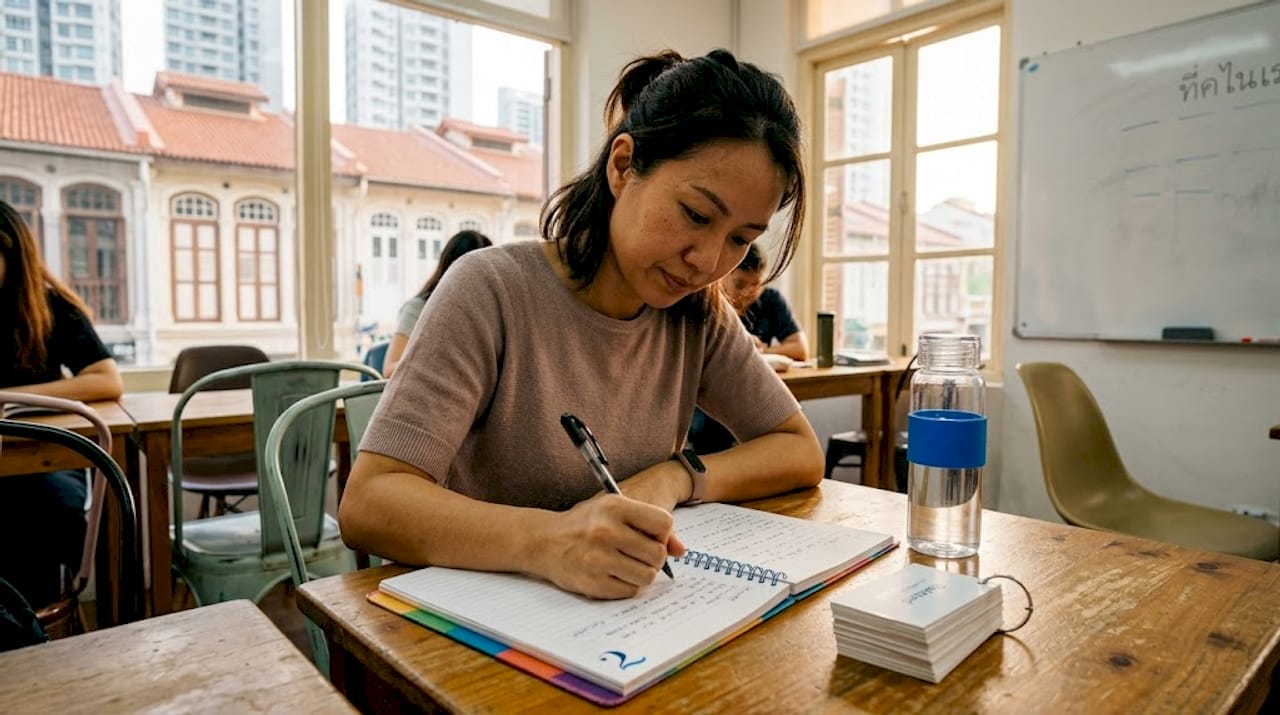
A truly step-by-step course means lessons build progressively. You do not jump from greetings to advanced grammar. Every module reinforces what came before and introduces only what you are ready to absorb next. This structure prevents the frustration of feeling lost mid-course, which is one of the most common reasons learners drop out.
Comparing your main course format options
| Format | Best for | Flexibility | Interaction | Cost range |
|---|---|---|---|---|
| Group classroom | Social learners, structure lovers | Low to medium | High | Budget-friendly |
| Private classroom | Custom pace, specific goals | Medium | Very high | Premium |
| Online group | Busy schedules, remote learners | High | Medium to high | Mid-range |
| Online private | Maximum flexibility, custom content | Very high | Very high | Premium |
When reviewing Thai course options, consider these key factors before committing:
- Class duration and frequency: Two sessions per week of 90 minutes each tends to give learners enough repetition without overwhelming their schedule.
- Cultural component: A great step-by-step course does not just teach words. It weaves in Thai customs, etiquette, and context so your language feels natural rather than robotic.
- Instructor qualifications: Native Thai speakers who are also fluent in English can bridge gaps in understanding that monolingual instructors simply cannot address.
- Progress checkpoints: Look for courses with built-in assessments so you always know exactly where you stand.
Online Thai courses that offer structured lesson plans can be reviewed at your own pace, and many include lesson recordings so you can rewatch difficult sections. This is a significant advantage over purely live classroom formats. For learners who want complete control over their schedule and curriculum, private lessons are available for total beginners and allow you to move exactly as fast as you are ready to go.
If you are a Singaporean resident looking to subsidize your learning, it is also worth checking out SkillsFuture Thai language courses, which may qualify for funding under the national SkillsFuture Credit scheme.
Pro Tip: Online Thai courses often include recordings of every session. Rewatching a lesson once after class can dramatically accelerate your retention and help you catch details you missed during live instruction.
Step-by-step Thai learning: What to expect
With your preferred course format chosen, here’s how your Thai lessons will likely unfold step by step. Understanding the typical learning arc helps you stay motivated, especially during the middle stages when progress can feel invisible even though real growth is happening.
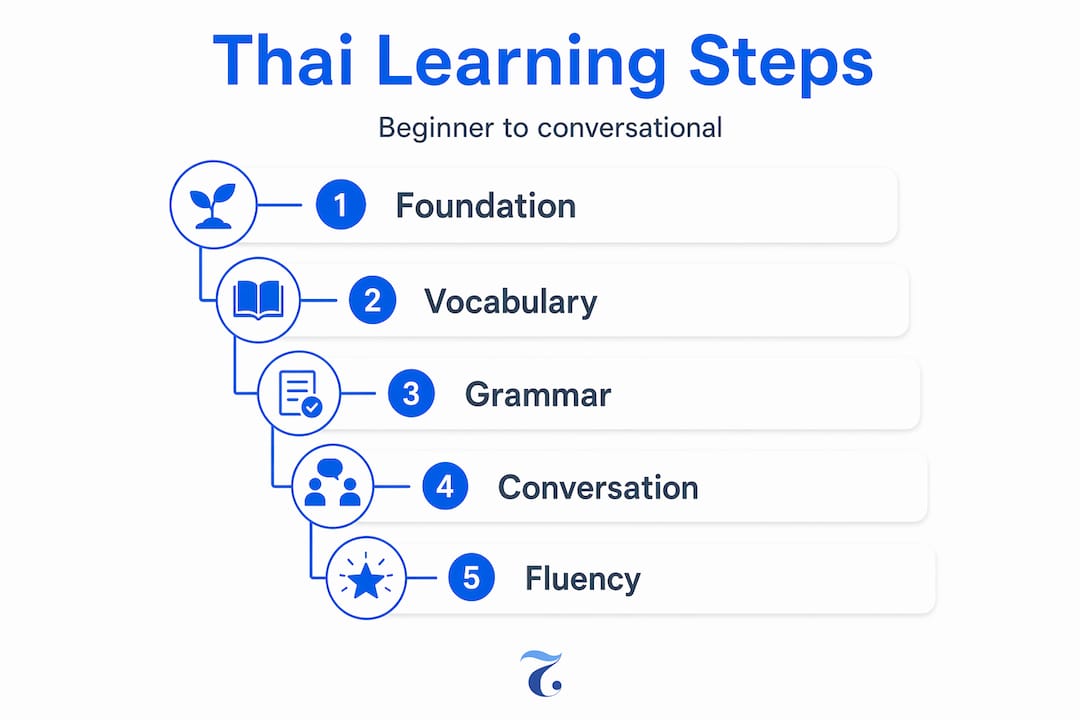
The typical progression in a structured Thai course
- Basic greetings and sounds: You start by learning Thai tones, the phonetic system, and essential greetings. This foundation is non-negotiable. Every other skill builds on it.
- Everyday conversation: Shopping, dining, asking for directions, and introducing yourself. These functional phrases give you immediate real-world value.
- Grammar and sentence structures: Thai grammar is logically structured, but it works differently from English. This stage teaches you how to form statements, questions, and negative sentences correctly.
- Cultural insights: Context is everything. You learn why certain phrases are used, how respect and formality work in Thai society, and what expressions to avoid.
- Assessment and progress tests: Regular evaluations keep you accountable and show you exactly which skills need more attention before you move forward.
Structured Thai courses are designed for those new to learning Thai, meaning the curriculum assumes nothing and explains everything from the ground up. Most learners reach a basic conversational level within 12 to 16 weeks of consistent weekly practice. The key word is consistent. Skipping sessions or taking long breaks between classes forces your brain to relearn rather than reinforce.
“Language learning is not a sprint. Every lesson is a brick. Skip too many and your wall has gaps that will slow everything that comes after.”
A useful way to benchmark your growth is through official Thai tests, which help you measure progress against recognized standards and give you concrete proof of your achievement. These assessments also align with the CU-TFL framework, which is internationally recognized for Thai as a foreign language.
For learners who want to understand the underlying rules of the language more deeply, working through a beginner grammar guide alongside your course sessions can fill in gaps and reinforce classroom lessons between sessions.
Celebrate small wins. Your first full conversation with a native Thai speaker, even if just two or three exchanges, is a milestone worth acknowledging. These moments build the emotional connection to the language that keeps you motivated long after the novelty of a new course wears off.
Troubleshooting and common missteps in learning Thai
Even with structured planning, learners can struggle if key pitfalls are not avoided. Here is how to troubleshoot the most common roadblocks Singaporean learners encounter in Thai courses.
The most common mistakes and how to fix them
- Skipping foundational lessons: Some learners try to fast-track past the basics because they feel too simple. This almost always backfires. Tones and phonetics learned incorrectly in week one will haunt every conversation you have afterward. Go slow to go fast.
- Avoiding speaking practice: Reading and writing Thai are much more comfortable for most learners than speaking out loud, especially with tones. But fluency only comes from using the language with your mouth, not your eyes. Join speaking groups or schedule extra practice time with your instructor.
- Hitting a plateau mid-course: Around the six to eight week mark, many learners feel like they have stopped progressing. They have not. This is the point where the brain is consolidating earlier learning rather than absorbing new material. Keep showing up consistently and the breakthrough will come.
- Relying only on apps: Vocabulary apps and translation tools are useful supplements, but they cannot replace real conversation with feedback. You need a real person to correct your tones and explain why something sounds wrong.
- Neglecting cultural context: Language divorced from culture produces technically correct but socially awkward communication. When you learn a phrase, always learn the situation it belongs in.
As highlighted in research on interactive Thai lessons, truly interactive sessions boost both engagement and retention significantly more than passive study methods.
“Interactive lessons and real conversations accelerate Thai mastery more than rote memorization.”
Pro Tip: Reviewing lesson recordings within 24 hours of your class doubles how much you retain. It only takes 20 to 30 minutes and turns a fading memory into something that sticks for weeks.
Our perspective: Why structure beats shortcuts in Thai language learning
With the common hurdles in mind, here is a reality check on what actually works when it comes to mastering Thai. We have seen hundreds of Singaporean learners come through courses, and the pattern is remarkably consistent across all age groups and backgrounds.
Learners who arrive having spent months on YouTube tutorials and random vocabulary apps are often harder to teach than absolute beginners. That might sound counterintuitive. The reason is that unguided learning creates gaps, mislearned tones, and bad habits that then have to be actively unlearned. Bad pronunciation baked in early is stubborn. It takes real effort to undo.
The learners who progress fastest are not necessarily the most talented or the ones who study the longest hours. They are the ones who follow a guided, progressive structure and practice what they learn with real people in real conversations. They do the basics deeply instead of chasing advanced content before they are ready. Even our most advanced students revisit foundational tone patterns regularly because fluency is built on fundamentals repeated well, not on complexity accumulated quickly.
There is also an emotional component that shortcuts miss entirely. Cultural immersion, humor, and real human connection with a native speaker create a relationship with the language that no app can replicate. When you laugh at a Thai joke for the first time and actually understand why it is funny, something clicks that no flashcard ever triggered.
The honest truth is that consistency and structure, more than talent, are the keys to mastering Thai. Forty minutes of focused practice five days a week will always outperform a four-hour cramming session on Sunday. Choose structured Thai programs that are built to guide you progressively, and trust the process even when it feels slow.
Ready to start your Thai journey? Find your ideal course
Bringing everything together, here is how you can put your new Thai-learning plan into action right now.
Thai Explorer offers a full range of step-by-step Thai courses designed specifically for learners in Singapore, from total beginners to those looking to refine advanced skills. Whether you prefer the energy of a group classroom, the personalized pace of private sessions, or the flexibility of online learning, every format is built around the same progressive, structured curriculum taught by qualified native Thai instructors.
Browse all Thai language course options to compare formats, schedules, and pricing in one place. Not sure which format fits your goals? Use the course finder to find your ideal class based on your schedule, level, and learning style. Thai Explorer is located directly above Tanjong Pagar MRT, making it one of the most accessible language schools in Singapore. Your first conversation in Thai is closer than you think.
Frequently asked questions
How long does it take to become conversational in Thai?
Most beginners reach a conversational level in 3 to 4 months if they practice regularly. Structured Thai courses designed for new learners typically cover the core conversational foundations within this timeframe.
Do I need to know Thai before joining a course?
No, most step-by-step Thai courses in Singapore start from absolute beginner level. Private Thai lessons are available for total beginners, with no prior knowledge required.
Are online Thai courses as effective as classroom ones?
Structured online Thai courses can be equally effective if they offer real interaction, live guidance, and regular practice. Online Thai courses with structured lesson plans allow you to review material at your own pace, which adds a retention advantage.
What makes a lesson “step-by-step”?
A true step-by-step course builds skills in clear, sequential stages without skipping fundamentals. Each lesson reinforces the previous one before introducing new content, ensuring nothing is built on a shaky foundation. Thai courses for new learners follow this progressive model from day one.
How can I track my progress in a Thai course?
Many courses offer official Thai tests and assessments as progress milestones, helping you benchmark your skills against recognized standards and stay motivated throughout your learning journey.