

Say ขอบคุณ (khàawp khun) for “thank you” in Thai. Male speakers commonly say ขอบคุณครับ (khàawp khun khráp), and female speakers commonly say ขอบคุณค่ะ (khàawp khun khâ). Choose the ending based on who is speaking.
Try a two-turn exchange. After someone holds a door for you, say ขอบคุณค่ะ or ขอบคุณครับ. The other person can reply ไม่เป็นไร (mai pen rai), meaning “no problem”. See Khon Kaen University’s beginner phrase guide.
Basic Phrases in Saying Thank You in Thai
Understanding how to say “thank you” in Thai is essential for anyone looking to engage with Thai culture and communicate effectively with Thai people. In the Thai language, expressing gratitude is not just about using the right words but also about understanding the nuances of politeness and respect.
Thank You in Thai
In ขอบคุณ, ขอบ (khàawp) has a low tone and คุณ (khun) has a mid tone. Say the two syllables separately, then join them.
Levels of Formality with “Khop Khun”
In Thai culture, showing gratitude appropriately is crucial, and the phrase “ขอบคุณ” (khàawp khun) is central to this. The Thai language, rich in nuances, allows for different levels of formality when saying “thank you,” making it essential to understand the context and the relationship between speakers.
How male speakers say thank you

In Thai, the phrase ขอบคุณครับ (khop khun krap) is used by male speakers to say “thank you.” This polite expression combines the word ขอบคุณ (khàawp khun), meaning “thank you,” with the male polite particle ครับ (khráp).
The inclusion of “ครับ” at the end of the phrase adds a level of respect and formality, making it suitable for a wide range of social interactions in Thai culture. This polite way of expressing gratitude is essential for male speakers in Thailand to show respect and appreciation in various contexts.
Usage Scenarios and Cultural Significance:
- Formal Interactions: When speaking to someone of higher status, such as a superior at work, a teacher, or an elder, using ขอบคุณครับ (khop khun krap) demonstrates respect and politeness, reflecting the traditional Thai value of showing deference to those of higher social standing.
- Meeting Thai Guests: For male speakers, using ขอบคุณครับ (khop khun krap) when interacting with guests or during formal gatherings highlights good manners and cultural sensitivity, important aspects of Thai society.
- In Service Situations: When receiving good service in a restaurant, hotel, or any customer service scenario, saying ขอบคุณครับ (khop khun krap) to staff members is a courteous way to acknowledge their efforts.
- With Strangers: When thanking someone you do not know well, such as a stranger who has offered help or assistance, using ขอบคุณครับ (khop khun krap) is appropriate and maintains a polite tone.
- In Public Announcements: During public speaking or formal announcements, male speakers use ขอบคุณครับ (khop khun krap) to thank their audience or participants, ensuring the message is conveyed respectfully.
- Cultural Respect: The use of ครับ (khráp) is ingrained in the Thai language as a marker of politeness and respect. Its consistent use of “thank you” expressions highlights the importance Thai people place on showing respect and maintaining harmonious social relations.
How female speakers say thank you
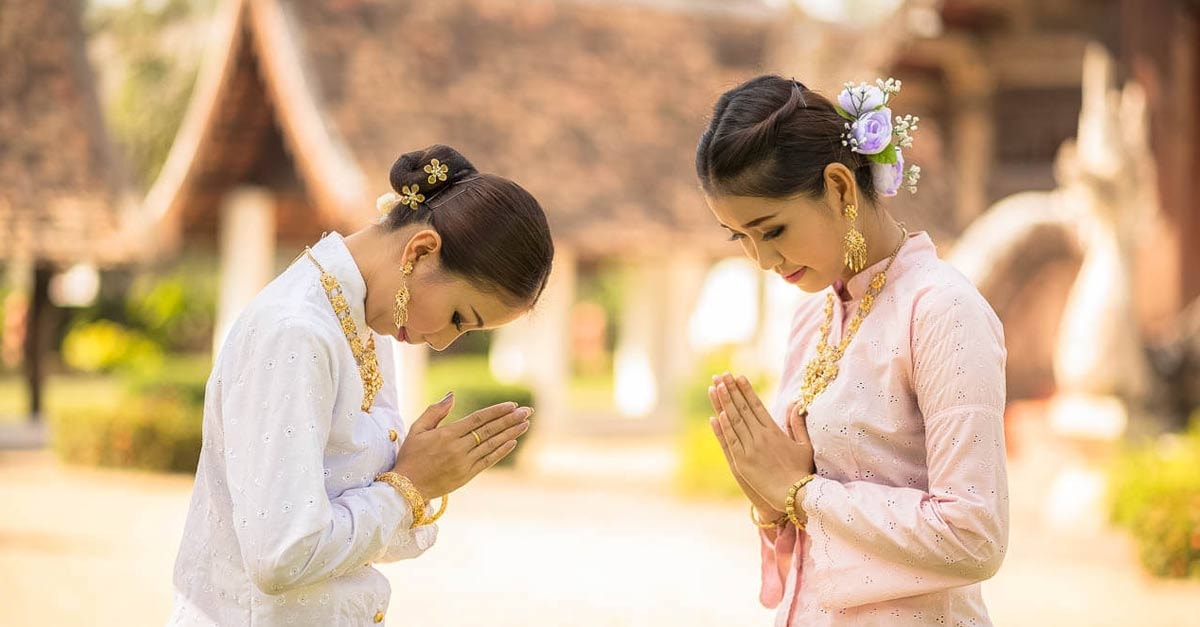
In Thai, the phrase ขอบคุณค่ะ (khop khun ka) is used by female speakers to say “thank you.” This polite expression combines the word ขอบคุณ (khàawp khun), meaning “thank you,” with the female polite particle ค่ะ (khâ).
The inclusion of “ค่ะ” at the end of the phrase adds a level of respect and formality, making it suitable for various social interactions within Thai culture. This polite way of expressing gratitude is essential for female speakers in Thailand to show respect and appreciation in diverse contexts.
Usage Scenarios and Cultural Significance
- Formal Interactions: When a female speaker is addressing someone of higher status, such as a superior at work, a teacher, or an elder, using ขอบคุณค่ะ (khop khun ka) demonstrates respect and politeness, which are key values in traditional Thai culture.
- Meeting Thai Guests: Female speakers use ขอบคุณค่ะ (khop khun ka) when interacting with guests or during formal gatherings to highlight good manners and cultural sensitivity, important aspects of Thai society.
- In Service Situations: When receiving good service in a restaurant, hotel, or any customer service setting, saying ขอบคุณค่ะ (khop khun ka) to staff members is a courteous way to acknowledge their efforts.
- With Strangers: When thanking someone you do not know well, such as a stranger who has offered help or assistance, using ขอบคุณค่ะ (khop khun ka) is appropriate and maintains a polite tone.
- In Public Announcements: During public speaking or formal announcements, female speakers use ขอบคุณค่ะ (khop khun ka) to thank their audience or participants, ensuring the message is conveyed respectfully.
- Cultural Respect: The use of ค่ะ (khâ) is deeply ingrained in the Thai language as a marker of politeness and respect. Its consistent use of “thank you” expressions highlights the importance Thai people place on showing respect and maintaining social relations.
Informal Thank You
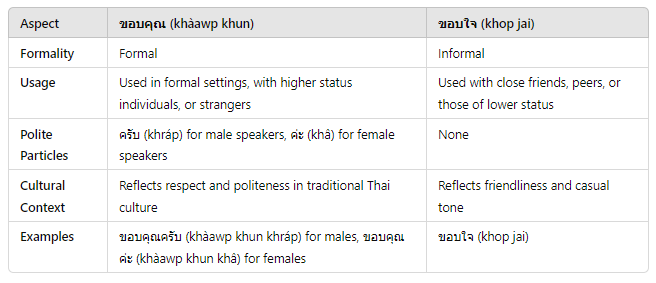
In informal settings, the phrase ขอบใจ (khop jai) is commonly used to say “thank you” in Thai. This phrase is less formal than ขอบคุณ (khàawp khun) and is typically used among close friends, peers of the same age, or those of lower status.
While still showing gratitude, ขอบใจ (khop jai) lacks the formal politeness particles that are essential in more formal interactions. It is a kind word that reflects a friendly and casual tone, suitable for everyday conversations among native speakers in Thai culture.
Here’s a brief example of the difference between formal and informal way of saying thank you:
How To Emphasise Gratitude
Expressing gratitude in Thai culture involves more than just saying the common word “thank you”; it often includes using polite words, traditional gestures, and understanding the appropriate context. To emphasise gratitude, Thai people use other phrases and particles to convey their appreciation more strongly.
Emphasising Gratitude with Phrases
- ขอบคุณมาก (khàawp khun mâak): Adding “มาก” (mâak), which means “very much,” to the end of the standard “ขอบคุณ” (khàawp khun) creates a stronger expression of thanks. This phrase is appropriate in both formal and informal settings to show extra appreciation.
- ขอบคุณมากครับ (khàawp khun mâak khráp) / ขอบคุณมากค่ะ (khàawp khun mâak khâ): For male and female speakers respectively, adding the polite particles “ครับ” (khráp) or “ค่ะ” (khâ) to “ขอบคุณมาก” (khàawp khun mâak) ensures the expression remains polite and respectful.
- ขอบคุณจริงๆ (khàawp khun jing jing): This phrase means “thank you truly” or “thank you sincerely,” with “จริงๆ” (jing jing) emphasising the sincerity of your gratitude. It is suitable for showing heartfelt thanks.
Usage Scenarios and Cultural Significance
- Formal Interactions: In formal settings or when speaking to someone of higher status, use “ขอบคุณมากครับ” (khàawp khun mâak khráp) for male speakers and “ขอบคุณมากค่ะ” (khàawp khun mâak khâ) for female speakers. This polite way of expressing gratitude is crucial in maintaining respect and formality in Thai society.
- Traditional Thai Gestures: Combining these phrases with the “wai” gesture, a traditional Thai greeting involving a slight bow with hands pressed together, enhances the politeness and cultural appropriateness of your gratitude.
- Casual Interactions: Among close friends or peers, using “ขอบใจมาก” (khàawp jai mâak) shows a deeper appreciation while maintaining a casual tone. This is particularly suitable for interactions with Thai kids or close friends.
- Expressing Deep Gratitude: When you want to express profound thanks, such as after receiving significant help or a meaningful gift, saying “ขอบคุณจริงๆ” (khàawp khun jing jing) or “ขอบคุณจากใจ” (khàawp khun jàak jai), which means “thank you from the heart,” can convey your sincere appreciation.
The use of polite particles, formal language, and traditional gestures reflects the importance of respect and politeness in Thai culture.
Thank You Very Much in Thai
The phrase ขอบคุณมาก (khop khun mak) translates to “thank you very much” in Thai. This phrase is an enhanced version of ขอบคุณ (khàawp khun), with the addition of มาก (mâak), meaning “very much.” It is a polite and sincere way to express deep gratitude in various situations. Using this phrase shows a higher level of appreciation and respect, fitting well within the framework of traditional Thai culture and etiquette.
Situations for Use and Variations
- Formal Interactions: When addressing someone of higher status or in formal settings, such as thanking a superior at work, a teacher, or an elder, use the complete form with polite particles:
- Male Speaker: ขอบคุณมากครับ (khàawp khun mâak khráp)
- Female Speaker: ขอบคุณมากค่ะ (khàawp khun mâak khâ)
- Informal Interactions: In more casual contexts, such as with friends or peers of the same age, the phrase can be used without the polite particles while still conveying a strong sense of gratitude:
- General Use: ขอบคุณมาก (khàawp khun mâak)
- With Thai Kids: When expressing gratitude to children, the simpler form ขอบคุณมาก (khàawp khun mâak) is often sufficient, maintaining politeness while being approachable.
- Good Service: After receiving excellent service in restaurants, hotels, or other customer service situations, using ขอบคุณมาก (khàawp khun mâak) shows appreciation for the efforts of the service staff.
- Special Occasions: For expressing gratitude during significant events, such as weddings, ceremonies, or public announcements, the formal versions with polite particles are appropriate to maintain respect and cultural norms.
- Extra Polite Variations: To emphasise sincerity even further, you can use phrases like ขอบคุณมากจริงๆ (khàawp khun mâak jing jing) meaning “thank you very much indeed”, or ขอบคุณมากจากใจ (khàawp khun mâak jàak jai) meaning “thank you very much from the heart.”
Thank You So Much in Thai
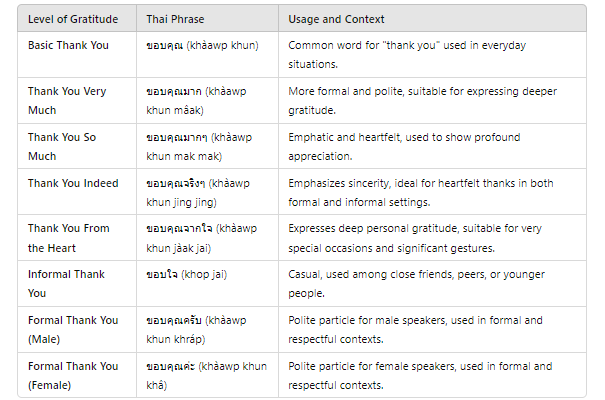
To express an even deeper level of gratitude in Thai, you can use the phrase ขอบคุณมากๆ (khop khun mak mak), which translates to “thank you so much.” The repetition of มาก (mak) adds extra emphasis, making the gratitude more profound and heartfelt.
This phrase is versatile and can be used in both formal and informal settings, depending on the context and the relationship with the person being thanked. Below are examples of the Thai phrases of saying thank you:
Usage Examples and Cultural Context
- Formal Settings: In formal interactions, such as with elders or superiors, using polite particles is crucial. For male speakers: ขอบคุณมากๆครับ (khàawp khun mak mak khráp), and for female speakers: ขอบคุณมากๆค่ะ (khàawp khun mak mak khâ).
- Informal Settings: Among friends or peers, simply saying ขอบคุณมากๆ (khàawp khun mak mak) is sufficient and conveys strong appreciation without being overly formal.
- Expressing Deep Gratitude: For occasions that warrant a high level of gratitude, such as receiving significant help or a special gift, phrases like ขอบคุณจากใจ (khàawp khun jàak jai) or ขอบคุณจริงๆ (khàawp khun jing jing) are appropriate to convey sincerity and depth of feeling.
- Good Service: In contexts such as restaurants or hotels, ขอบคุณมากๆ (khàawp khun mak mak) can show your appreciation for excellent service, ensuring you maintain politeness and gratitude.
Contextual Thank Yous
In Thai culture, expressing gratitude goes beyond mere kind words; it reflects respect, politeness, and appreciation for others. Understanding the nuances of saying “thank you” in Thai involves considering the context, relationship dynamics, and the appropriate level of formality.
Thank You For…
When you want to thank someone specifically for something in Thai, you can use the phrase “ขอบคุณสำหรับ” (khop khun sam rap). This phrase is useful for expressing gratitude for a particular action, favour, or gift in a respectful manner. It shows appreciation while acknowledging the specific act or item that you are thankful for.
Examples of Common Situations:
- Receiving a Gift: “ขอบคุณสำหรับของขวัญ” (khop khun sam rap khǎawng khwǎn) – Thank you for the gift.
- Helping with a Task: “ขอบคุณสำหรับการช่วยเหลือ” (khop khun sam rap kan chûai leư̄a) – Thank you for helping.
- Providing Information: “ขอบคุณสำหรับข้อมูล” (khop khun samrap khomun) – Thank you for the information.
- Showing Support: “ขอบคุณสำหรับการสนับสนุน” (khop khun sam rap kan sà nap sà nǔn) – Thank you for your support.
- Offering Hospitality: “ขอบคุณสำหรับการต้อนรับ” (khop khun sam rap kan tôn ráp) – Thank you for the warm welcome.
- Completing a Service: “ขอบคุณสำหรับบริการดีๆ” (khop khun sam rap bò ri kān dī dī) – Thank you for the excellent service.
Thank You, Goodbye in Thai
In Thai culture, expressing gratitude and bidding farewell are important gestures that reflect politeness and respect. To say thank you and goodbye in Thai, you can combine “ขอบคุณ” (khop khun), meaning thank you, with “ลาก่อน” (la gon), which translates to goodbye.
Steps in starting a conversation:
- Initiate Farewell: Start by saying “ลาก่อน” (la gon), which means goodbye.
- Response with Gratitude: The other person may respond with “ขอบคุณ” (khop khun), thank you.
- Express Good Wishes: Optionally, follow with well-wishes such as “สวัสดีครับ” (sawasdee khrap) for males or “สวัสดีค่ะ” (sawasdee khâ) for females, which means goodbye or hello.
- Parting Words: End the conversation with another “ลาก่อน” (la gon) or “สวัสดี” (sawasdee), depending on the context.
Replies to thanks and how to decline an offer
“You’re welcome” and “no problem” can both answer thanks. A polite refusal belongs in a different situation.
1. You are welcome
Responding politely when someone thanks you is essential for maintaining social balance and showing respect. A common and polite response to “thank you” in Thai is “ยินดี” (yin dee), which translates to “you are welcome” or “gladly”. This phrase is versatile and suitable for various situations, from casual interactions to more formal settings.
Scenarios and Cultural Tips:
- Casual Interactions: When friends or family thank you for something small or informal, responding with “ยินดี” (yin dee) is appropriate and shows warmth.
- Formal Settings: In professional or formal contexts, using “ยินดี” (yin dee) maintains a respectful tone while acknowledging gratitude.
- Customer Service: In service-oriented situations, responding with “ยินดี” (yin dee) expresses willingness to assist further or provide good service.
- Cultural Significance: Thai culture values politeness and maintaining harmonious relationships. Using “ยินดี” (yin dee) not only acknowledges the gratitude expressed but also reciprocates with a positive sentiment, reinforcing goodwill between individuals.
Understanding when and how to use “ยินดี” (yin dee) in Thai conversations is important for anyone learning the language or engaging with Thai speakers. It reflects an appreciation for Thai customs and fosters respectful communication in various social contexts.
2. No Problem
Reassuring someone that their request or expression of gratitude has not caused any inconvenience is commonly conveyed with the phrase “ไม่เป็นไร” (mai bpen rai), which translates to “no problem” or “it’s okay”. This phrase is used to reassure others that their actions or requests were not burdensome and are gladly accommodated.
Scenarios and Cultural Tips:
- Everyday Interactions: When someone apologises for a minor inconvenience or expresses thanks, responding with “ไม่เป็นไร” (mai bpen rai) acknowledges their concern and reassures them that it was no trouble at all.
- Customer Service: In service-oriented environments, using “ไม่เป็นไร” (mai bpen rai) indicates a willingness to help and ensures the customer feels valued without feeling like they’ve caused any inconvenience.
- Casual Conversations: Among friends or acquaintances, “ไม่เป็นไร” (mai bpen rai) maintains a friendly atmosphere by downplaying any perceived inconvenience.
- Cultural Norms: Thai culture emphasises politeness and maintaining harmonious relationships. Responding with “ไม่เป็นไร” (mai bpen rai) reflects a gracious attitude and helps to avoid any sense of imposition or discomfort in social interactions,
3. No, Thank You
If someone offers you something and you are fine without it, ไม่เป็นไรค่ะ or ไม่เป็นไรครับ can mean “I’m fine, thanks”. Add ขอบคุณ if you want to thank the person for the offer.
Scenarios and Cultural Tips:
- Offer of Help: When someone offers assistance or a favour, responding with “ไม่เป็นไร” (mai pen rai) acknowledges their offer but declines politely.
- Gifts or Treats: If someone offers you something, using “ไม่เป็นไร” (mai pen rai) graciously decline while appreciating the gesture.
- Invitations: When invited to an event or outing that you can’t attend, “ไม่เป็นไร” (mai pen rai) conveys regret but declines respectfully.
- Cultural Norms: Thai culture values humility and modesty. Using “ไม่เป็นไร” (mai pen rai) shows respect for the offer or invitation while ensuring that the refusal is gentle and considerate.
- Maintaining Relationships: Polite refusals with “ไม่เป็นไร” (mai pen rai) help in maintaining positive relationships by acknowledging the offer graciously, even when declining.
How to Write Thank You in Thai
Write the two syllables together as ขอบคุณ.
- ขอบ is ข + อ + บ.
- คุณ is ค + ◌ุ + ณ. The vowel sign sits beneath ค.
- Copy each syllable once, then write the whole expression from memory.
Conclusion
Start with ขอบคุณ and the polite ending you normally use. Practise the two-turn exchange with a friend.
Learning a new language can be a bit overwhelming, and you find it difficult to speak to natives at first. However, just knowing how to say thank you is more than enough, as that will show that you are sincere.
For guided practice, see the S$45 two-hour Beginner 1 trial and confirm availability on the published schedule.