TL;DR:
- Deep Thai integration typically takes three to five years of committed language and cultural learning.
- Speaking Thai builds trust, demonstrates effort, and fosters genuine relationships in Thai society.
- Mastering cultural nuances like indirect communication and saving face is essential for meaningful interaction.
Plenty of Singaporeans visiting Thailand assume a few English phrases will carry them through any situation. That assumption works fine at a Phuket resort or a Bangkok hotel lobby, but it starts to crack the moment you step outside the tourist bubble. Deeper integration into Thai society, whether for work, relationships, or genuine belonging, typically takes three to five years of committed language and cultural learning. This article cuts through the noise and gives you practical, honest strategies to build real Thai communication skills from Singapore.
Table of Contents
- Why Thai communication matters beyond tourism
- Navigating cultural nuances: Directness, politeness, and ‘losing face’
- Essential strategies to develop Thai communication skills
- Overcoming common obstacles for Singaporeans learning Thai
- The uncomfortable truth most guides miss about Thai communication
- Take your Thai communication skills further with Thai Explorer
- Frequently asked questions
Key Takeaways
| Point | Details |
|---|---|
| English is not enough | Relying solely on English limits true integration and professional opportunities in Thailand. |
| Cultural nuances matter | Understanding Thai politeness, indirectness, and humility is essential for effective communication. |
| Real progress is gradual | Developing meaningful Thai skills takes years and consistent practice, not shortcuts. |
| Practical strategies help | Daily practice, online resources, and engaging with Thai speakers accelerate learning. |
| Tailored courses boost results | Professional lessons and personalized courses provide structured guidance and faster improvement. |
Why Thai communication matters beyond tourism
English gets you a hotel room and a Pad Thai order. It does not get you a trusted business partner, a genuine friendship, or a seat at the community table. This is the gap most people underestimate before they spend serious time in Thailand.
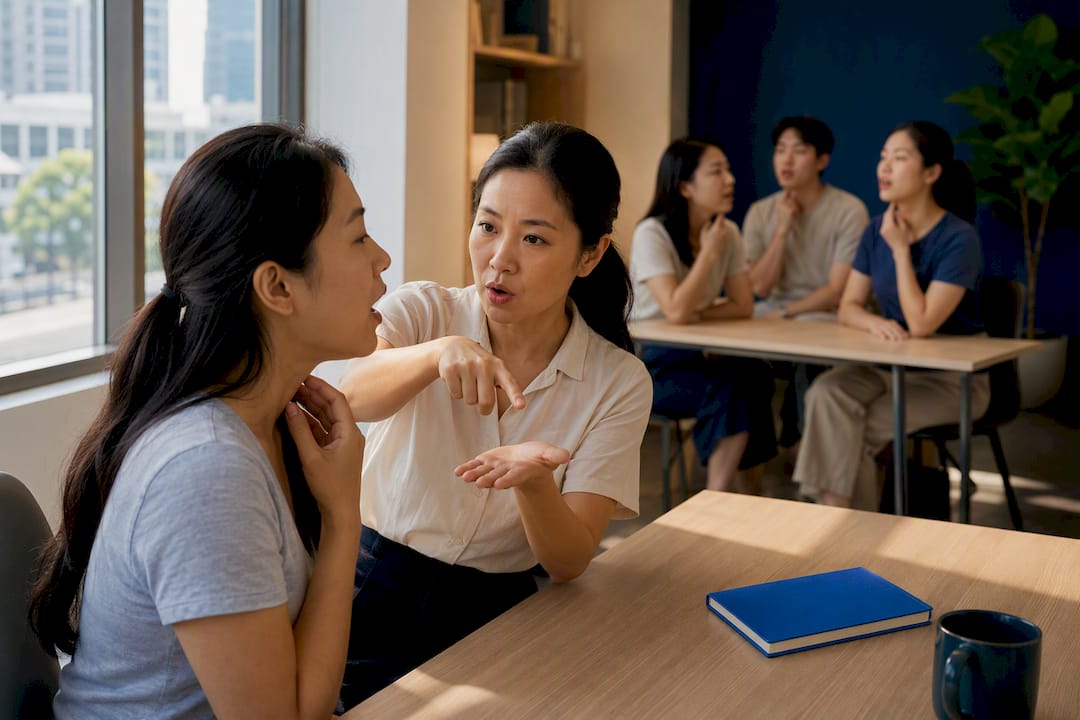
Thai is not just a communication tool. It is a social signal. When you speak Thai, even imperfectly, locals respond with warmth and respect that no amount of English fluency can replicate. You are showing effort, humility, and genuine interest in their world. That matters deeply in Thai culture, where relationships are built slowly and trust is earned through consistent, respectful interaction.
“Thais are polite, but the culture’s reliance on indirectness carries a real risk of inefficiency in business settings, where unspoken concerns can delay decisions.”
This indirectness runs through almost every professional and personal interaction in Thailand. A Thai colleague who disagrees with your proposal may smile, nod, and say nothing rather than voice objection. Without language skills and cultural awareness, you will misread silence as agreement. With them, you learn to read the room, ask the right follow-up questions, and create space for honest dialogue.
For Singaporeans eyeing business or career opportunities in Southeast Asia, this distinction is huge. Understanding Thai for travelers is a solid starting point, but moving beyond phrasebook knowledge means investing in proper language study. Building your skills from the ground up, including building Thai reading skills, opens up a completely different level of access to Thai society, media, and professional networks.
The practical upside is real. Professionals who communicate in Thai report faster trust-building with local partners, fewer misunderstandings in negotiations, and dramatically better social integration. These are not small advantages in a market where personal relationships often determine business outcomes.
Navigating cultural nuances: Directness, politeness, and ‘losing face’
Thai communication is shaped by a concept that many Singaporeans only partially understand: the idea of saving face. In Thai culture, public criticism, blunt disagreement, or any behavior that makes someone feel embarrassed is considered a serious social offense. It does not matter whether you are right. If you make someone lose face, you lose their respect and their cooperation, possibly permanently.
This is directly tied to Buddhist humility and the Thai value of kreng jai, a deep reluctance to impose on others or cause discomfort. Foreigners who are naturally direct, which includes most Singaporeans shaped by a frank, results-driven culture, are often perceived as blunt or even rude without realizing it.
Here is a clear comparison of how the same situation plays out differently across these two communication styles:
| Situation | Singapore style | Thai style |
|---|---|---|
| Disagreeing with a proposal | “That won’t work because…” | Gentle deflection, asking clarifying questions |
| Pointing out a mistake | Direct correction in front of others | Private, indirect feedback with a softening phrase |
| Refusing a request | Clear “no” with reason | “Maybe,” “I’ll check,” or a change of subject |
| Expressing enthusiasm | Straightforward confirmation | Smiling agreement, modestly worded |
| Giving critical feedback | Specific and factual | Wrapped in praise, delivered indirectly |
Understanding this table is not just academic. It changes how you write emails, run meetings, respond to feedback, and build friendships in Thailand. Every one of these scenarios plays out daily in professional and social environments.
Pro Tip: When you want to decline something or push back in a Thai setting, phrase it as a question rather than a statement. “Would it be possible to look at another option?” lands far better than “I don’t agree with this approach.”
Here are the most important cultural rules to internalize early:
- Never raise your voice in frustration, even when things go wrong. Volume signals loss of control and is deeply embarrassing for everyone present.
- Use polite particles consistently. In Thai, men add khrap and women add kha at the end of sentences to signal respect. Skipping these sounds abrupt.
- Avoid pointing feet at people or sacred objects. Body language is part of communication culture in Thailand.
- Address people by their first name with the title Khun (similar to Mr./Ms.) until invited to use casual forms.
- Compliment effort and character, not just results. Thai culture responds warmly to acknowledgment of the person, not just the outcome.
Learning these rules through structured study of Thai culture and etiquette alongside your language lessons will accelerate your integration far more than vocabulary drills alone. Culture and language reinforce each other constantly.
Essential strategies to develop Thai communication skills
Building real Thai communication ability requires a system, not just good intentions. Here is what actually works for learners based in Singapore.
Consistency beats intensity every single time. Thirty minutes of Thai practice every day will take you further than a five-hour marathon session once a week. Your brain consolidates language during sleep and in the gaps between sessions. Daily exposure keeps vocabulary active and pronunciation fresh in your muscle memory.
Use real-world anchors to reinforce what you learn. Change your phone language to Thai for a week. Watch Thai Netflix series without subtitles for the first ten minutes before switching them on. Listen to Thai radio while commuting. These small habits create genuine immersion without needing to leave Singapore.
Key strategies that move the needle:
- Start with the most common 500 Thai words and master them deeply before expanding. Broad shallow knowledge is less useful than narrow deep knowledge at the beginner stage.
- Practice Thai tones daily using minimal pairs. Thai has five tones, and mixing them up changes meaning completely. “Ma” can mean horse, dog, come, or a question particle depending on tone.
- Find a language exchange partner through expat Facebook groups or apps like Tandem. Teaching an English speaker and learning Thai in return is free and highly effective.
- Record yourself speaking Thai weekly and compare recordings over time. Progress is often invisible day to day but obvious month to month.
- Build a personal vocabulary list tied to your specific life. If you work in finance, learn Thai financial terms. If you travel for food, learn market and restaurant vocabulary first.
The data on language learning time investment is sobering but useful:
| Thai skill area | Estimated hours to basic competence | Estimated hours to professional competence |
|---|---|---|
| Spoken conversation | 150 to 200 hours | 600 to 800 hours |
| Listening comprehension | 200 to 300 hours | 700 to 900 hours |
| Reading (script) | 100 to 150 hours | 500 to 700 hours |
| Writing | 200 to 300 hours | 800 to 1,000 hours |
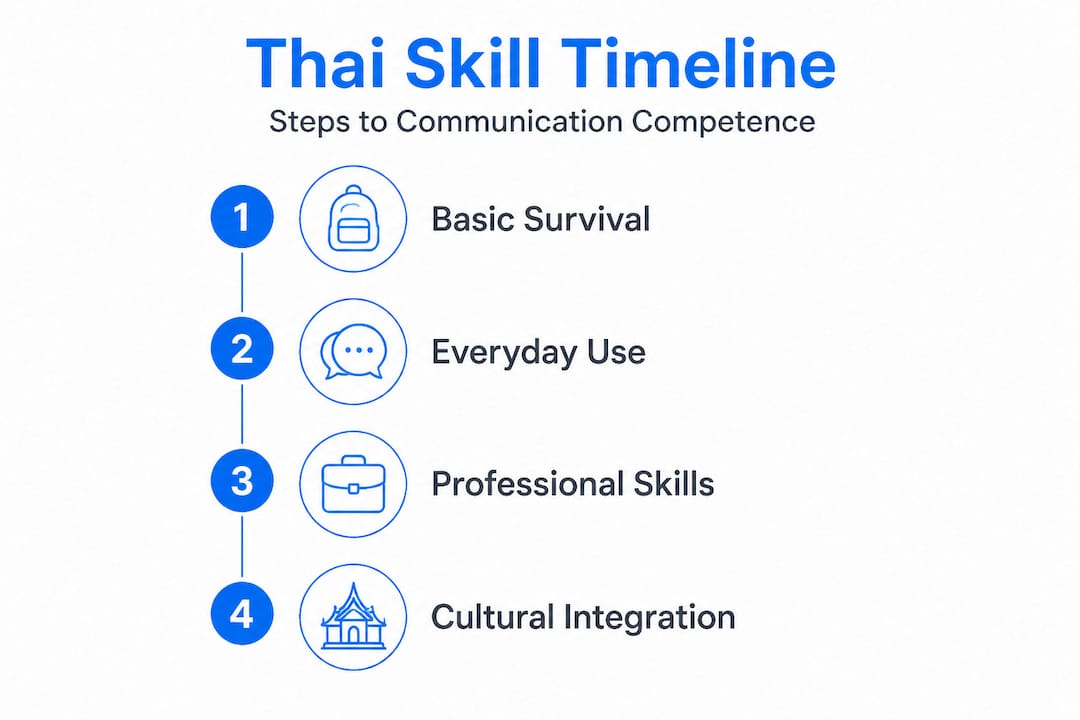
These numbers explain why deeper integration genuinely takes three to five years for most people. Language learning is cumulative and demands long-term commitment rather than short bursts of enthusiasm.
The good news is that practicing Thai daily with a structured plan makes those hours add up faster than you expect. Starting with Thai greetings and essential phrases gives you immediate wins that keep motivation high. For those who prefer flexibility, learning Thai online offers a structured, step-by-step approach that fits around work and family commitments.
Overcoming common obstacles for Singaporeans learning Thai
Thai presents specific challenges that catch Singaporean learners off guard. Knowing what these are in advance saves you months of frustration.
Tones are the biggest early wall. Unlike Mandarin, which has four tones, Thai has five, including a mid tone that is easy to overlook. Singaporeans who speak Mandarin have a slight advantage in understanding tonal logic, but the actual tones in Thai are different enough to require deliberate, dedicated practice. The solution is to learn pronunciation with a qualified instructor from day one rather than picking up bad habits from apps alone.
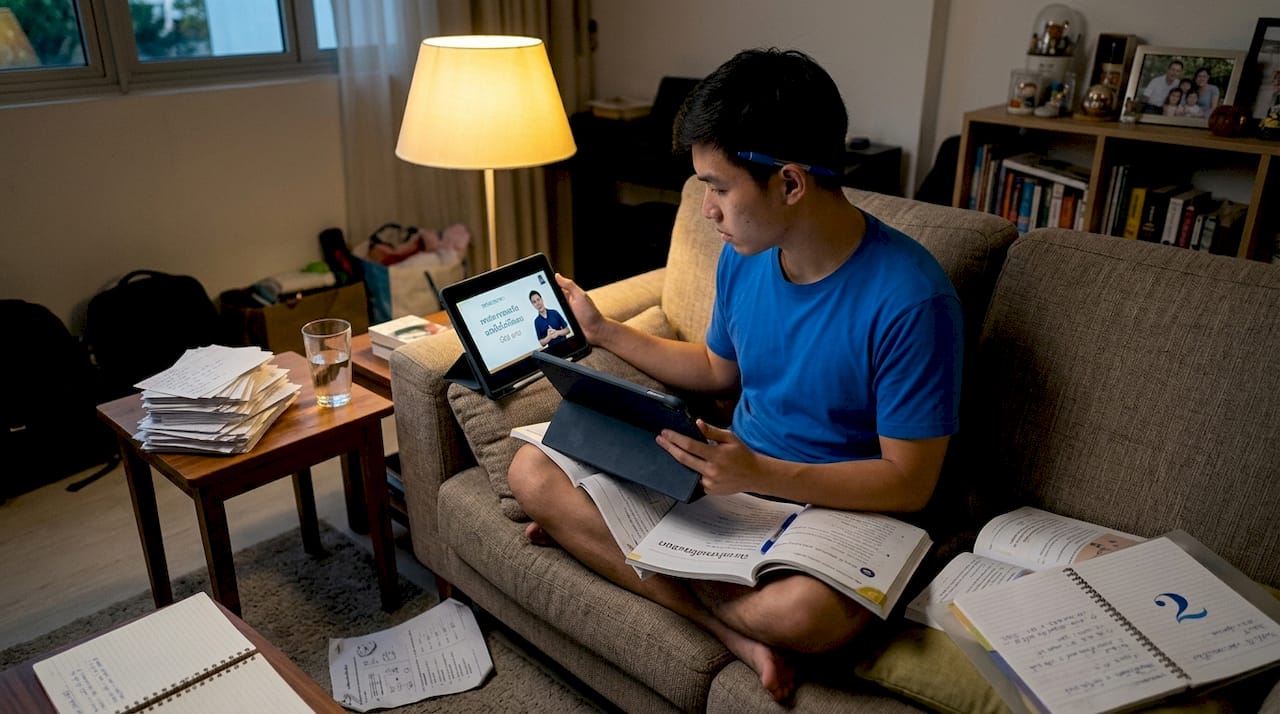
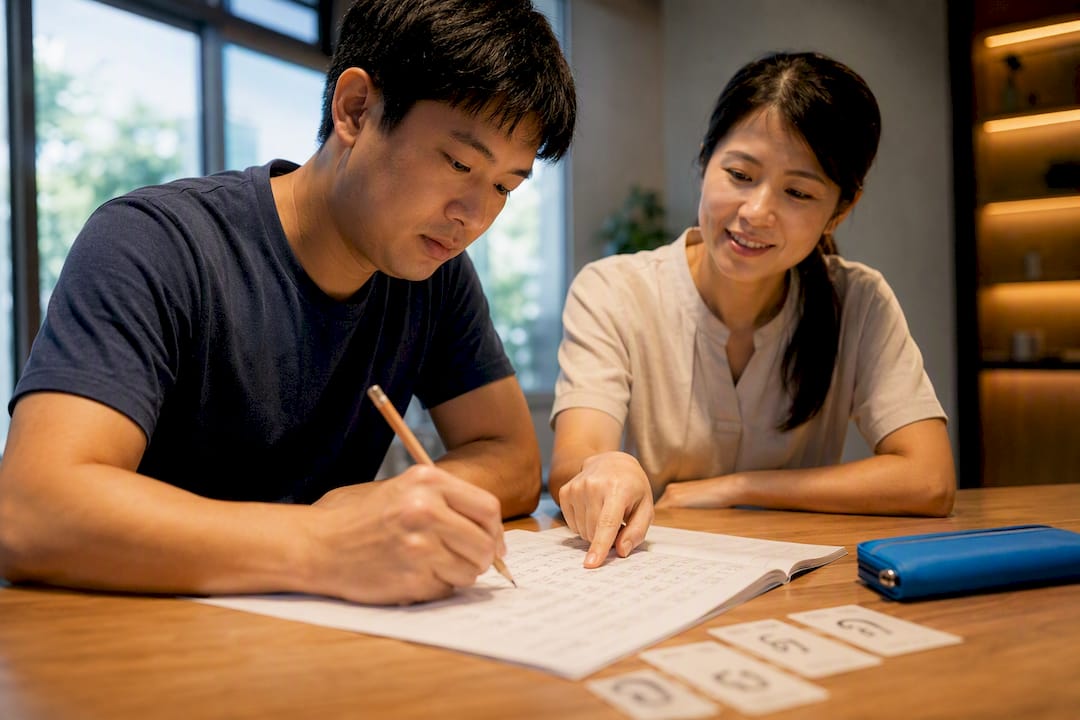
The script feels overwhelming. Thai has 44 consonants, 32 vowel symbols, and no spaces between words. Many learners skip reading and writing entirely and focus on speaking. This is understandable in the short term, but it limits long-term progress significantly because reading reinforces spelling, tones, and vocabulary retention in ways that listening alone cannot.
Cultural expectations differ from Singapore norms. Singaporeans are used to efficiency, directness, and a relatively egalitarian workplace culture. Thailand operates on hierarchy, patience, and relationship-building. This mismatch creates friction that feels personal but is actually structural. Recognizing the system helps you adapt without feeling dismissed.
Immersion opportunities are limited in Singapore. Unlike living in Bangkok, you cannot simply walk outside and practice Thai in daily life. Solutions include:
- Joining Thai community groups in Singapore where events and conversations happen in Thai
- Watching Thai drama series, which are excellent for absorbing natural speech patterns and cultural references
- Scheduling regular trips to Thailand with a specific language practice goal for each visit
- Using structured classes where instructors speak to you predominantly in Thai from intermediate level onward
Pro Tip: Set a specific goal for each trip to Thailand rather than just “practicing Thai.” For example: “I will order every meal in Thai without pointing at the menu.” Constraints like this force real communication and build confidence fast.
English is sufficient in most tourist areas of Thailand, which creates a comfort trap. You can always escape back to English when things get hard. Resist this. Every time you push through an uncomfortable Thai exchange, you build the resilience that distinguishes genuine learners from perpetual beginners.
Taking a Thai language test at the right stage of your learning gives you an objective benchmark of where you stand and what to prioritize next. It removes the guesswork from your study plan.
The uncomfortable truth most guides miss about Thai communication
Most articles about learning Thai give you a list of phrases, tell you to be polite, and send you on your way. That advice is not wrong. It is just wildly incomplete.
Here is what we have observed working with students over time: the learners who struggle most are not the ones who find tones difficult. They are the ones who expect cultural fluency to come automatically once they hit a certain vocabulary count. It does not work that way.
Language and culture are inseparable in Thai. You can memorize every phrase in a textbook and still offend someone in your first real business meeting because you did not know when to stay quiet. You can speak grammatically perfect Thai and still be treated as an outsider because you never learned the relational rhythms that signal genuine respect.
The conventional wisdom says: learn the language, then learn the culture. Our experience says: learn them simultaneously from the beginning, or you will have to painfully unlearn habits later. A student who memorizes phrases without understanding the cultural weight behind them will use those phrases in the wrong context at the wrong moment with the wrong tone of voice, and walk away wondering why the interaction felt flat.
Real Thai language integration takes three to five years of consistent, humble, culturally engaged practice. There is no shortcut version that delivers the same result. The good news is that every month of genuine effort compounds. You notice things you would have missed at the six-month mark. Relationships that felt polite but distant begin to feel genuinely warm.
Start by reading Thai effectively as early as possible in your study. Reading forces you to engage with the language as a complete system, not just a spoken one. It slows you down in a way that deepens retention and cultural understanding far more than conversation practice alone.
The learners who succeed long-term are the ones who stop treating Thai as a skill to acquire and start treating it as a relationship to cultivate.
Take your Thai communication skills further with Thai Explorer
Building authentic Thai communication skills is a long-term investment, and having the right structure from the start makes an enormous difference. Thai Explorer, located directly above Tanjong Pagar MRT in Singapore, offers expert-led Thai courses designed to build speaking, listening, reading, and writing skills simultaneously, with cultural context woven into every lesson.
Whether you are starting from scratch or looking to sharpen professional-level fluency, Thai Explorer’s qualified native instructors deliver lessons that connect language to real culture. You can choose from group classes, private Thai lessons tailored to your schedule and goals, or use your learning credits through the SkillsFuture Thai course program. Every format is built to move you from classroom confidence to genuine real-world communication.
Frequently asked questions
Is English enough for travel in Thailand?
English works well in tourist areas and major hotels, but deeper cultural integration and genuine belonging require Thai language skills. If you want more than a surface-level experience, learning Thai is essential.
How long does it take to gain Thai communication skills for business?
Most learners need three to five years of consistent study and real-world practice to reach professional fluency and a genuine sense of belonging in Thai business culture. Structured courses significantly shorten that timeline.
What is the biggest challenge Singaporeans face learning Thai?
Adapting to indirect communication is often harder than mastering pronunciation. Thai indirectness in business can feel like ambiguity or disinterest to Singaporeans who are used to frank, efficient communication styles.
Can I learn Thai without living in Thailand?
Absolutely. Consistent daily practice using online classes, language exchange partners, Thai media, and structured courses in Singapore can build strong communicative ability without relocating. Occasional trips to Thailand help reinforce what you have learned in real-world situations.